Paradox
How a visual brand evolution helped 6x ARR and lead to a successful exit
TYPE
AI & Enterprise SaaS
PERSONALITY
Minimalist, Dimensional, Future-forward
SERVICES
Art Direction
Identity System
Brand Guidelines
Content Strategy & IA
Web & UX/UI Design
Lead Gen Design
Event Branding
Digital Advertising
ROLE
Lead Sr. Marketing Designer
Paradox is an award-winning HR technology company that builds conversational AI software for hiring. Their AI assistant automates the busywork of recruiting, freeing up talent teams to focus on candidates and high-value work.
As Paradox began to grow from a startup into a market leader, they needed a creative lead to evolve the brand and drive the visual strategy for their demand engine—including the website, print and digital marketing, and global events.
Strategy
Introduction
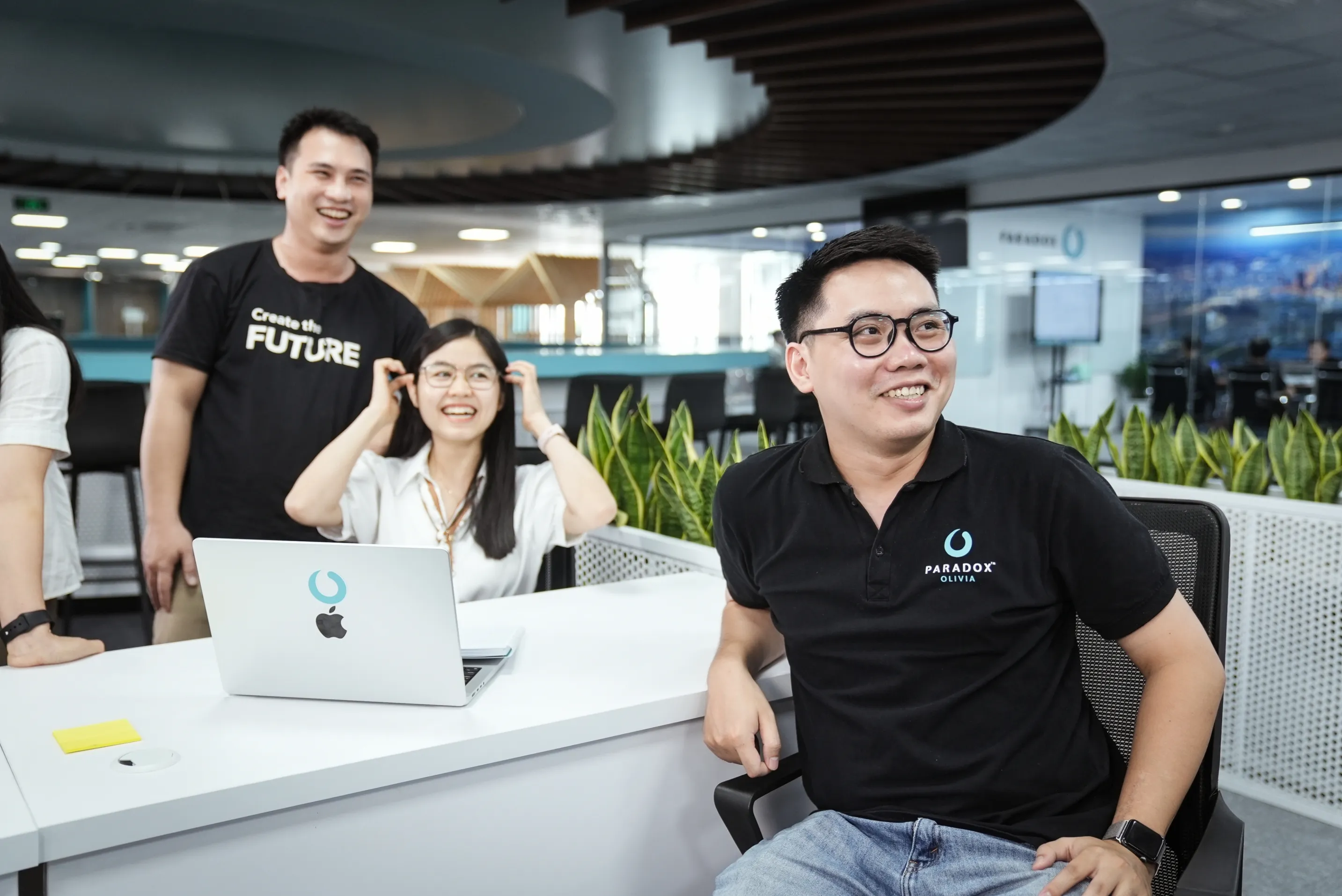
Headquartered in Scottsdale, Paradox was an early pioneer of chat-based HR tech. I joined shortly after their Series B when the startup looked to shift into a high-growth phase. As the sole marketing designer, I took ownership of the brand evolution to position Paradox as the clear choice in recruiting technology.
In the five years that followed, Paradox was consecutively named on the Inc. 5000 and recognized as one of the fastest growing companies in HR tech. Industry analysts at Aptitude Research labeled Paradox as “consistently one of the most beloved providers in the TA tech market” with “unusually high customer loyalty.” This journey of growth and brand equity eventually culminated in a successful acquisition by enterprise software giant Workday.
In the five years that followed, Paradox was consecutively named on the Inc. 5000 and recognized as one of the fastest growing companies in HR tech. Industry analysts at Aptitude Research labeled Paradox as “consistently one of the most beloved providers in the TA tech market” with “unusually high customer loyalty.” This journey of growth and brand equity eventually culminated in a successful acquisition by enterprise software giant Workday.
My role
My role at Paradox was global: I owned the visual identity, website UX/UI, and design strategy for everything from digital ads to large-scale conference exhibits. My work focused on creating a cohesive experience that supported the go-to-market strategy. I joined as a solo contributor, but as the company scaled, I shaped creative direction for 6+ teammates across video, photo, and design to maintain brand integrity.
Beyond art direction, I focused on brand stewardship and creative operations. I authored brand standards and preflight guidelines to scale quality, mentored early career creatives, and led quarterly syncs to align marketing and sales enablement designers. As the primary liaison for our development agency, I managed briefs and sprint priorities to power our digital presence while leading high-visibility, multi-team projects to meet critical business goals and timelines.
Beyond art direction, I focused on brand stewardship and creative operations. I authored brand standards and preflight guidelines to scale quality, mentored early career creatives, and led quarterly syncs to align marketing and sales enablement designers. As the primary liaison for our development agency, I managed briefs and sprint priorities to power our digital presence while leading high-visibility, multi-team projects to meet critical business goals and timelines.
Information architecture
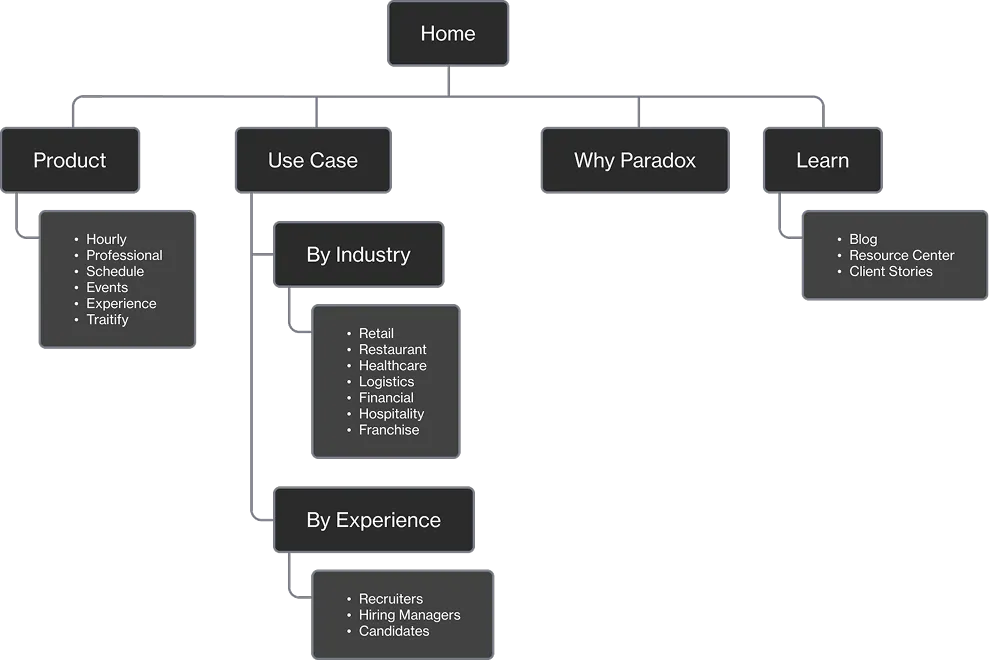
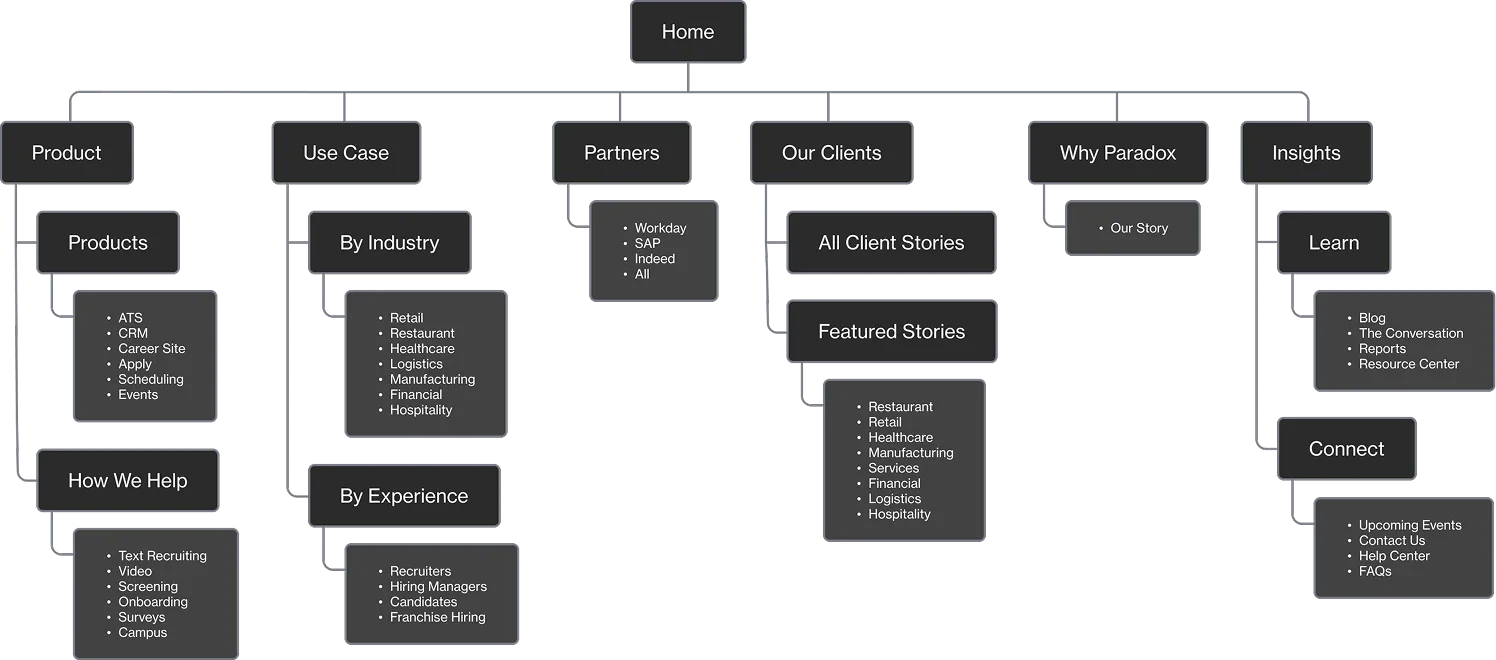
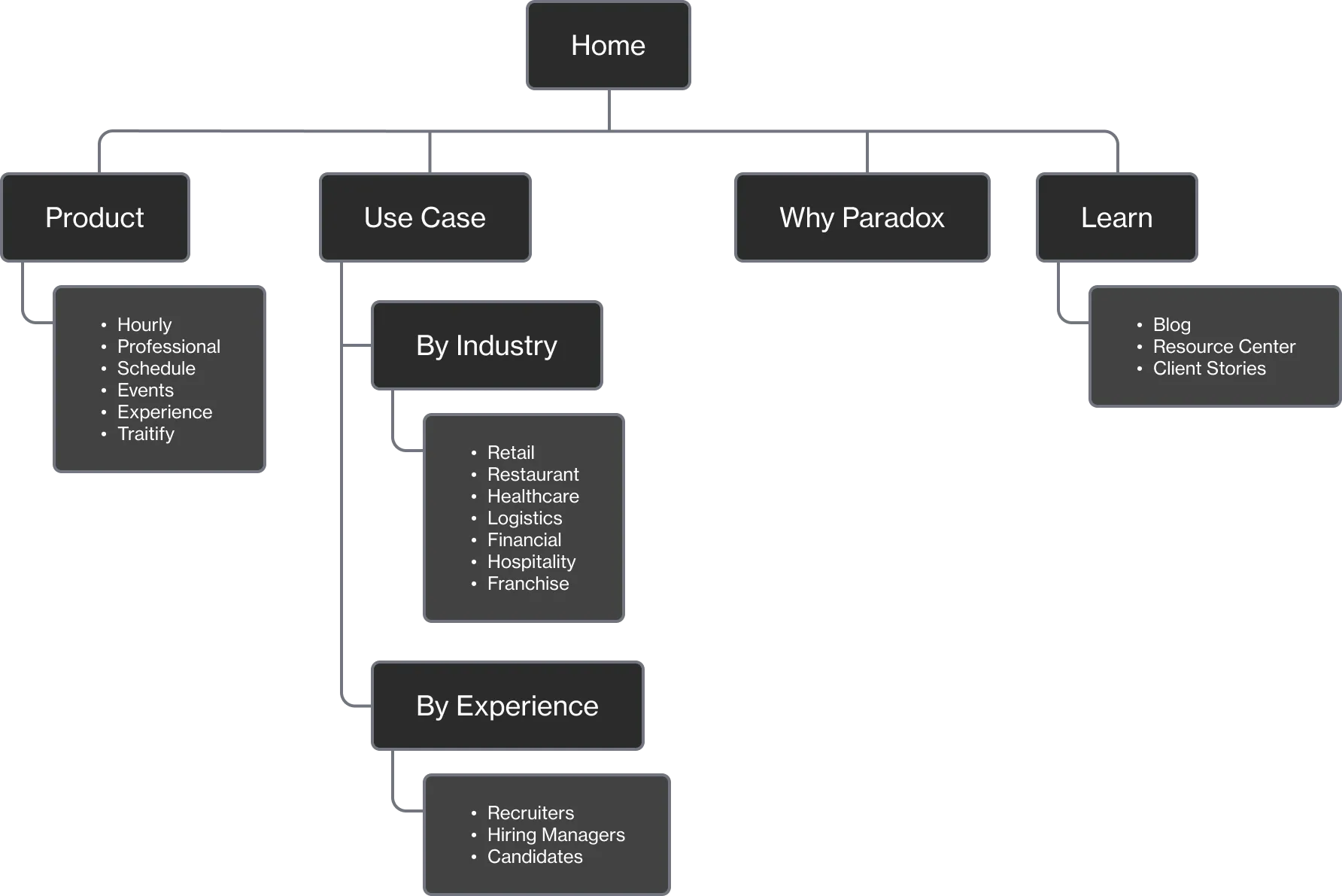
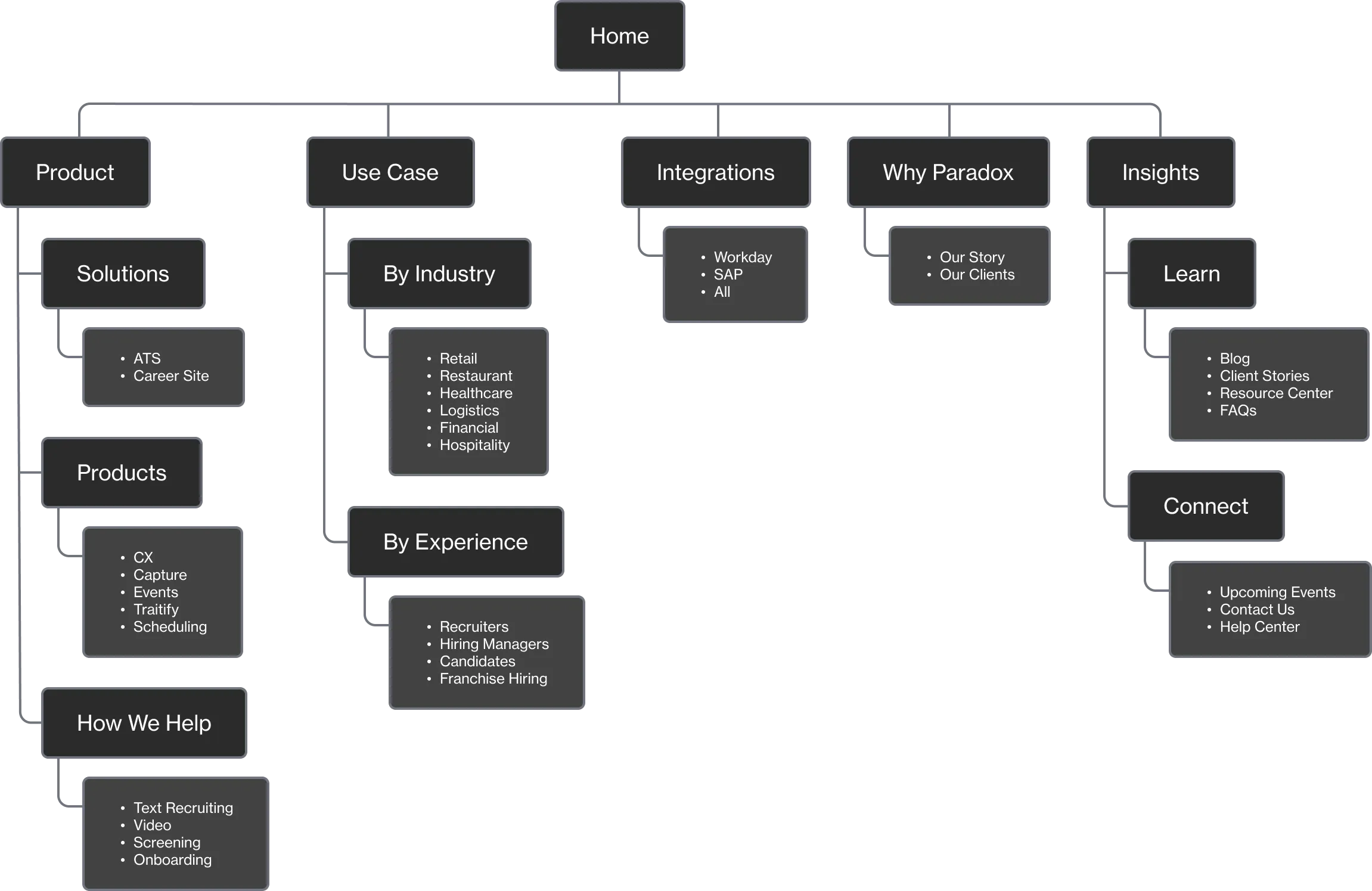
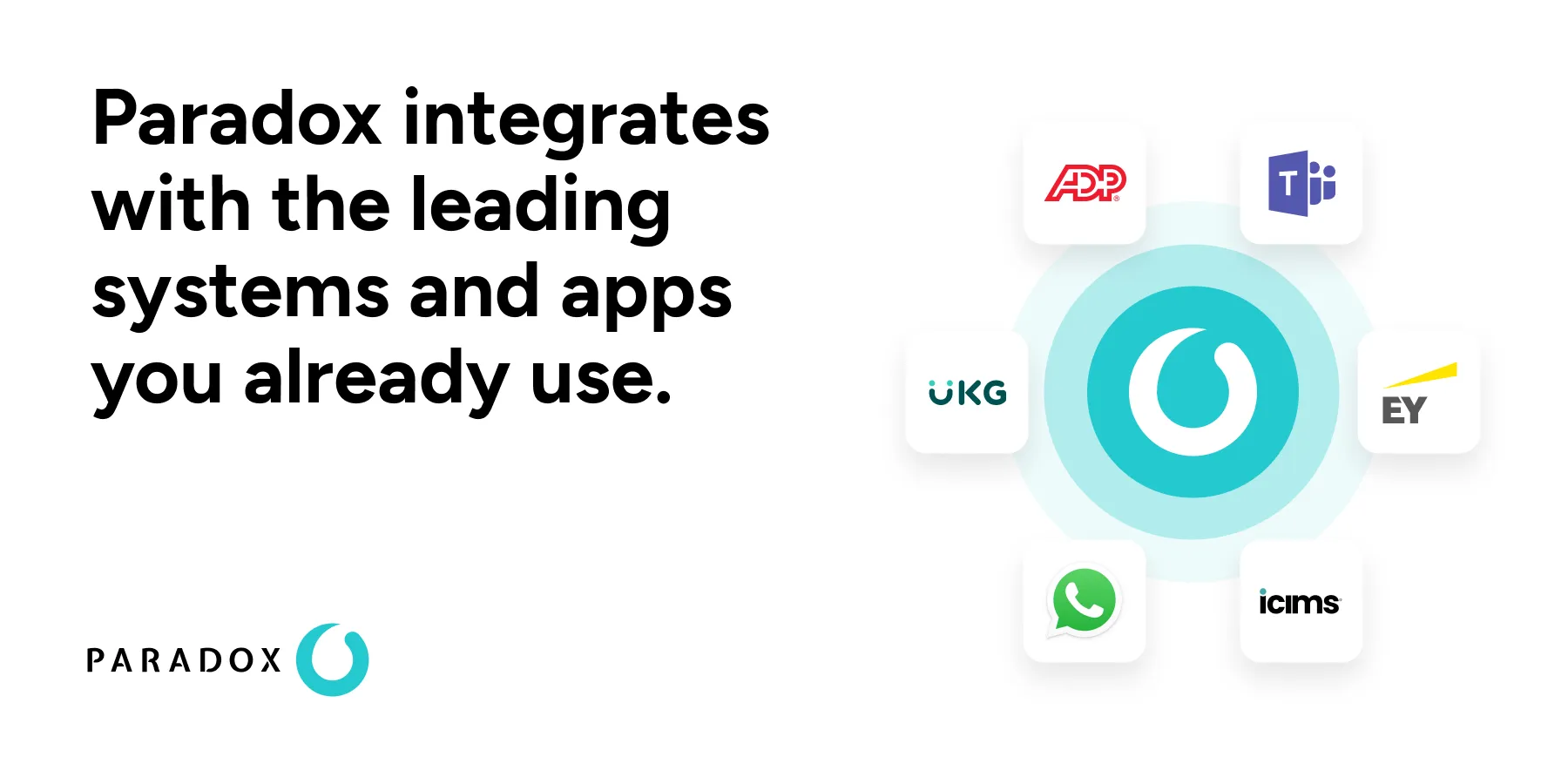
To guide our users, I designed an intention-based web navigation with distinct paths for product (micro) and use cases (macro). As the site scaled, I added unique paths for integrations (micro) and content within the resource center (micro and macro). These paths helped buyers quickly identify pain points, building trust and credibility.
As product packaging evolved over the years to meet the needs of the market, I partnered with marketing and product leaders to align on goals, target audiences, and the ROI of the latest packages to ensure visual assets and navigation supported these initiatives.
I also streamlined page hierarchy, reducing bounce rates by prioritizing impactful information above the fold. User sessions were extended by surfacing related resources and social proof throughout their journey. Every experience concluded with a clear call to action to move prospects through the funnel.
Initial site IA after Series B
Site IA after ATS product launch
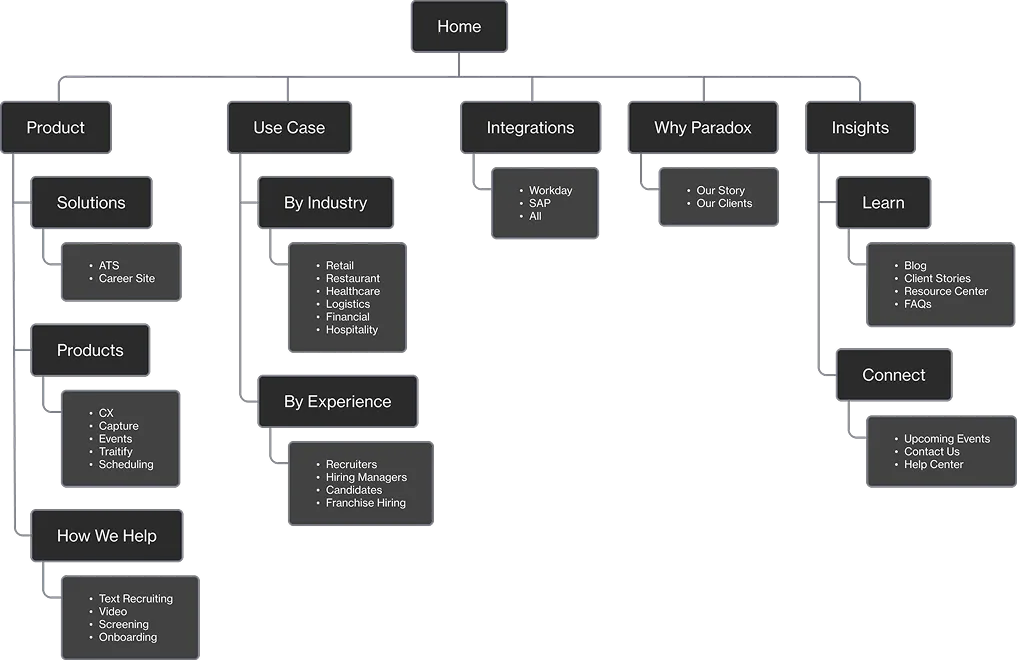
Final site IA at Workday acquisition
2/6
Initial site IA after Series B
Site IA after ATS product launch
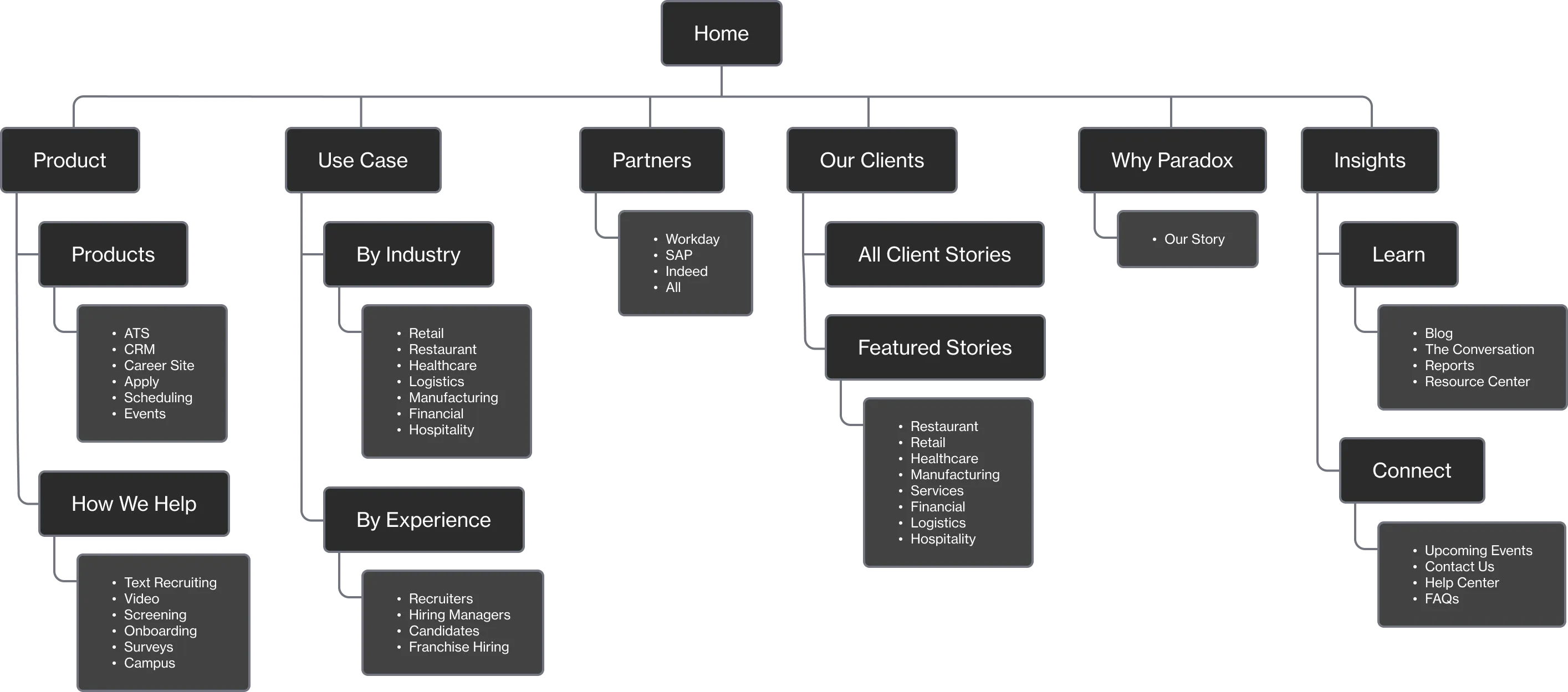
Final site IA at Workday acquisition
Brand strategy
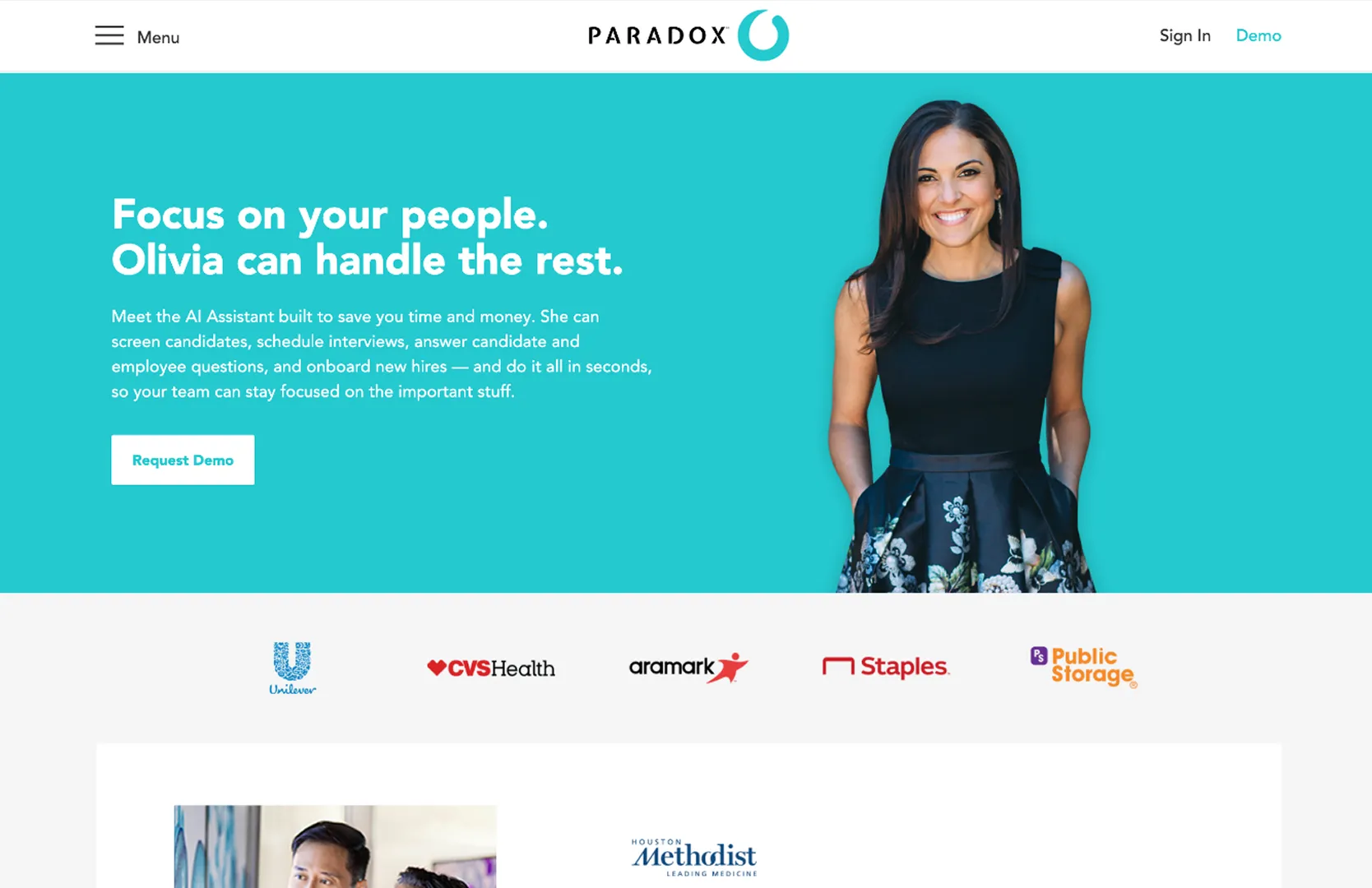
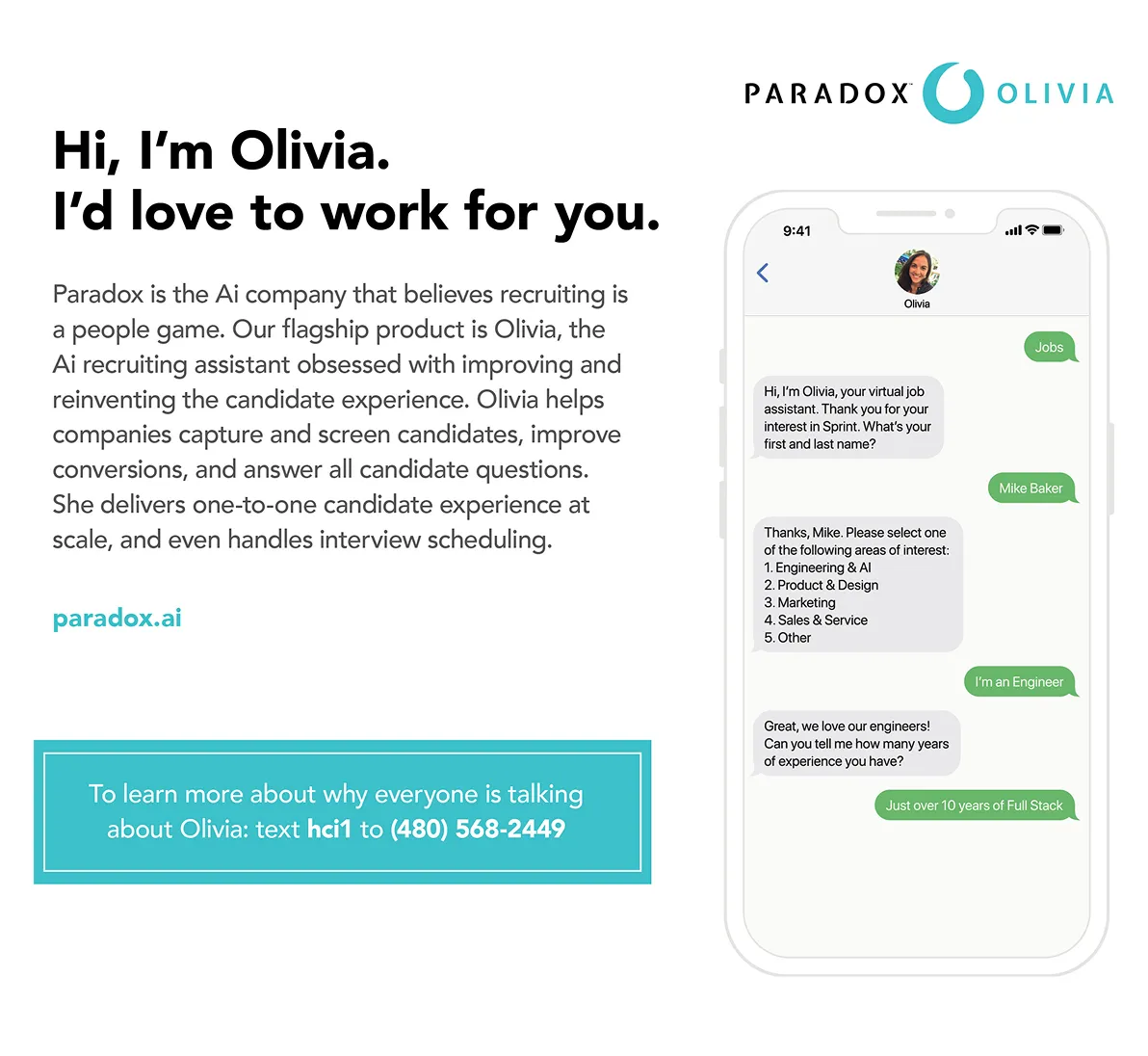
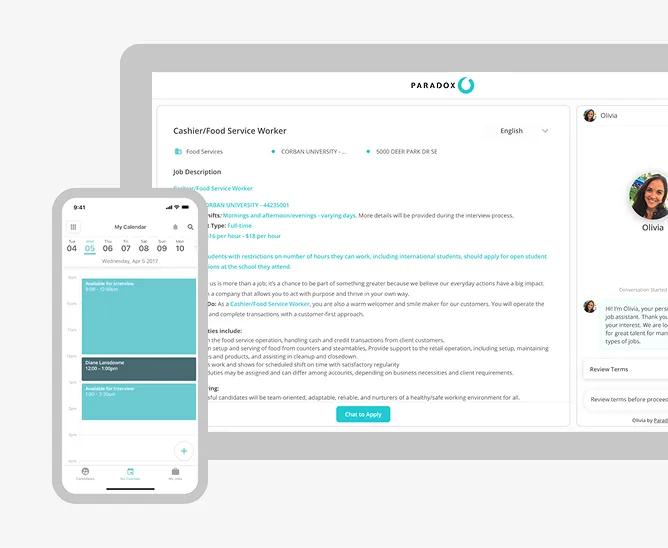
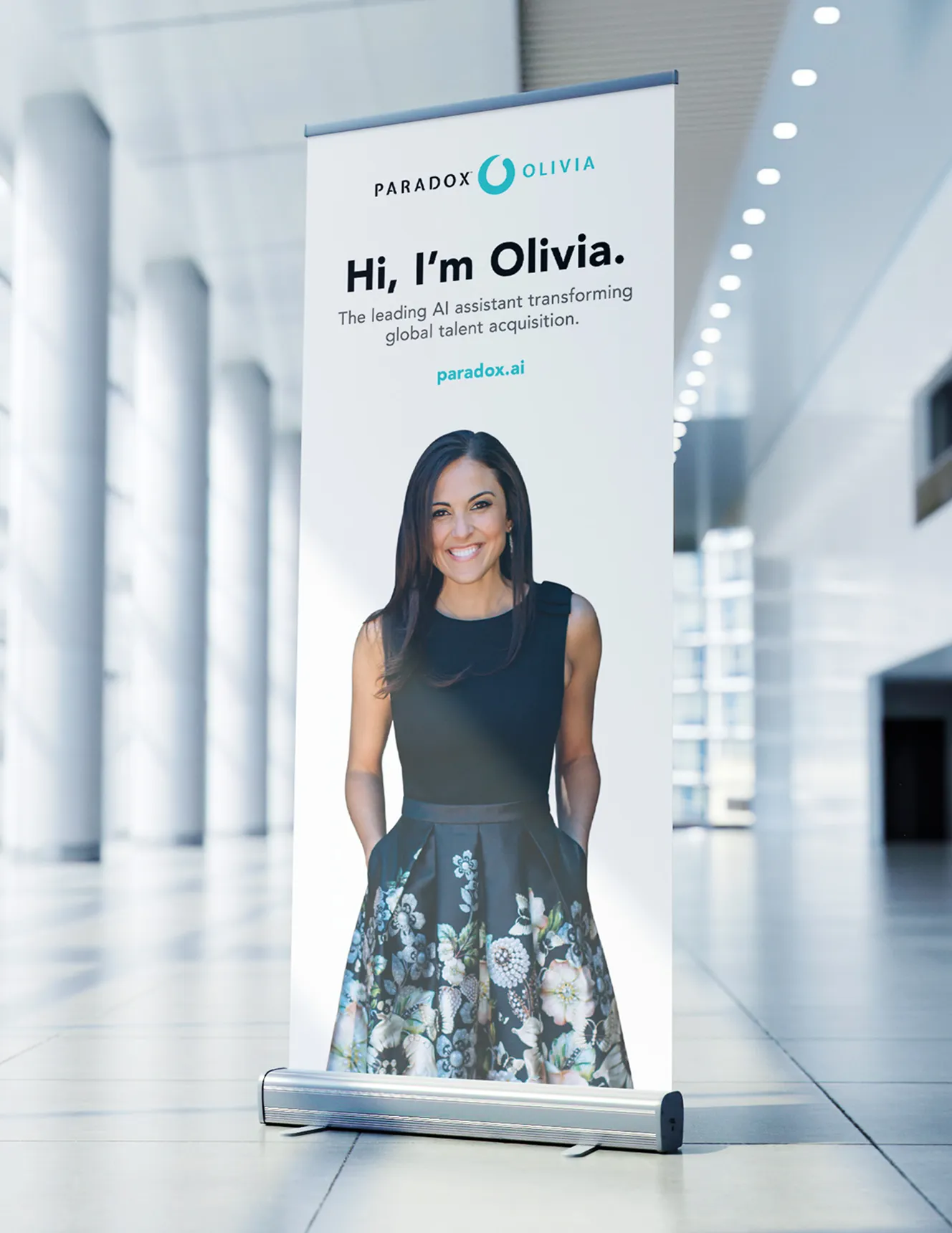
While the initial visual identity had strong typographic and minimalist foundations, the team recognized the opportunity for Paradox to better connect with problem-focused SaaS buyers. Early marketing relied heavily on an image of the founder’s wife—the namesake behind Paradox’s AI assistant “Olivia”—which required deeper context and didn’t provide an at-a-glance understanding of the software.
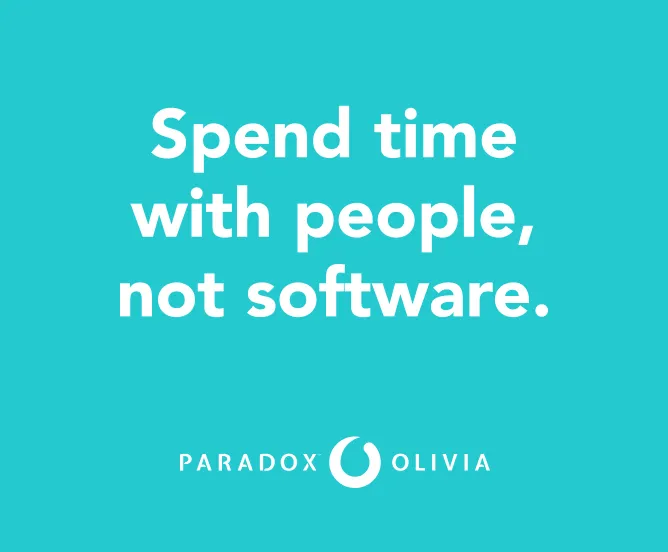
Visually, the product was represented through matte mockups and 2D vectors that felt too soft for a high-tech roadmap. Even the brand’s primary blue color lacked the depth and contrast needed for full-bleed digital backgrounds. With all this in mind, I set out to shape a brand identity that would clarify Paradox’s offerings
and match the caliber of its tech.
Previous visual identity

Developing the new identity
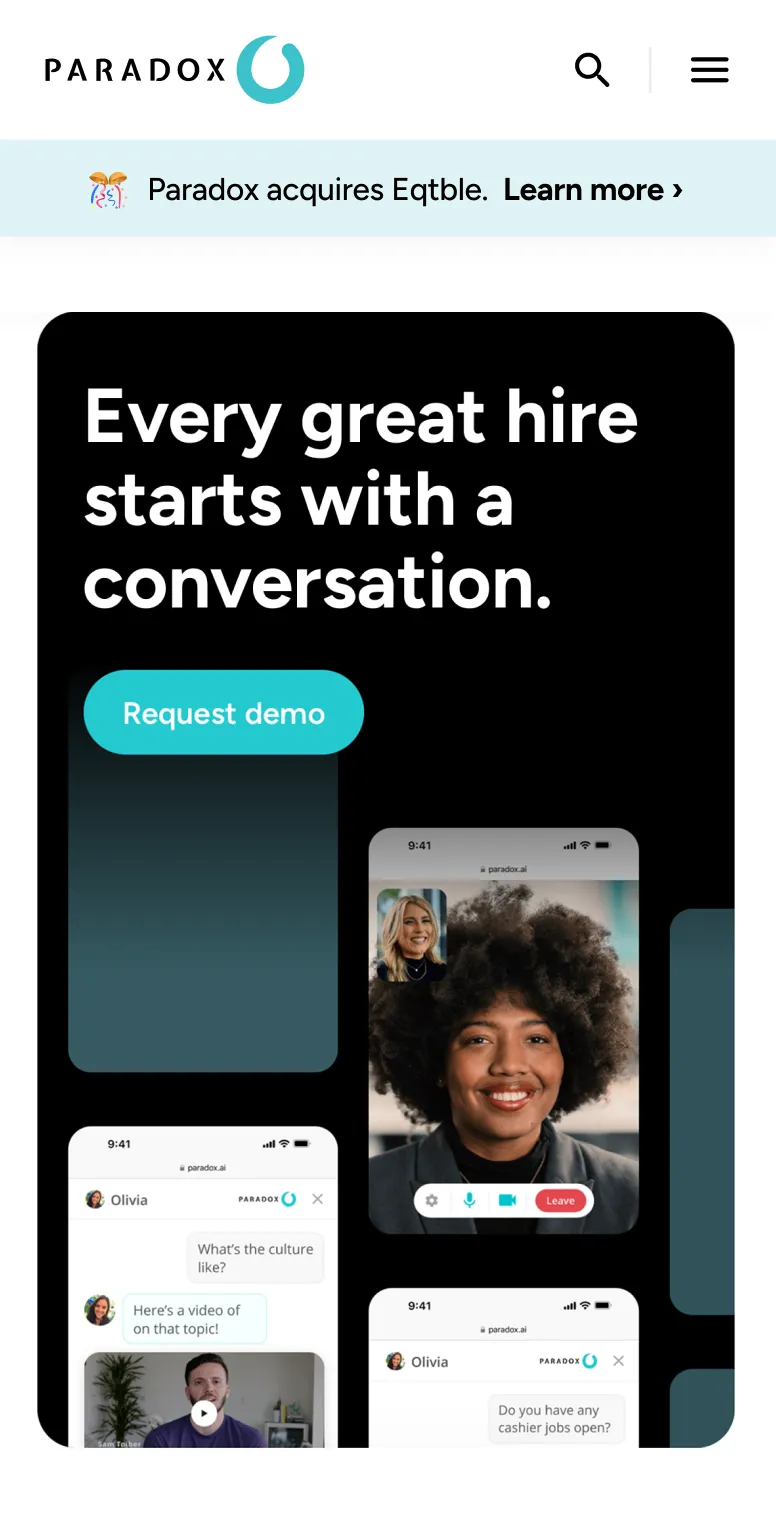
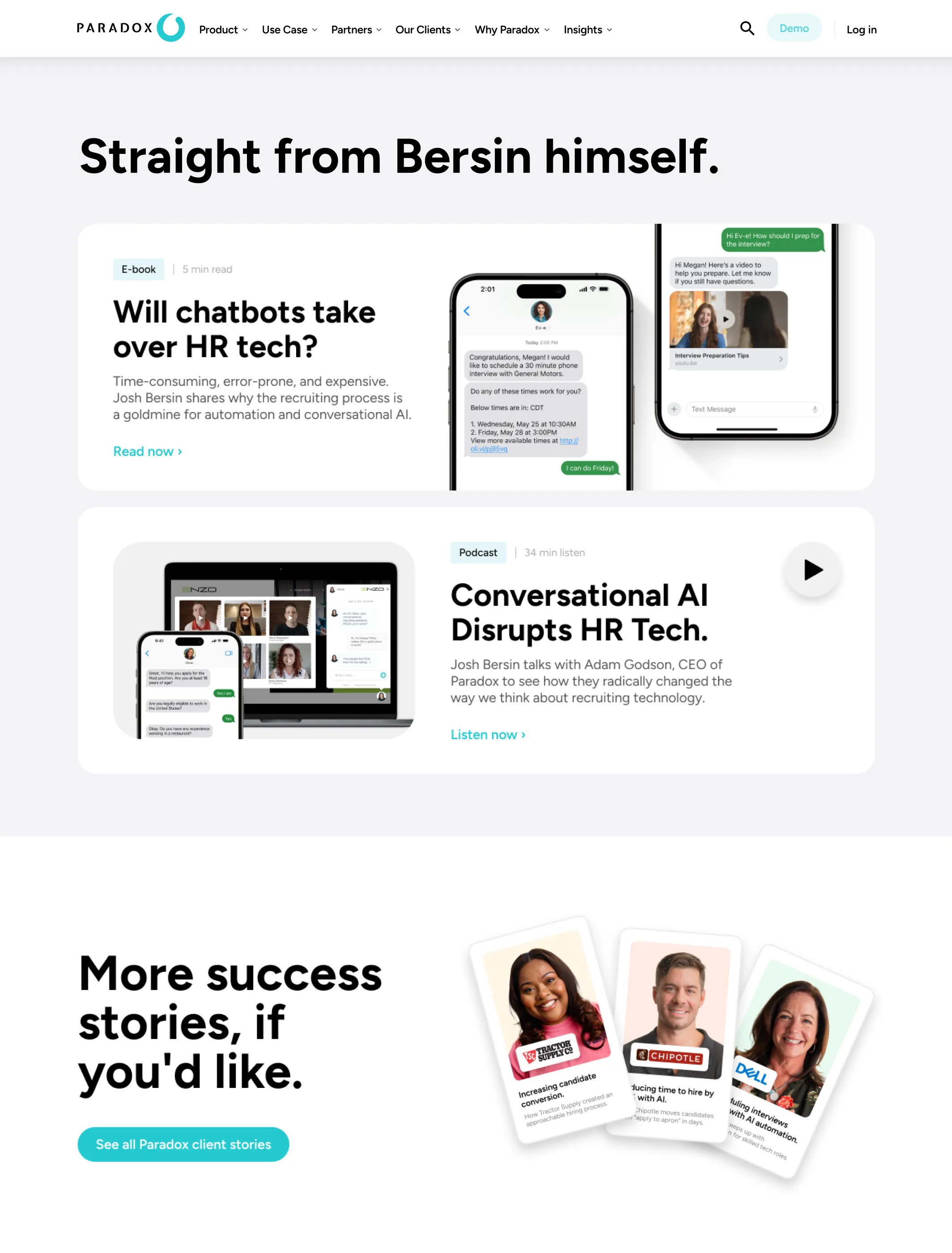
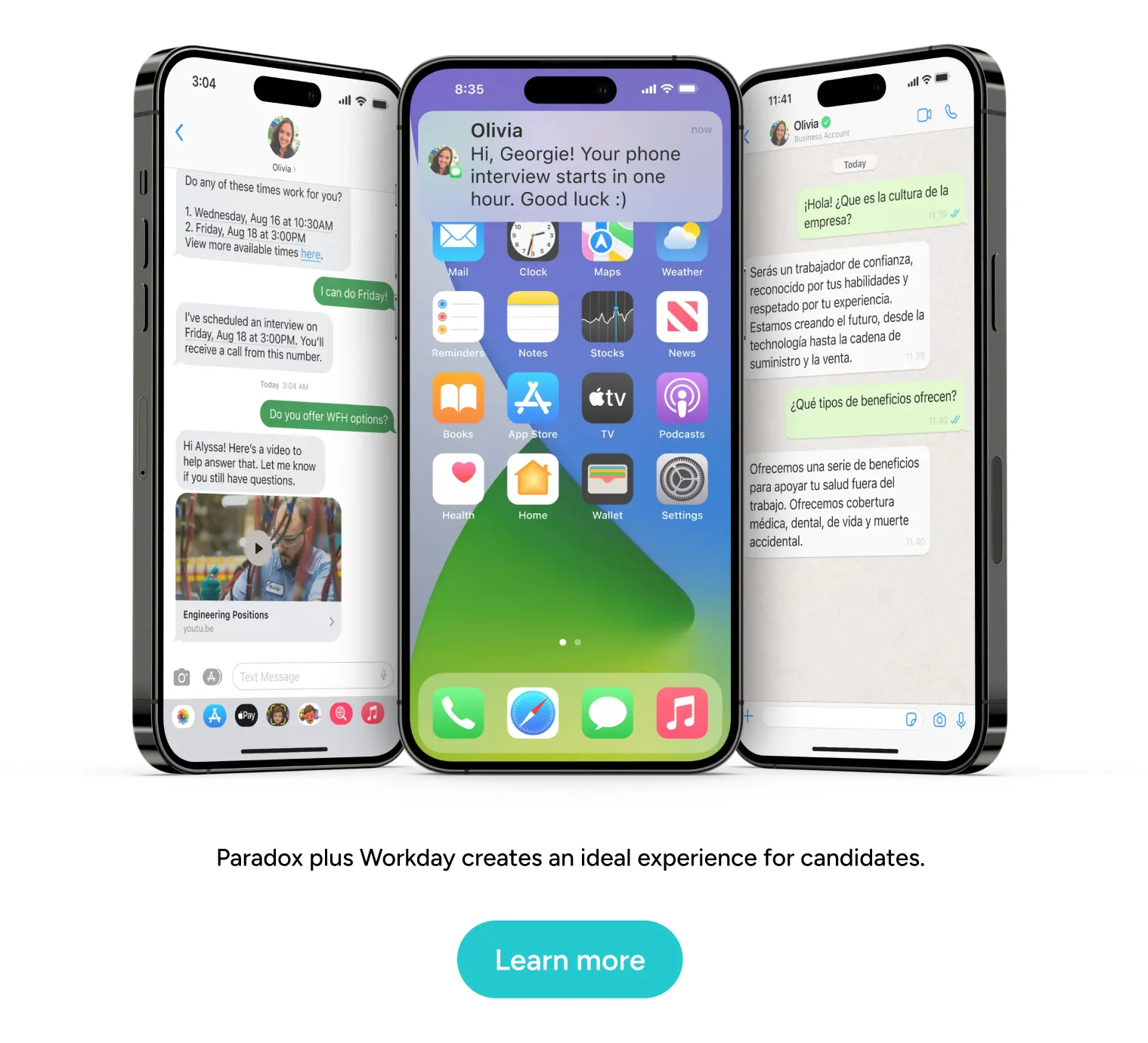
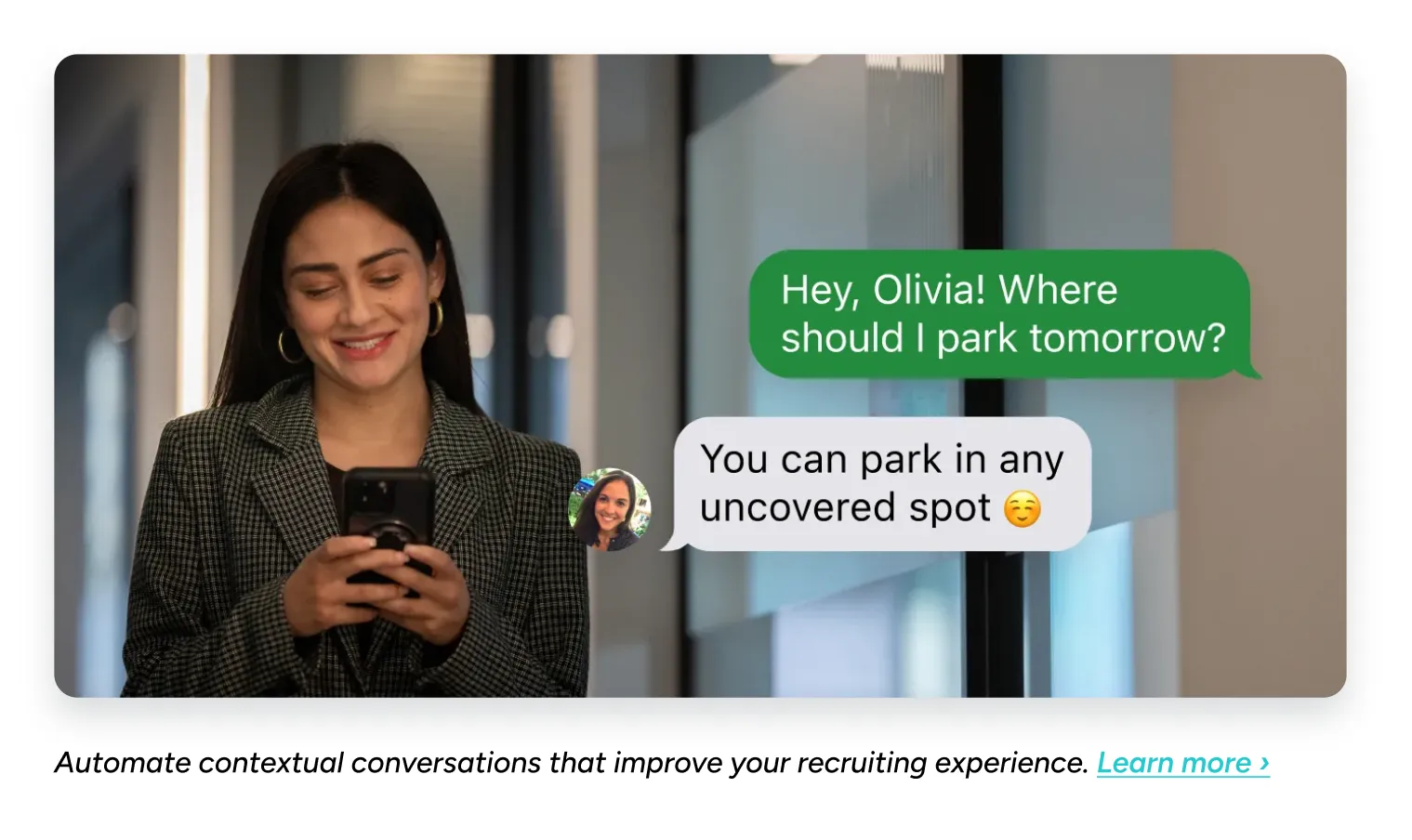
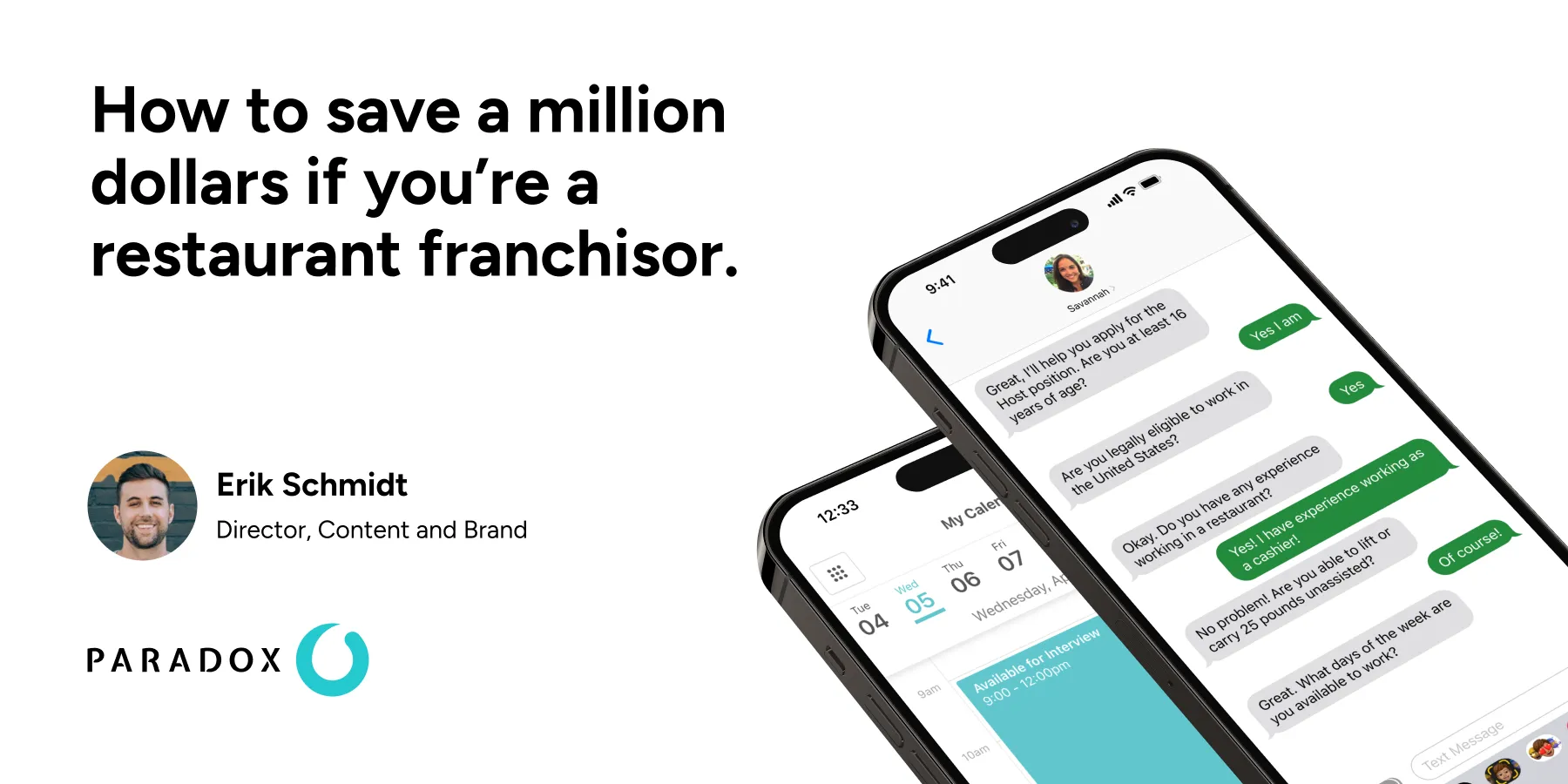
Intent-driven design was key to attract and engage more prospects. I shifted the visual focus from introducing the “Olivia” persona to introducing the software itself and its ROI—simple chat experiences, reduced time to hire, 24/7 candidate support, and more. I kept Olivia’s profile picture in chat interfaces as a unique humanizing element, but reserved her full image for targeted brand storytelling.
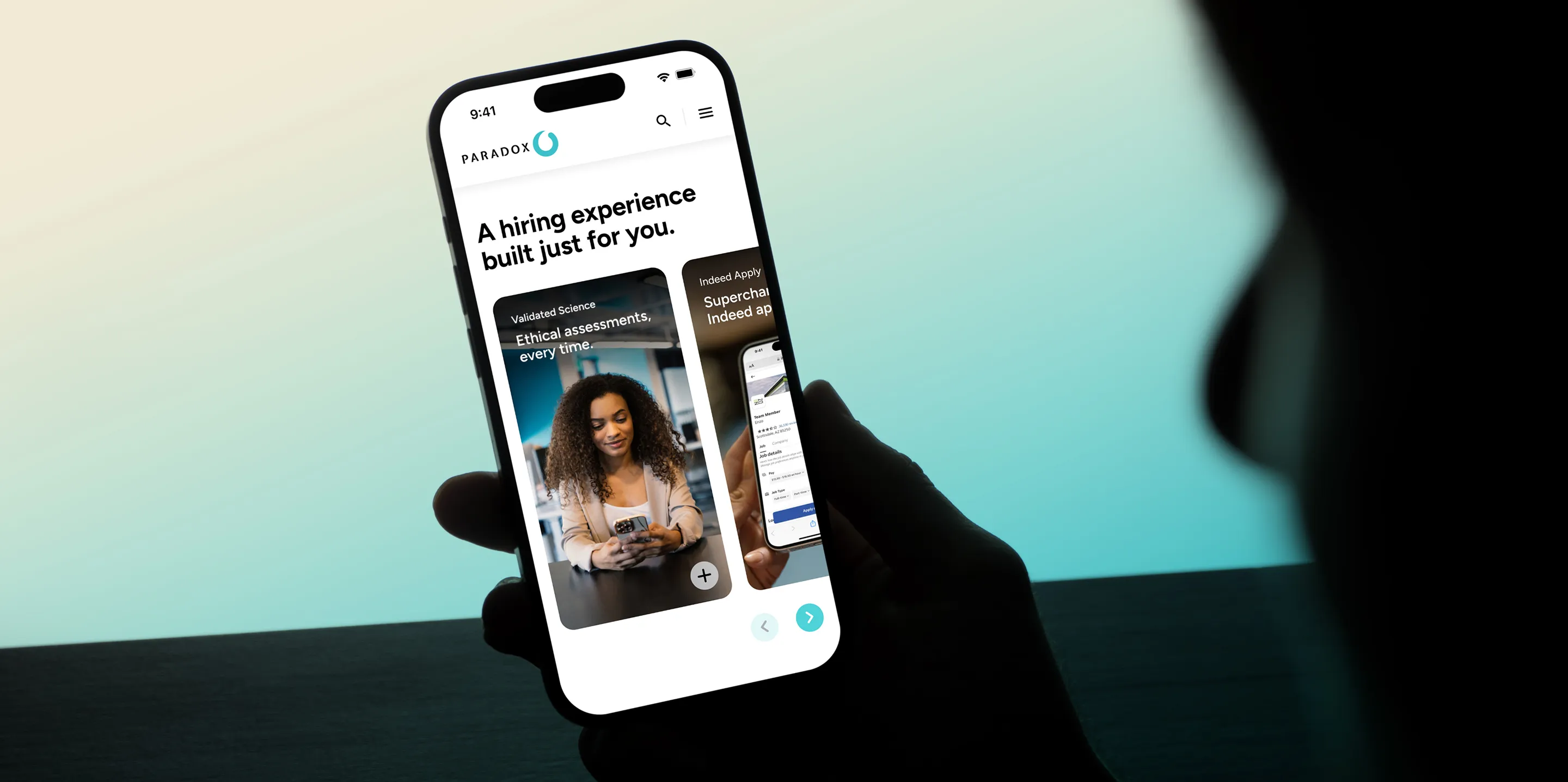
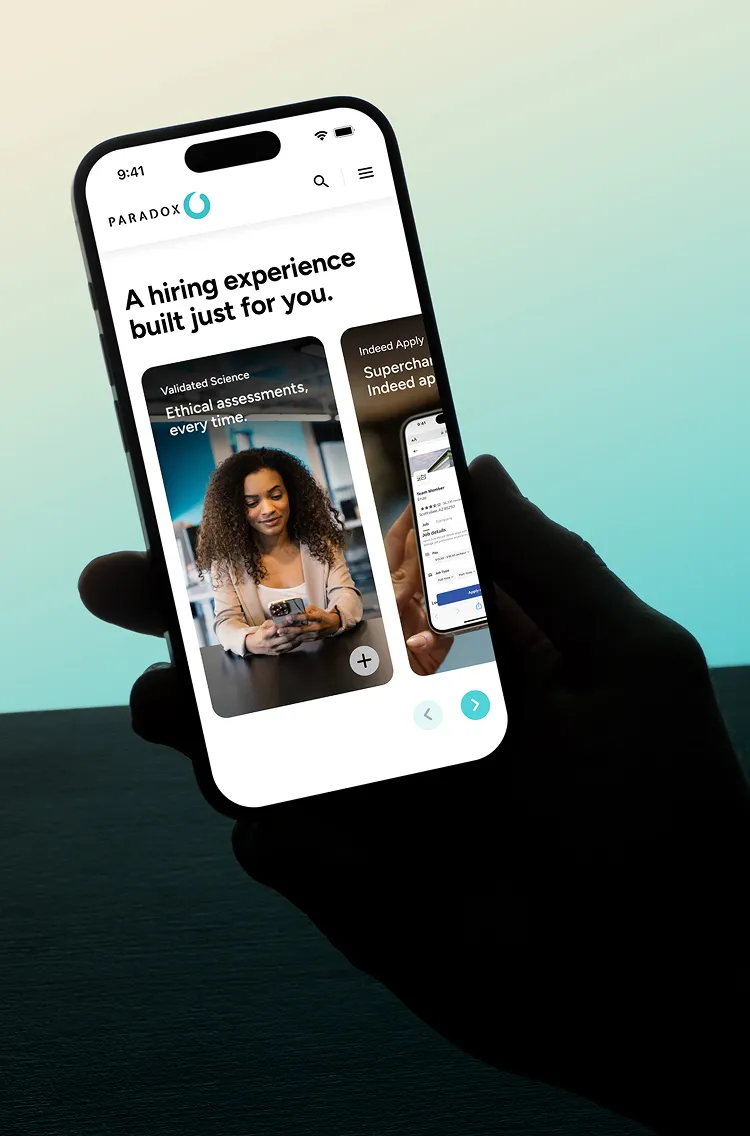
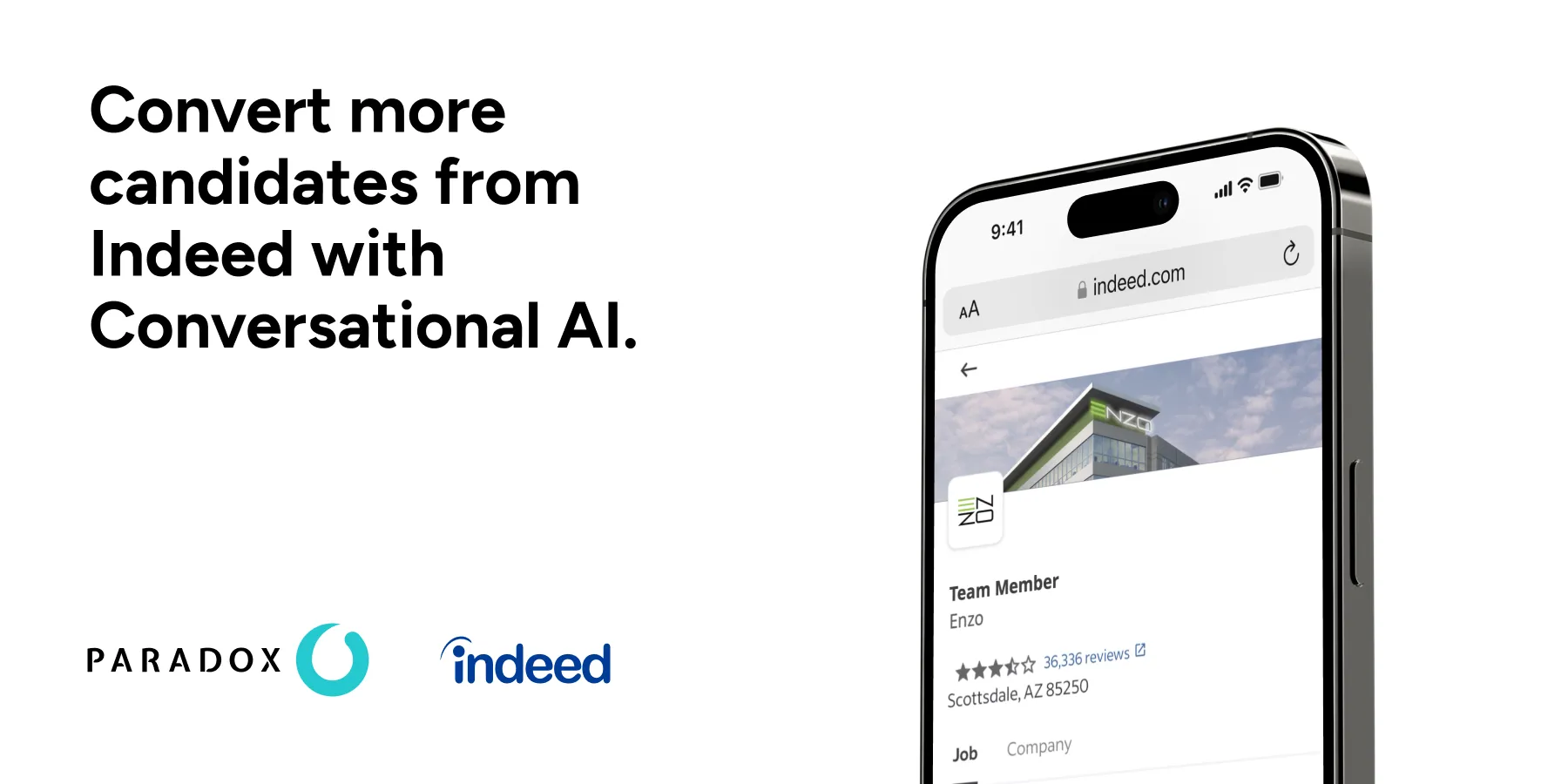
I elevated product visuals by using photorealistic mobile devices that emphasized on-the-go ease of use. While the Paradox blue was a valuable part of their identity, I pivoted towards a “less is more” use of color to help the brand feel more confident and modern. This approach leaned into the brand’s minimalistic roots and disrupted traditional recruiting marketing with upscale visuals.
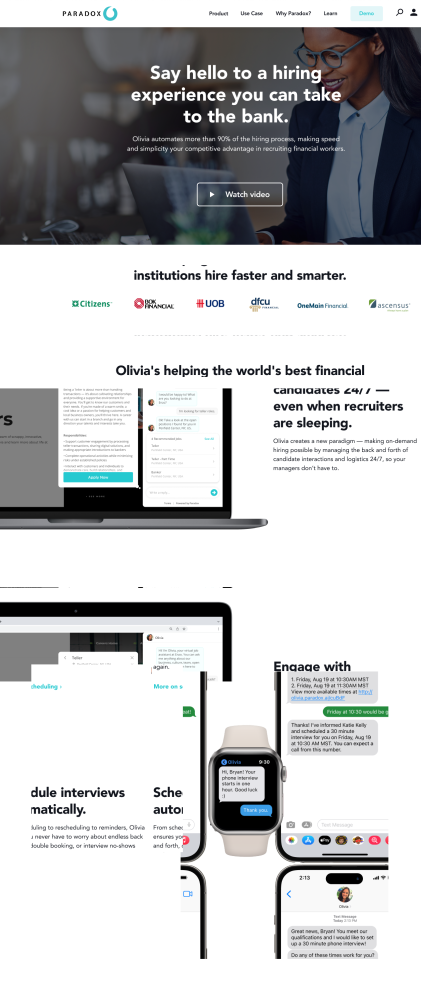
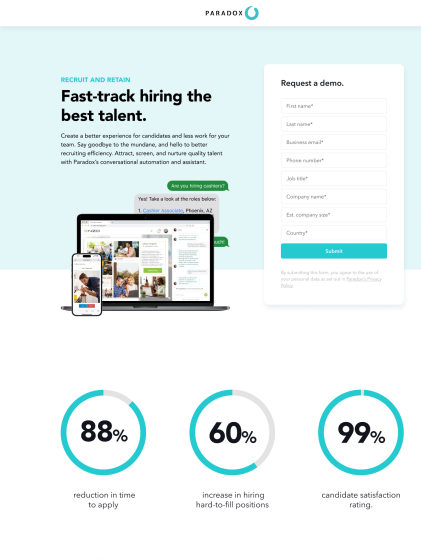
As Paradox evolved its marketing, I navigated a complex stakeholder environment with conflicting creative ideas and priorities. I proposed iterative changes by launching small elements with requested styling, while keeping the core user flow aligned with the current identity. This allowed for the brand experimentation needed in a startup environment, while also ensuring major design decisions stayed grounded in shared business goals.
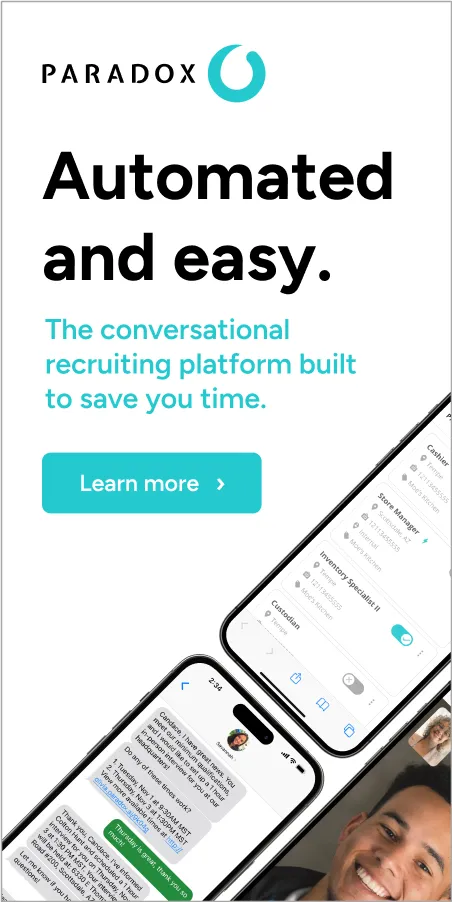
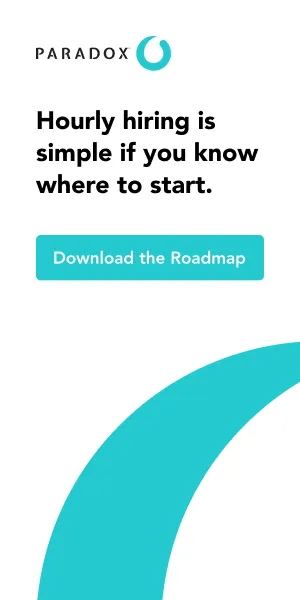
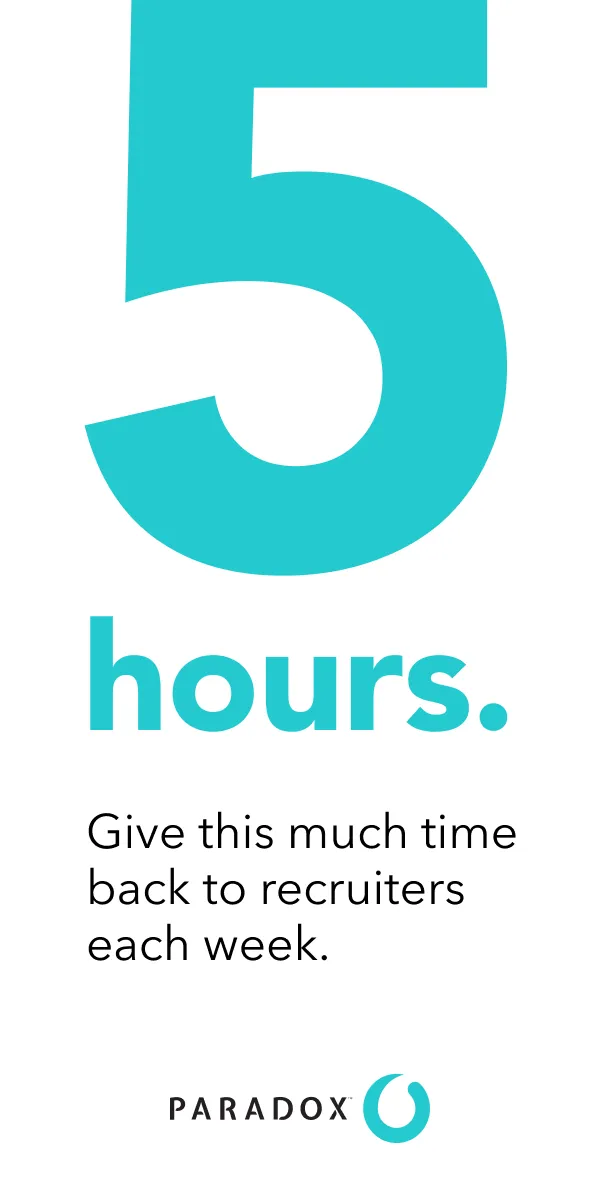
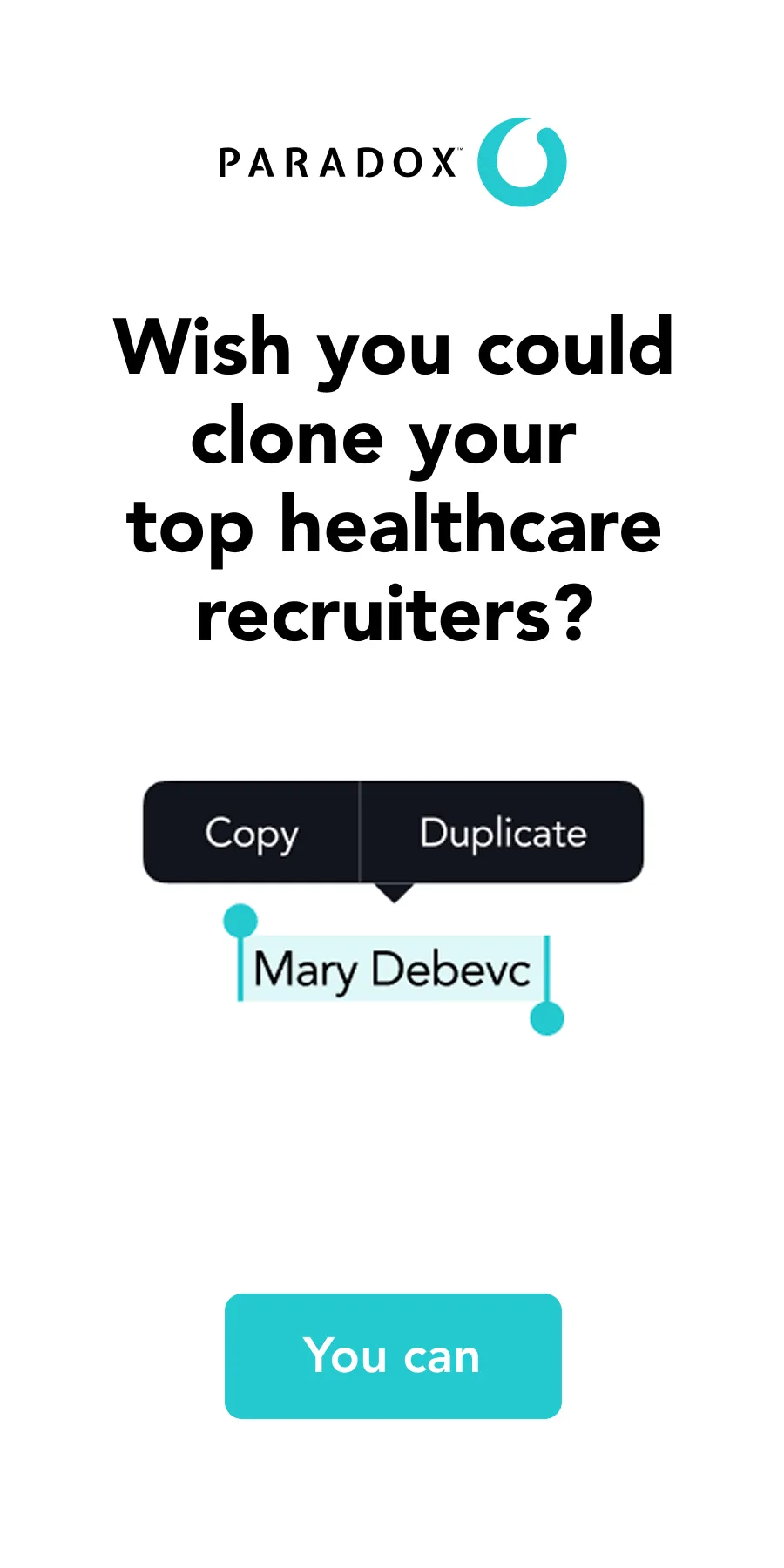
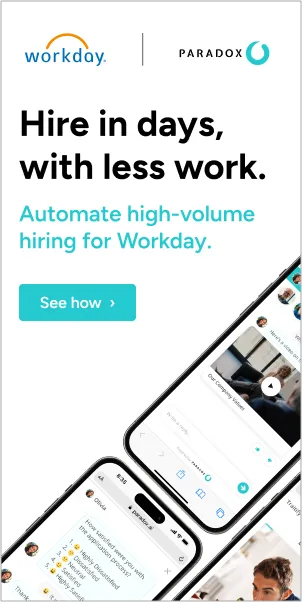
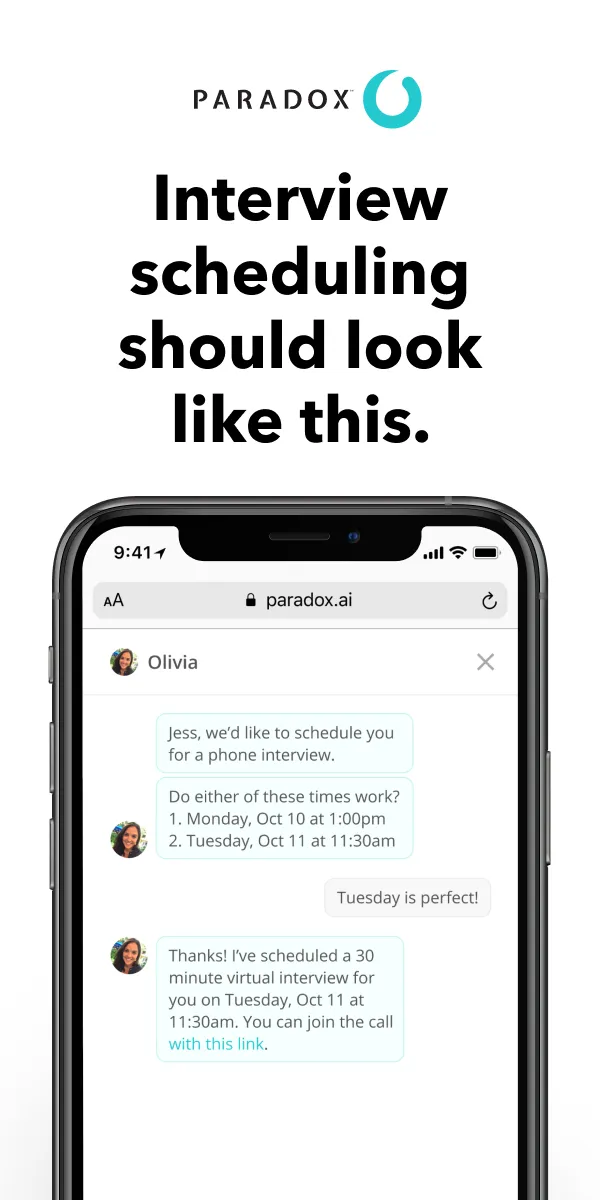
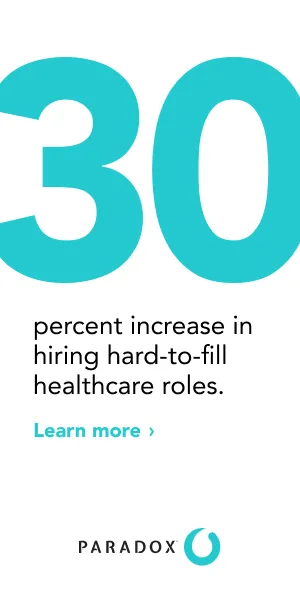
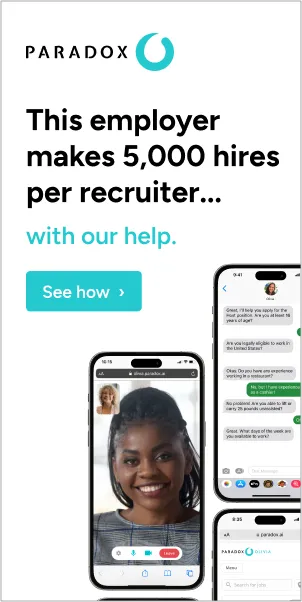
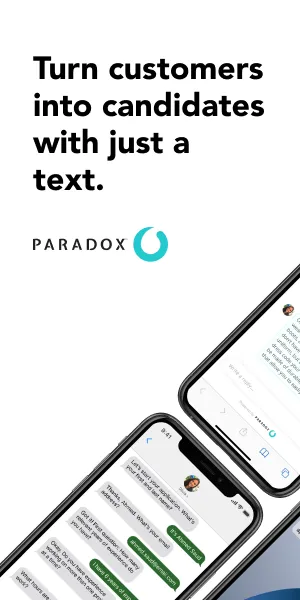
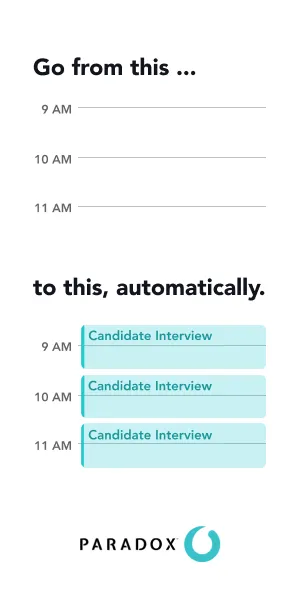
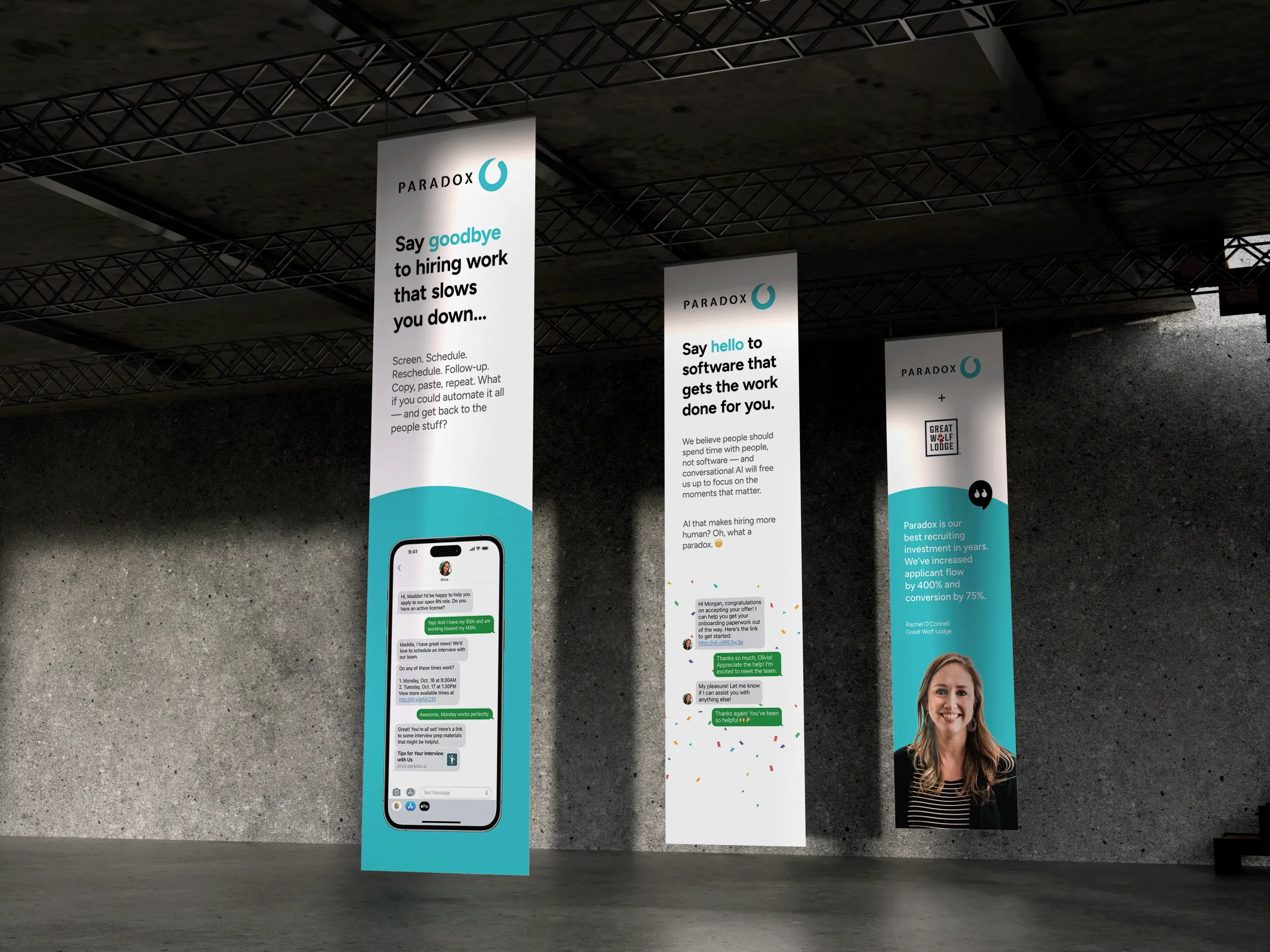
These visual shifts resulted in upward trends in engagement, conversion, and pipeline acceleration—proving we were on the right path and creating a foundation for further brand refinement.
Creative
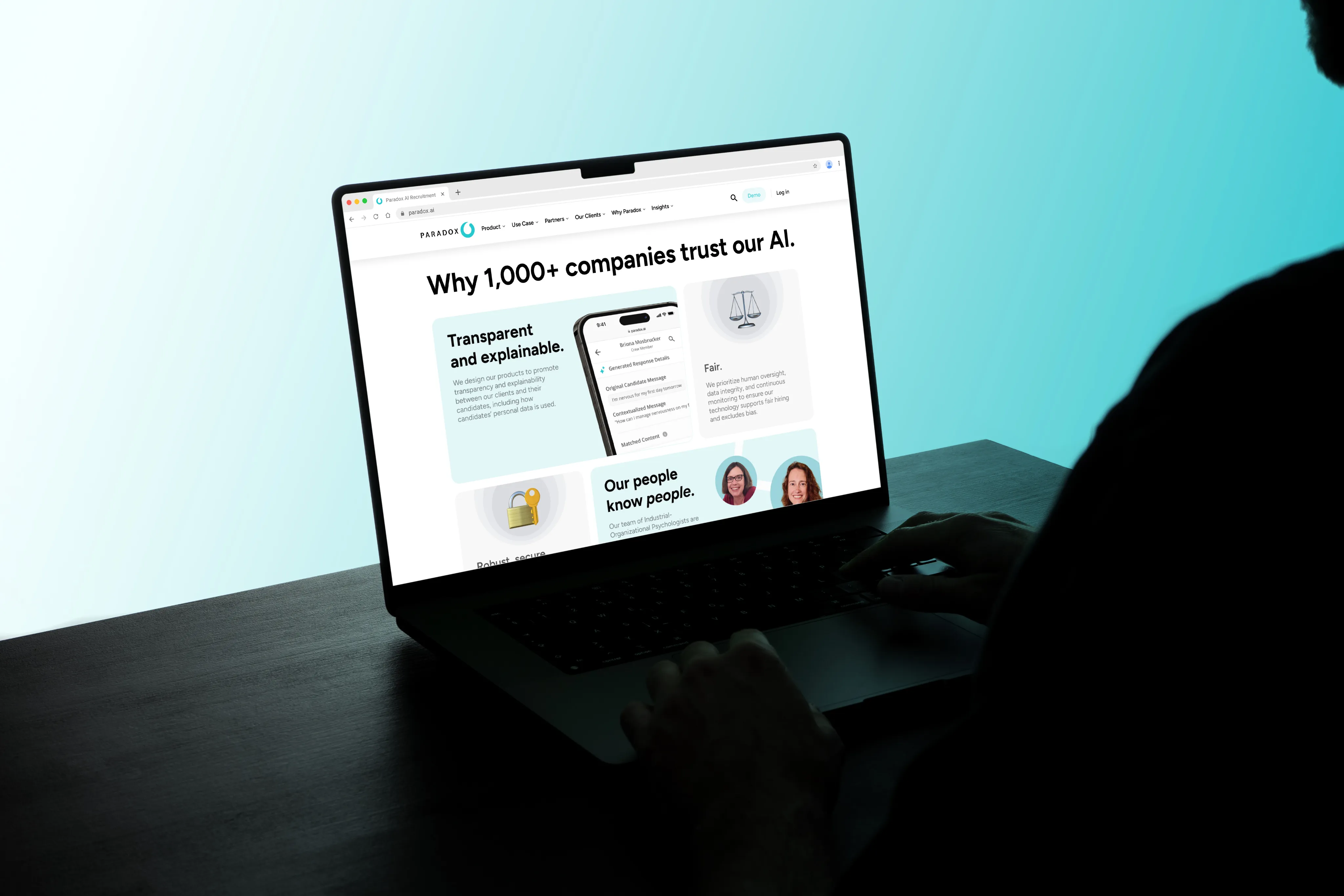
The final visual identity
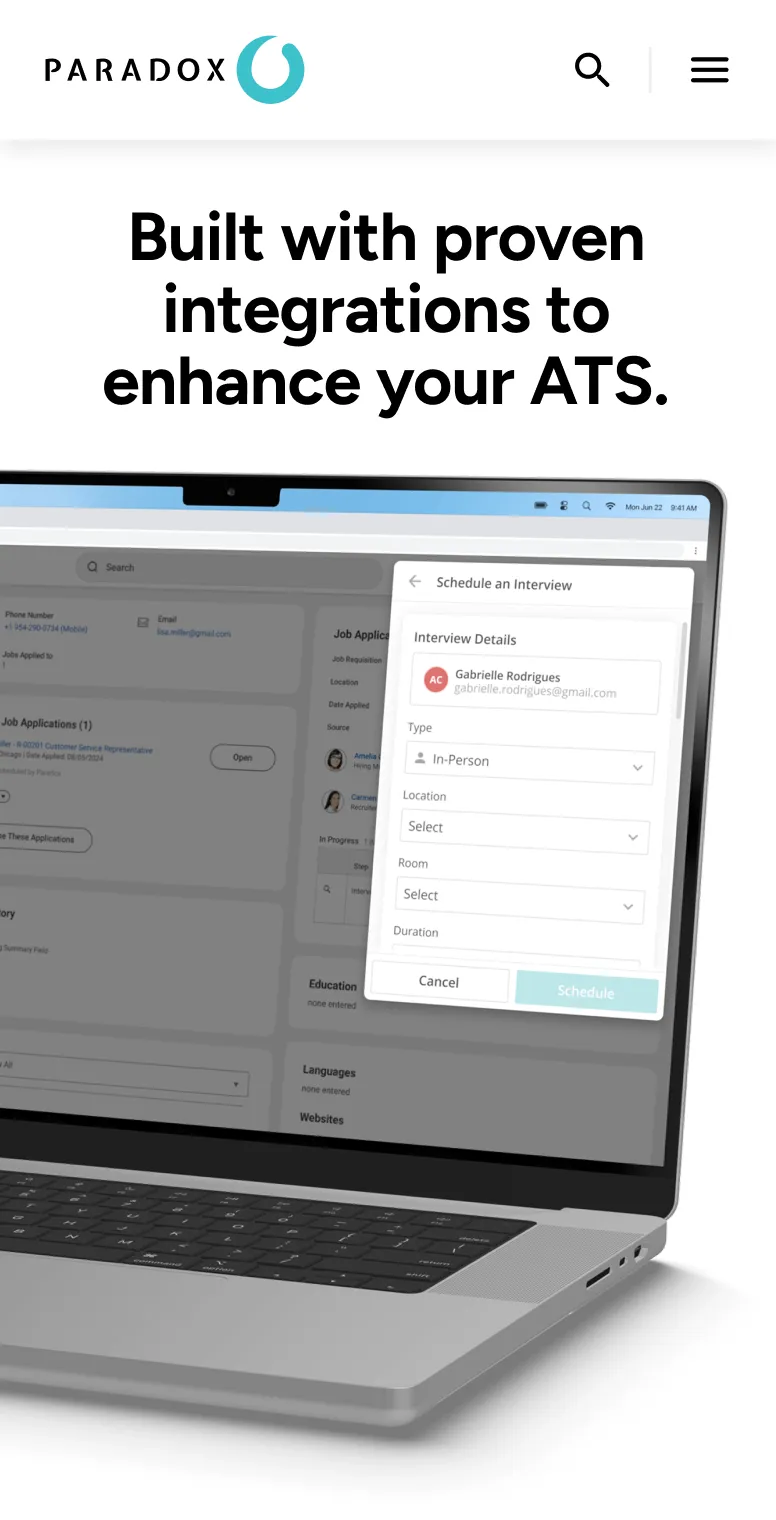
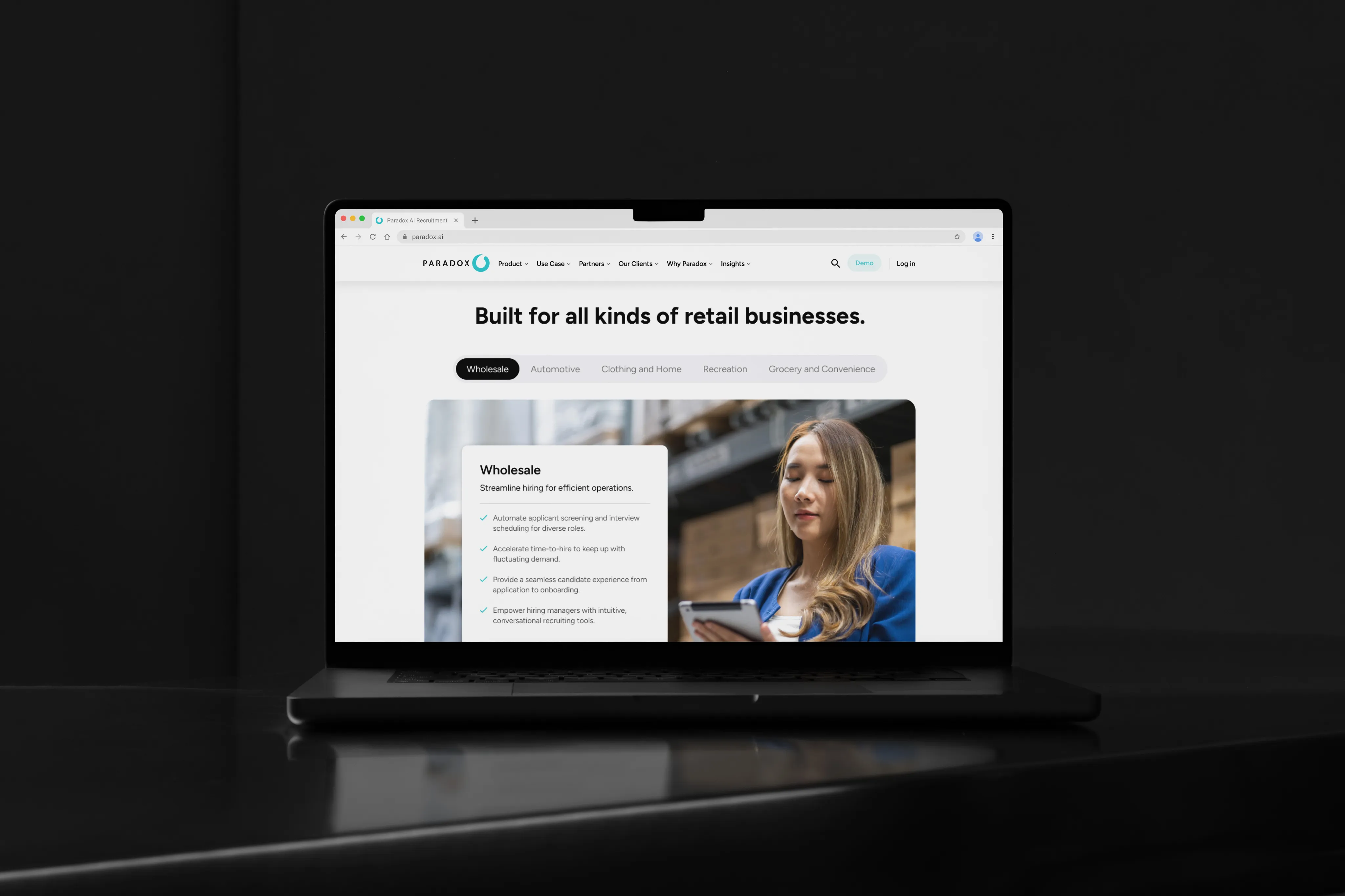
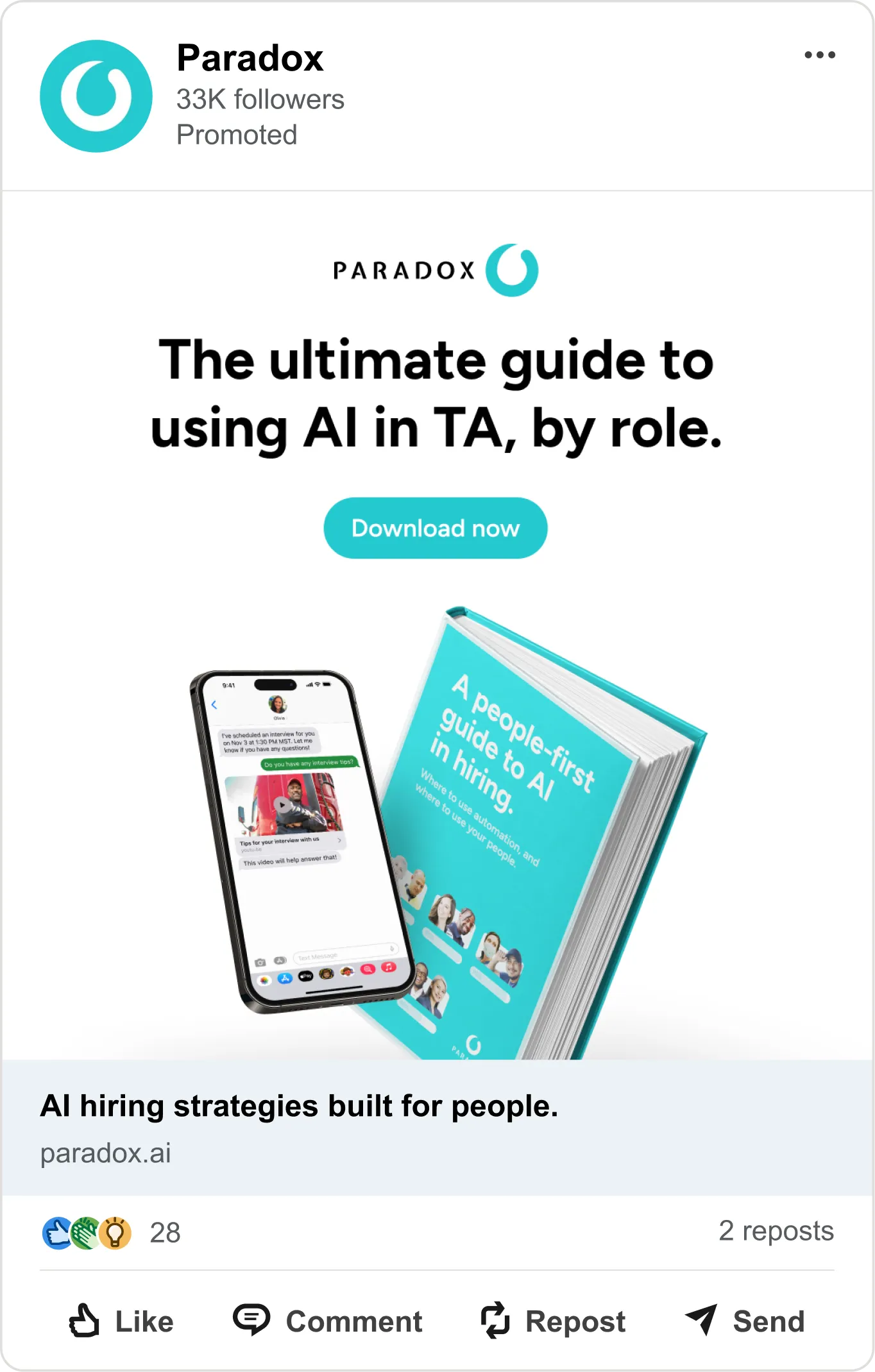
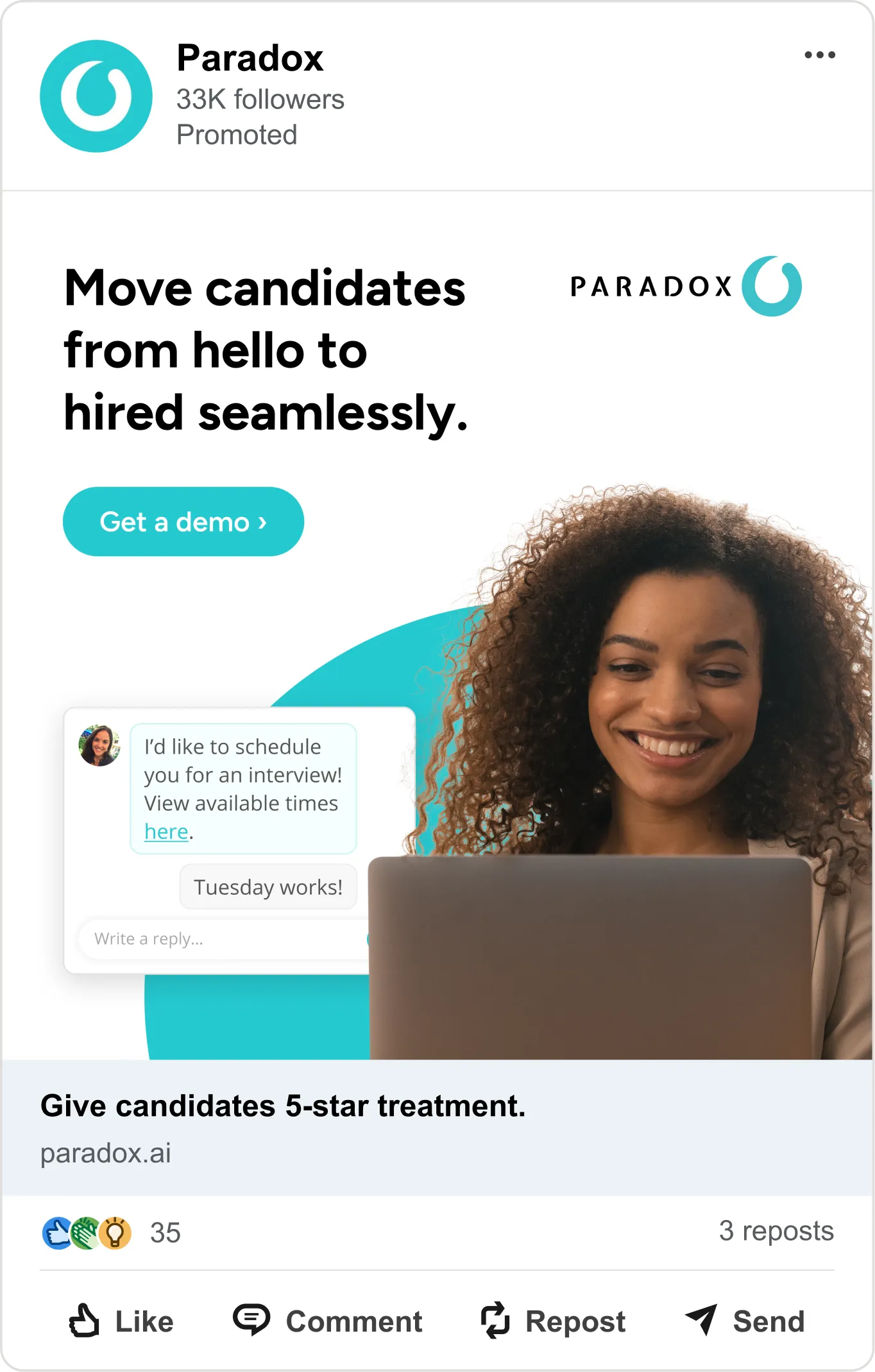
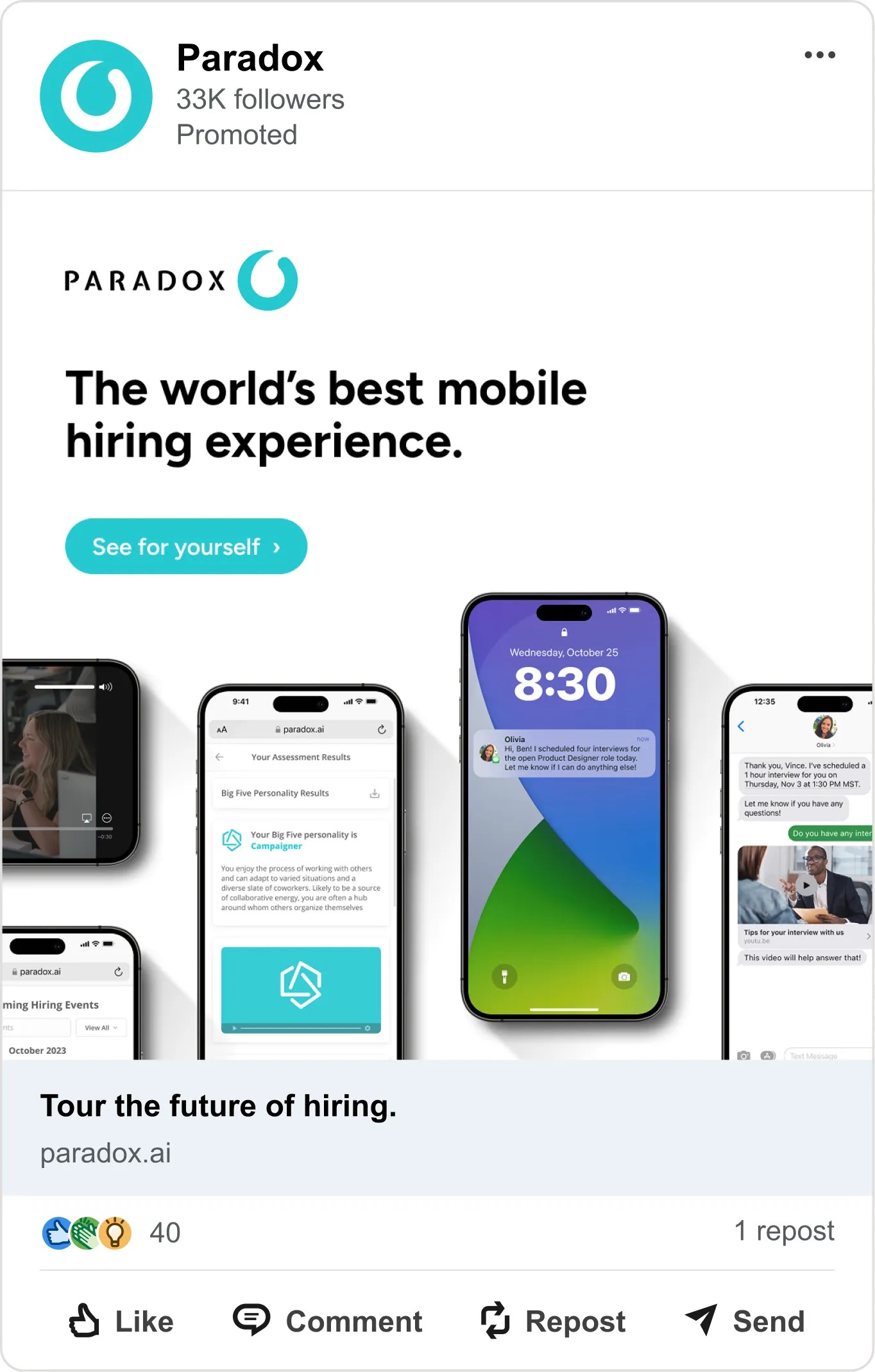
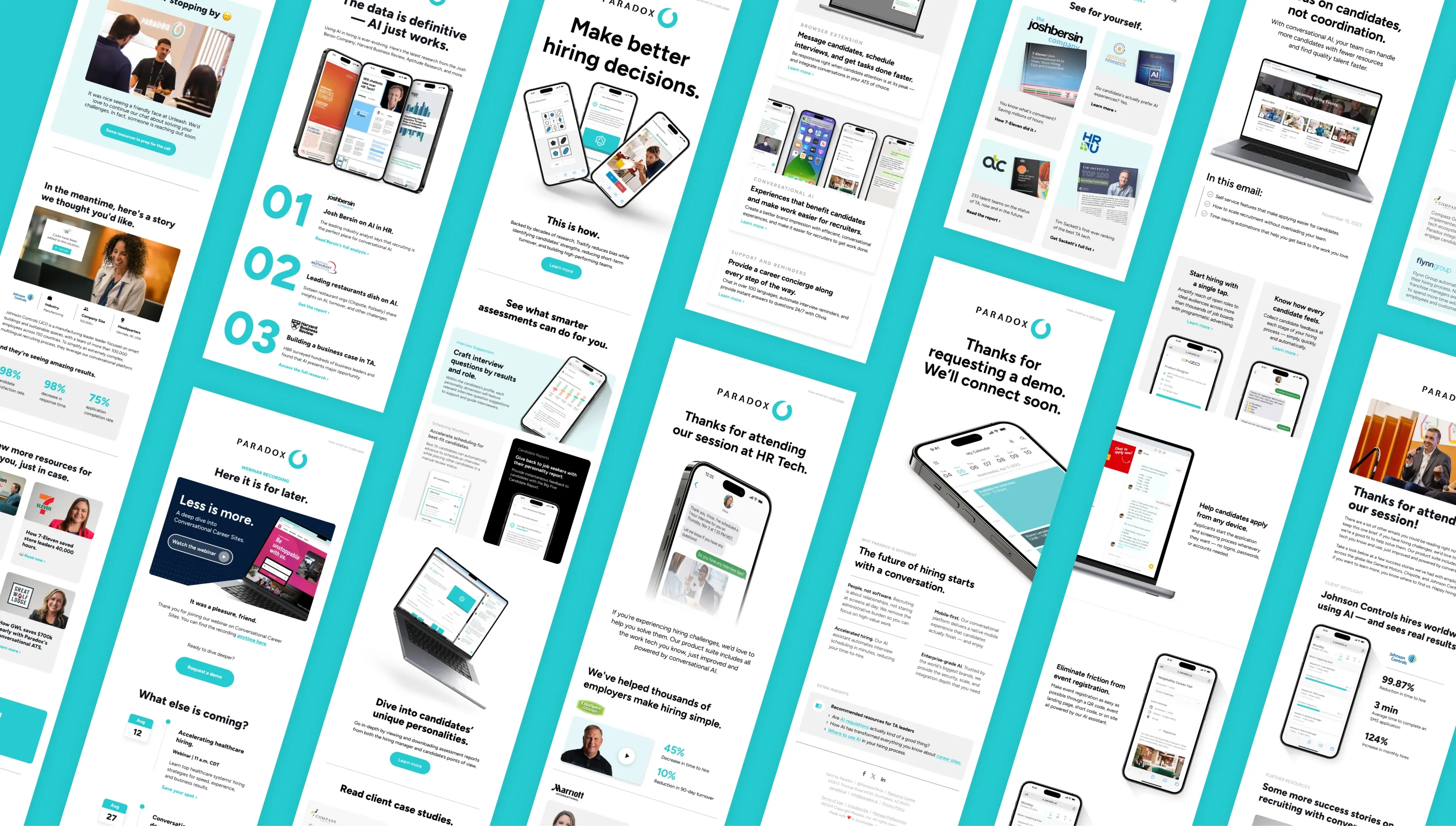
After making those initial changes, the team recognized that the brand could take one step closer towards a premium market position, while still reinforcing Paradox’s value props. I replaced front-facing phones with dynamic, 3D device renders—their glossy reflections and rich shadows making the software feel almost luxurious. I highlighted colorful, visually interesting UI for retail-grade visuals that still showcased real user workflows.
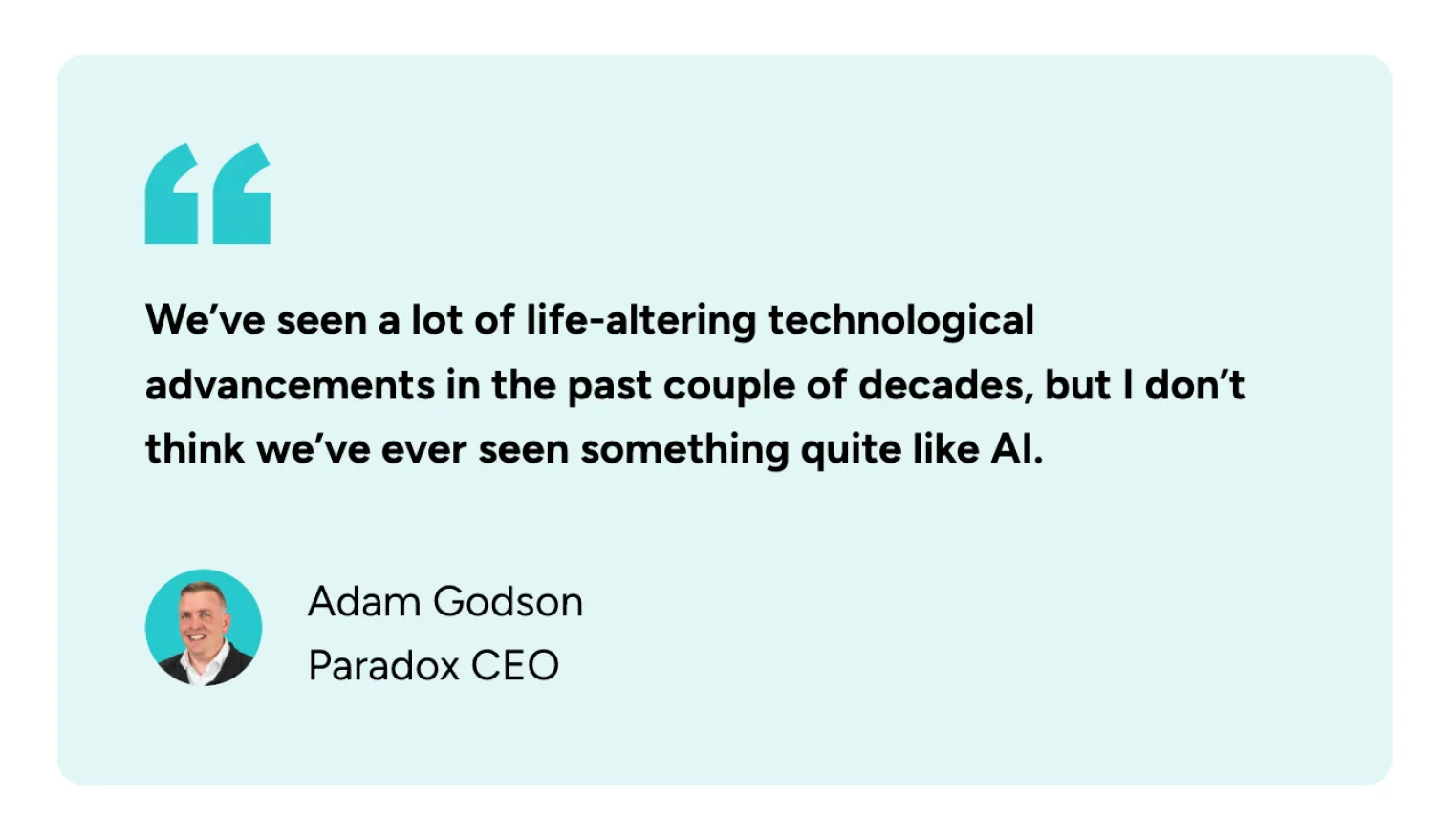
The design system introduced sophisticated neutrals and rounded buttons, organized within bento-style layouts that let users explore at their own pace. The use of client headshots and success stories built an emotional connection and became a marketing differentiator. In a crowded HR tech landscape, these final refinements reintroduced dynamism and humanity to the identity, and increased Paradox brand recall and authority.

Resource center
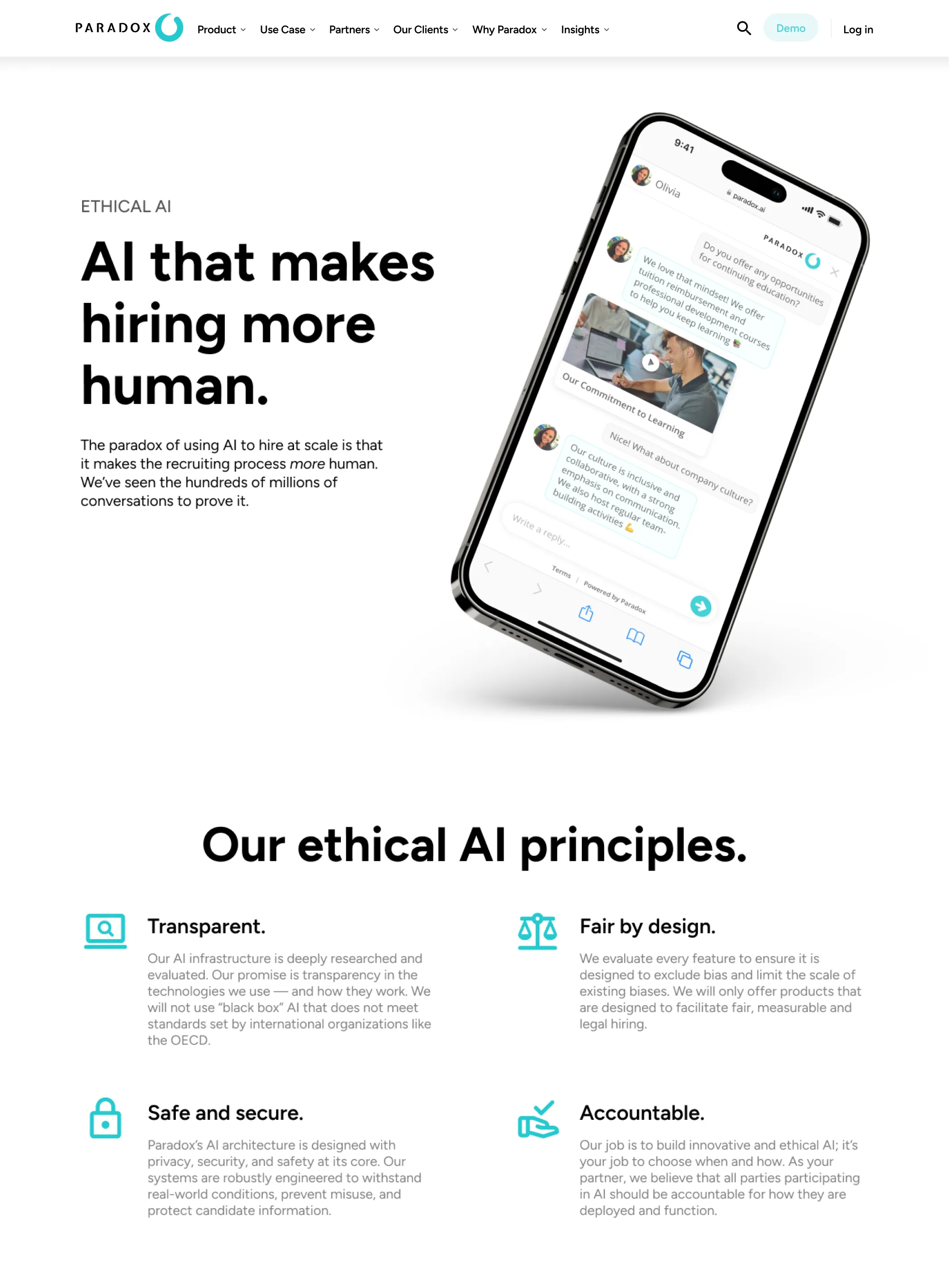
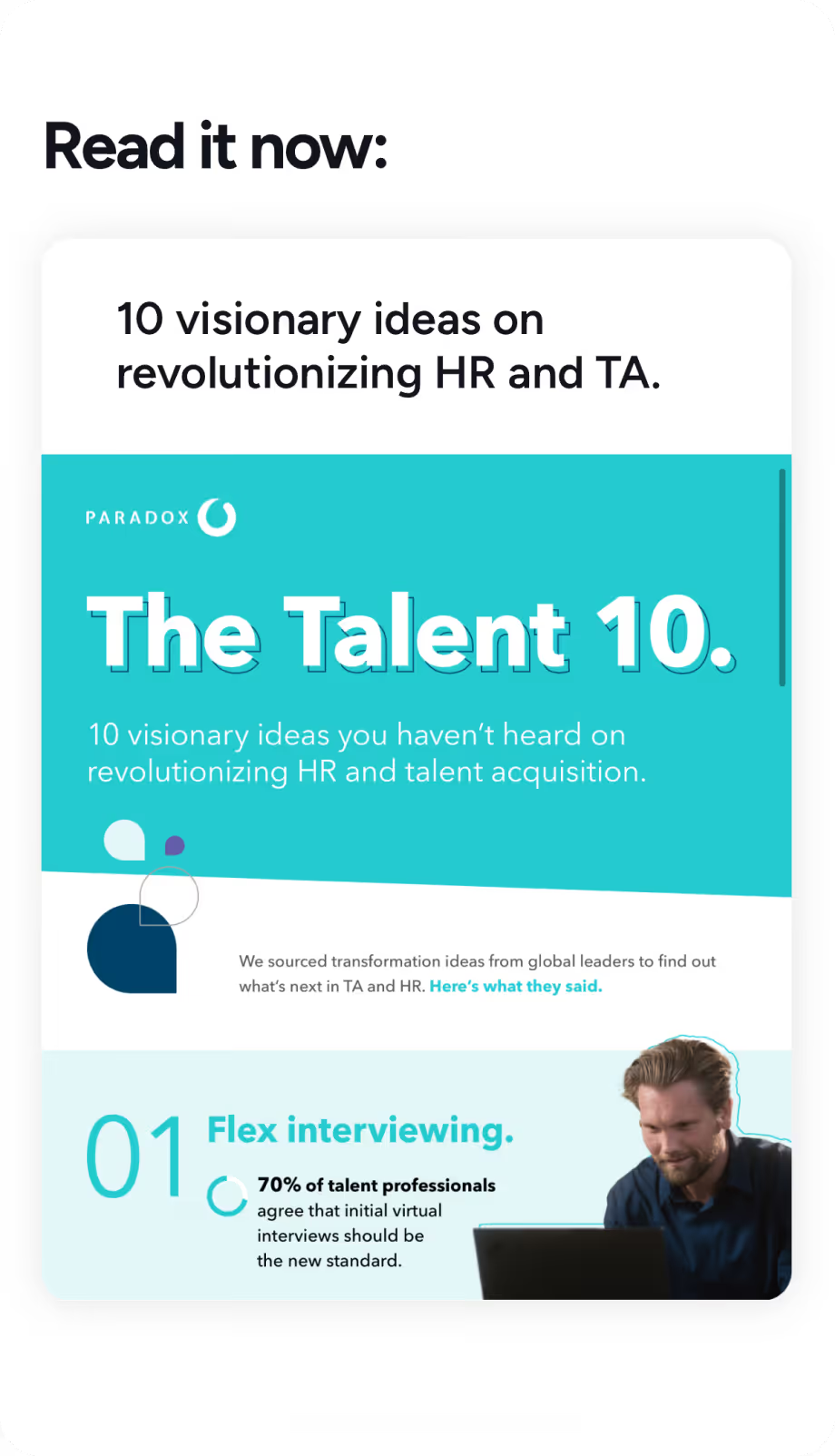
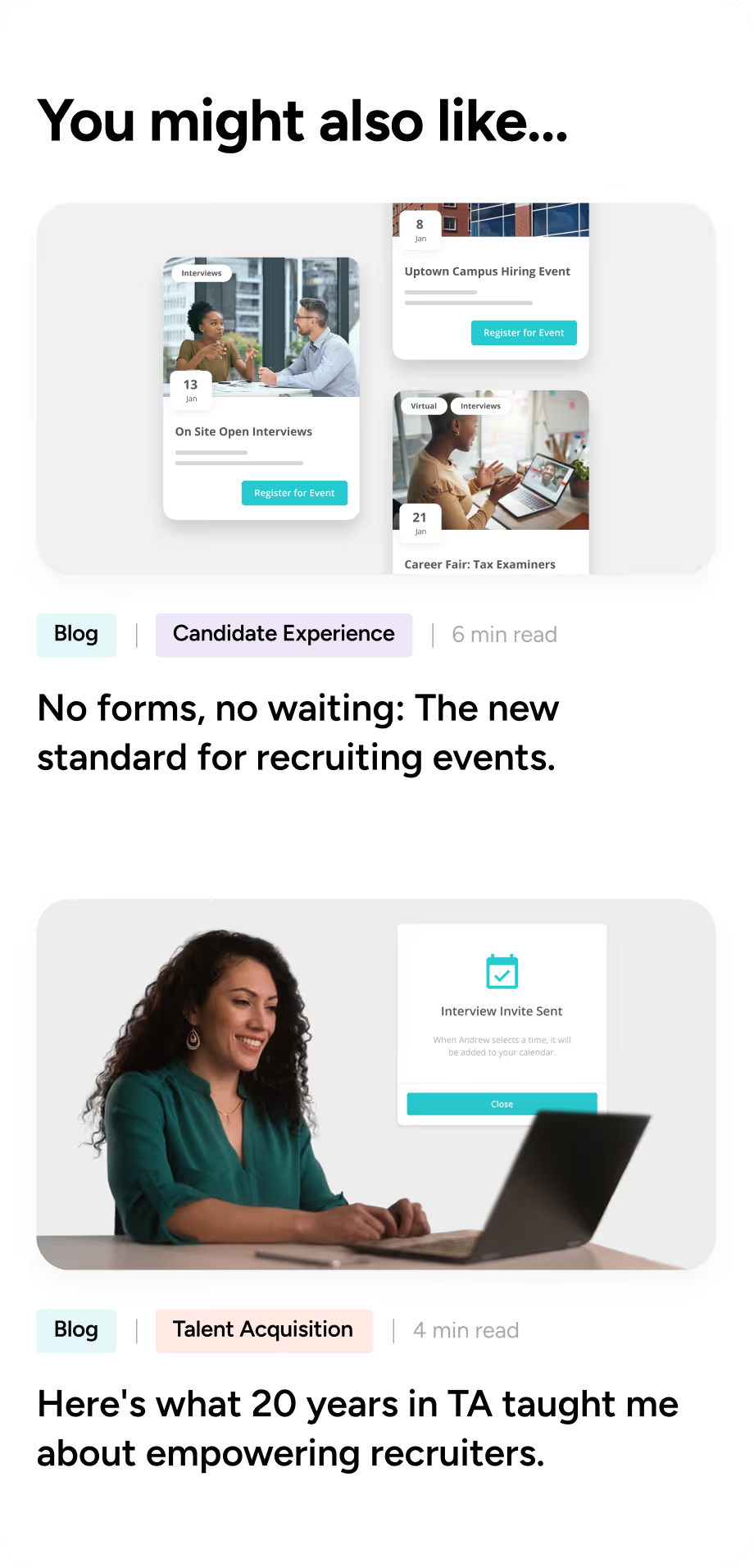
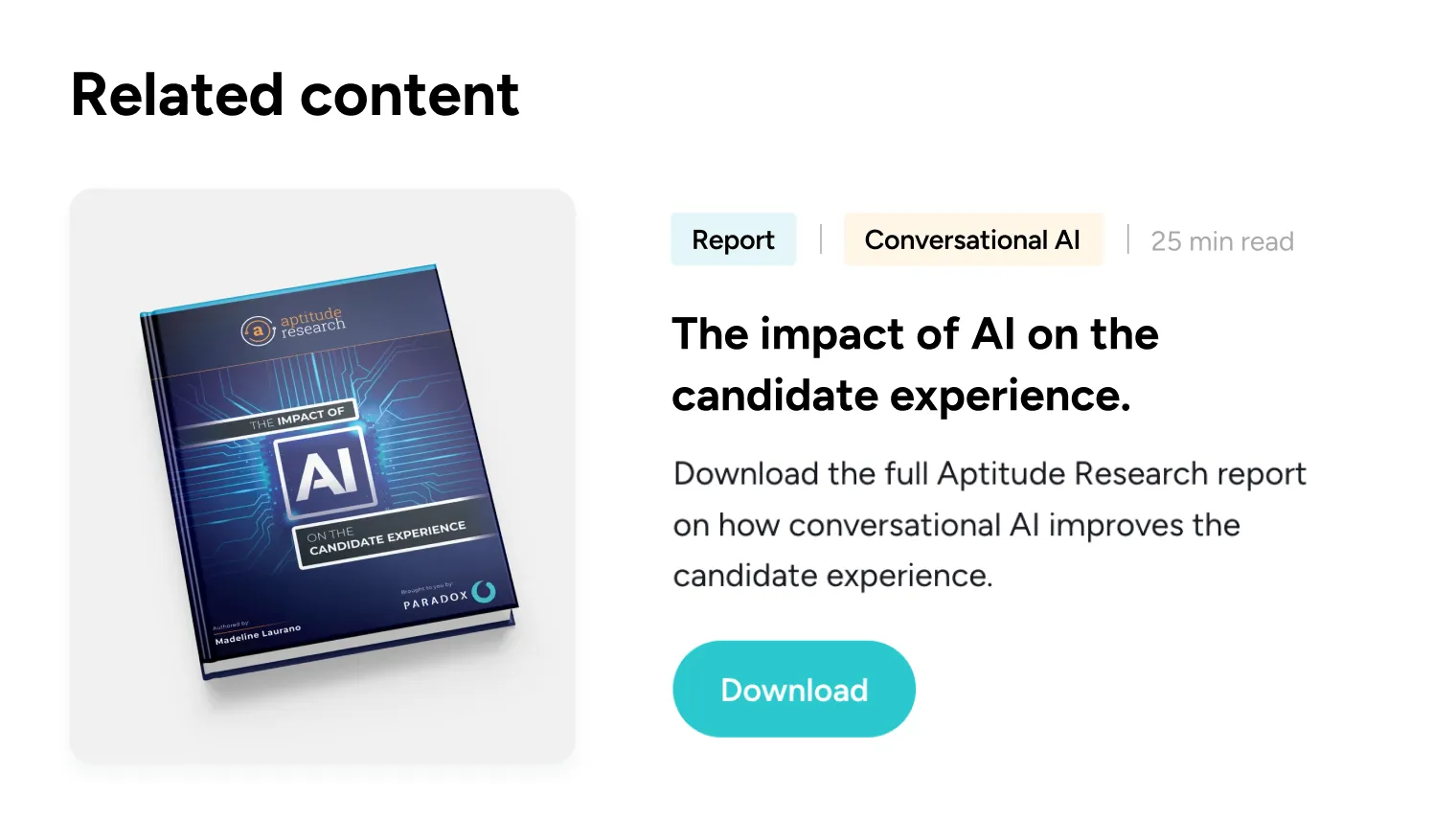
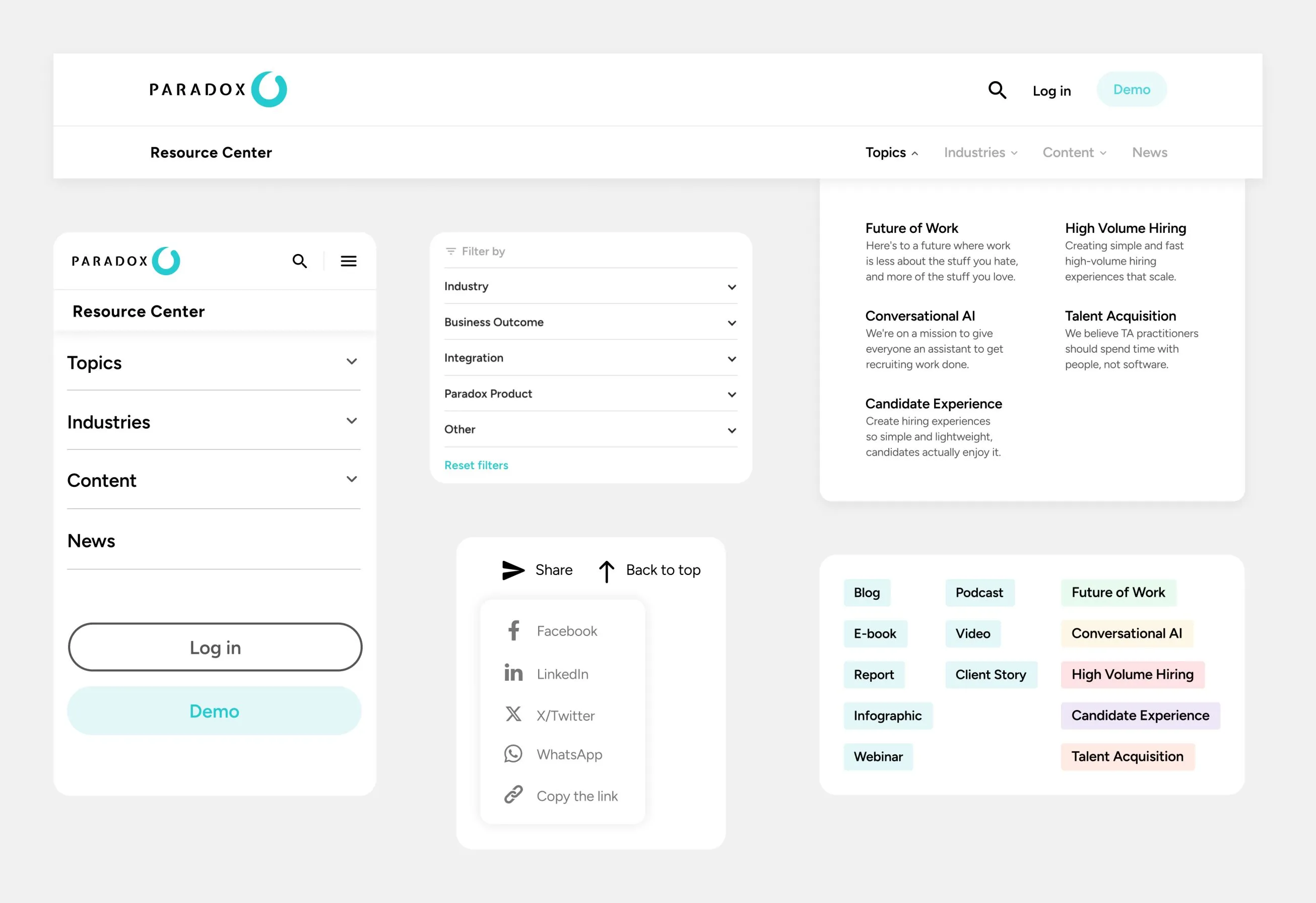
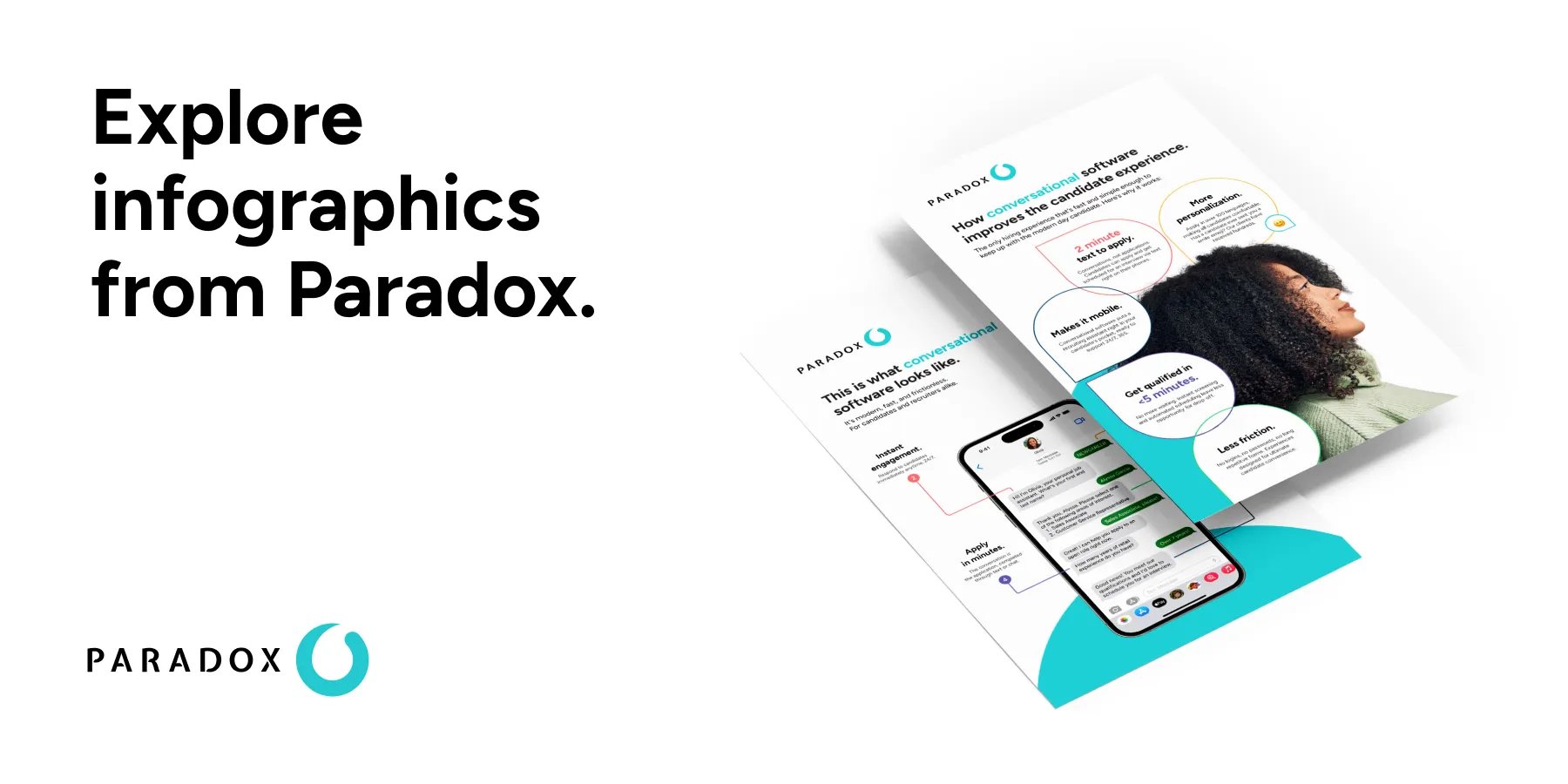
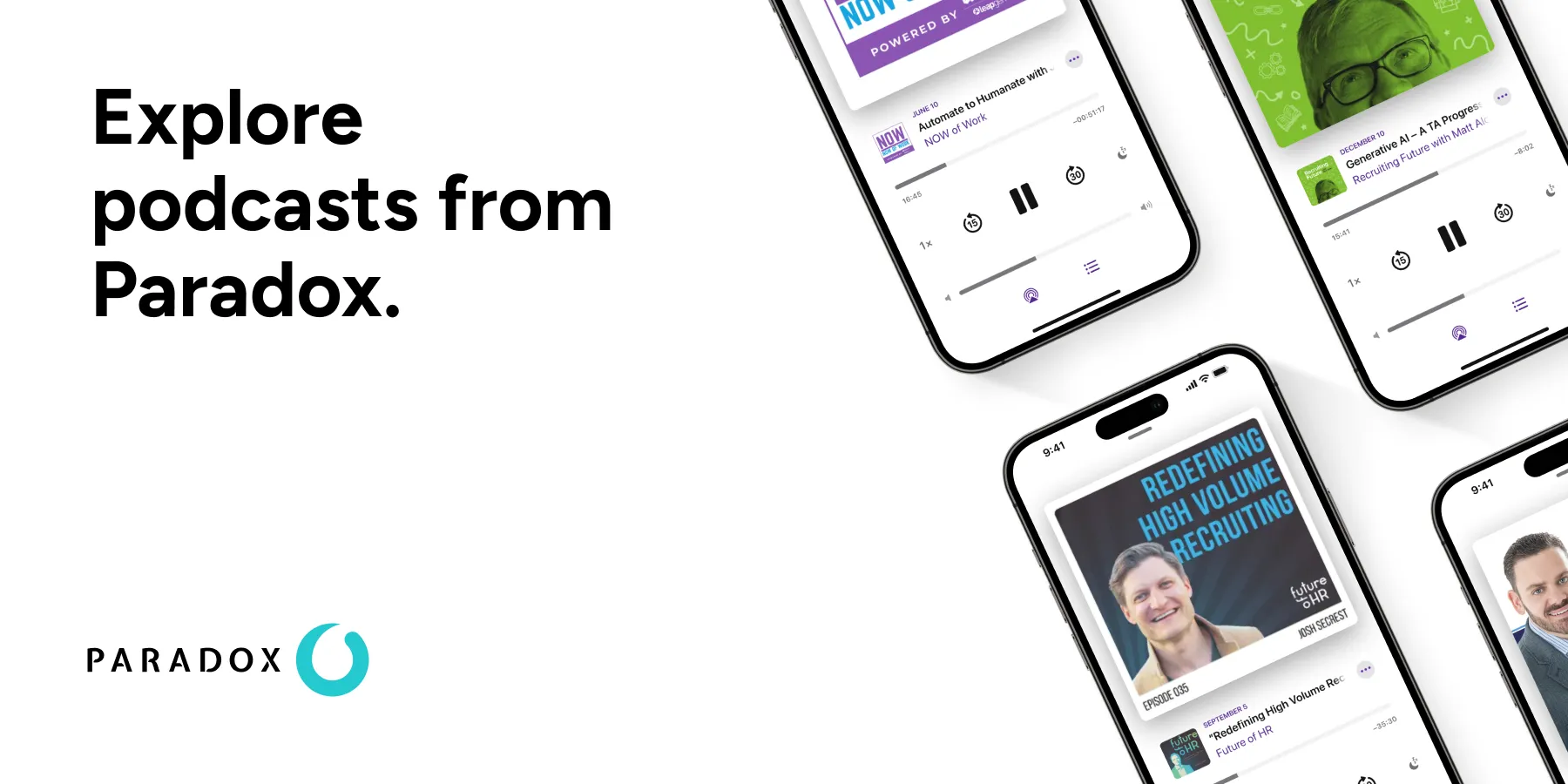
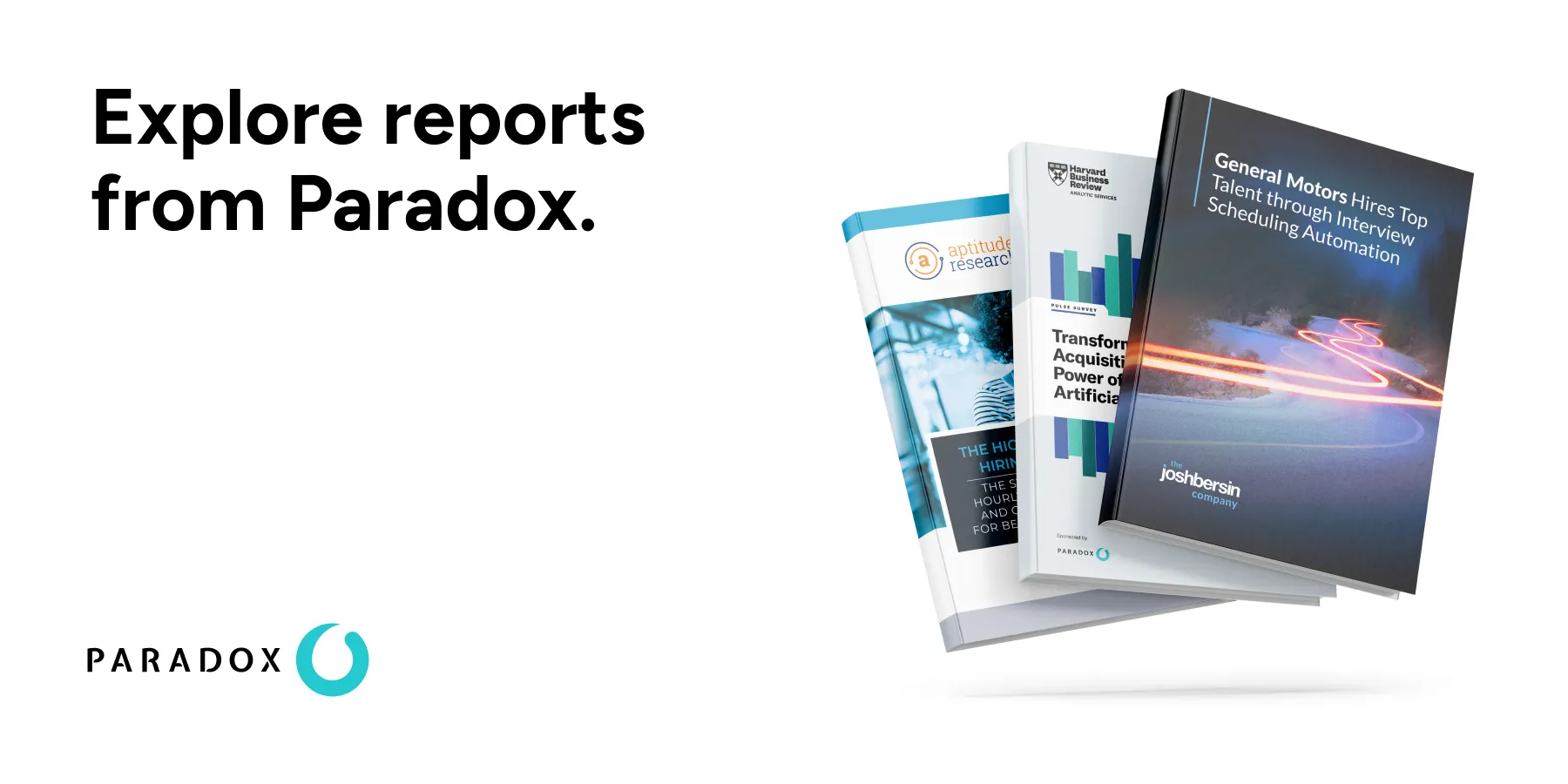
To position Paradox as a thought leader and accelerate the sales cycle, I proposed a digital resource center and led its design and execution. The goal was to organize and expand existing content within a sophisticated, central destination. I focused on balancing depth with discovery by giving users multiple paths to explore and allowing them to dive as deep as they wanted. I also managed 5 cross-functional teams during the build and launch. This microsite houses hundreds of on-demand resources for B2B buyers to engage with on their own terms.
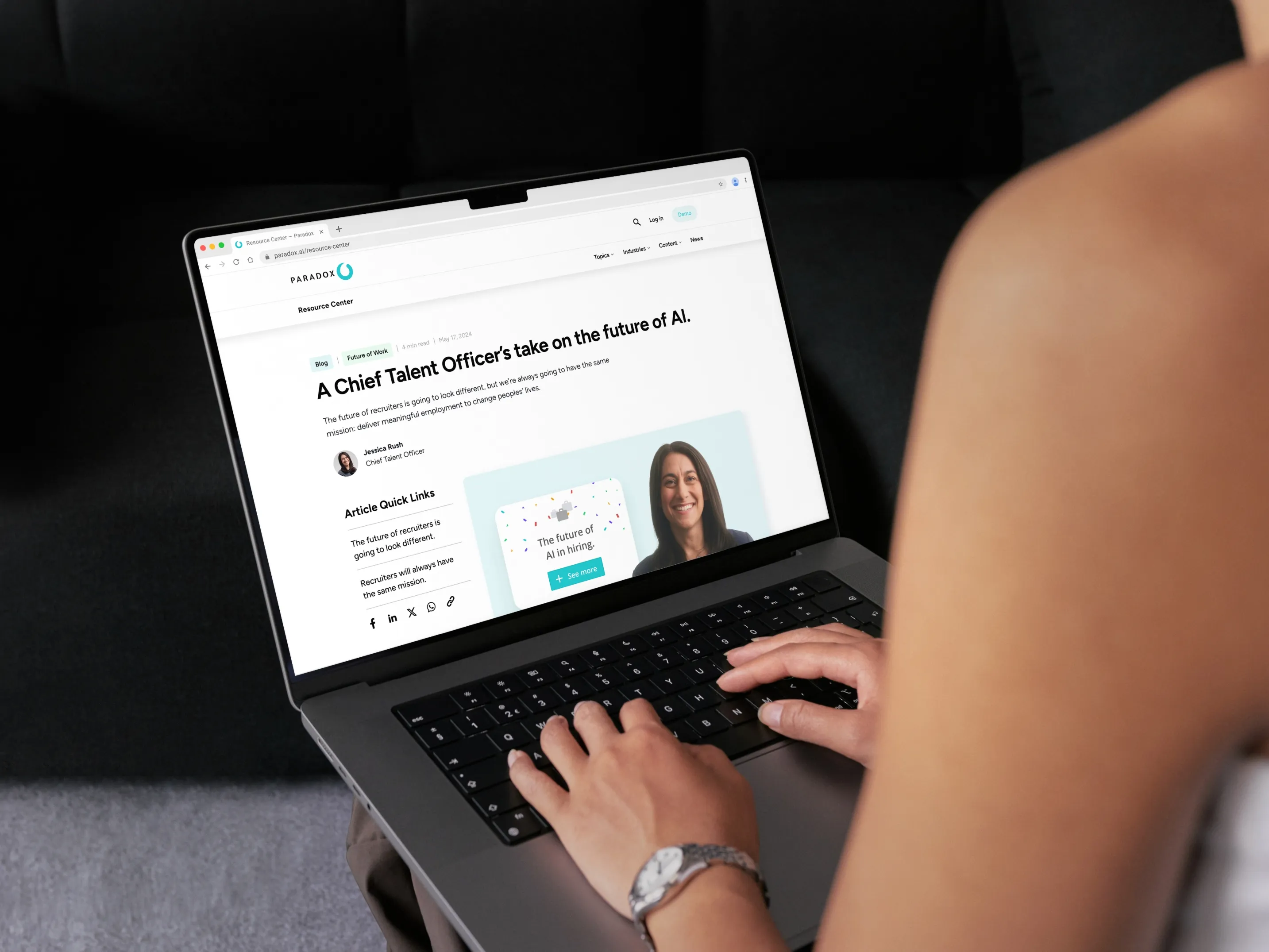
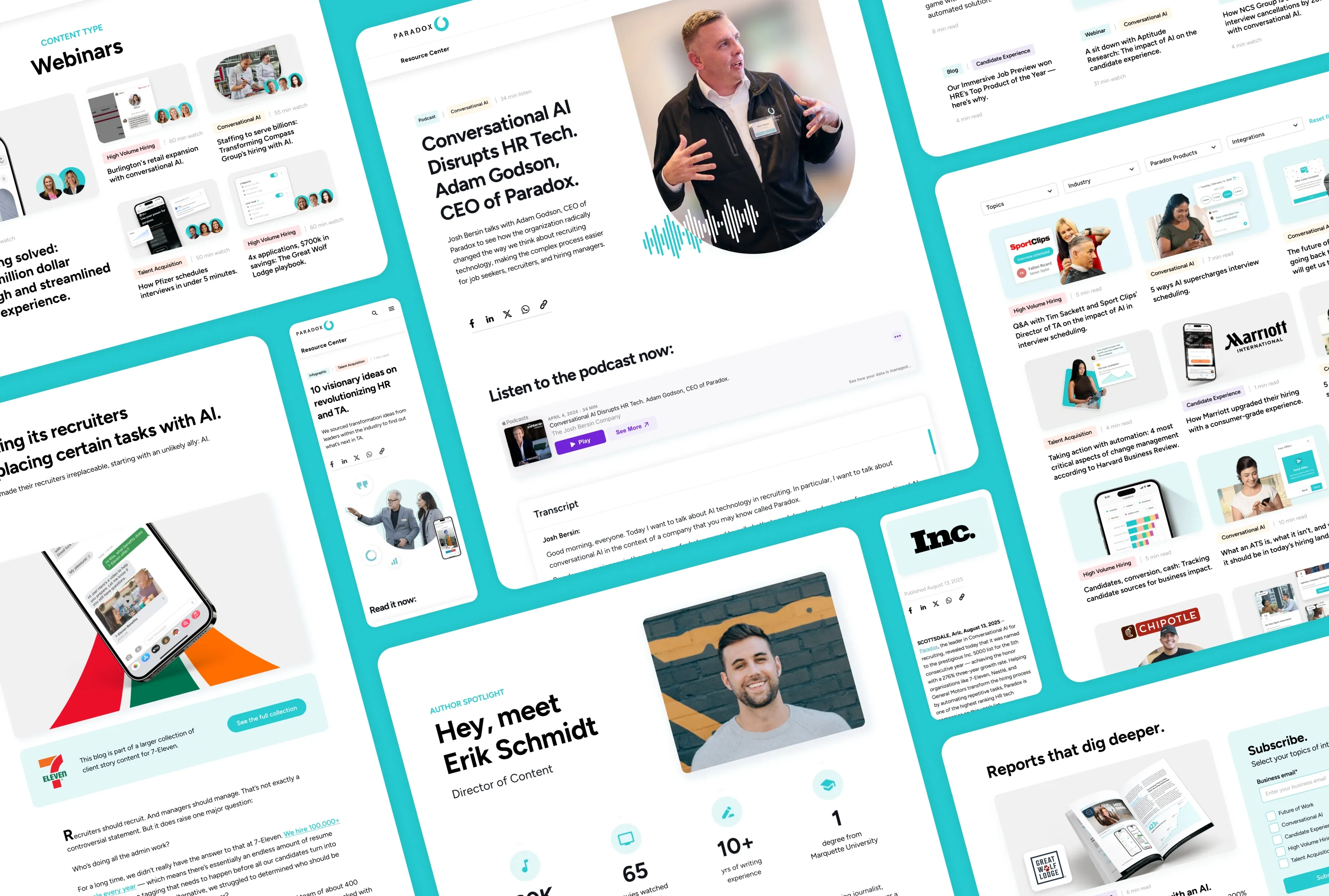
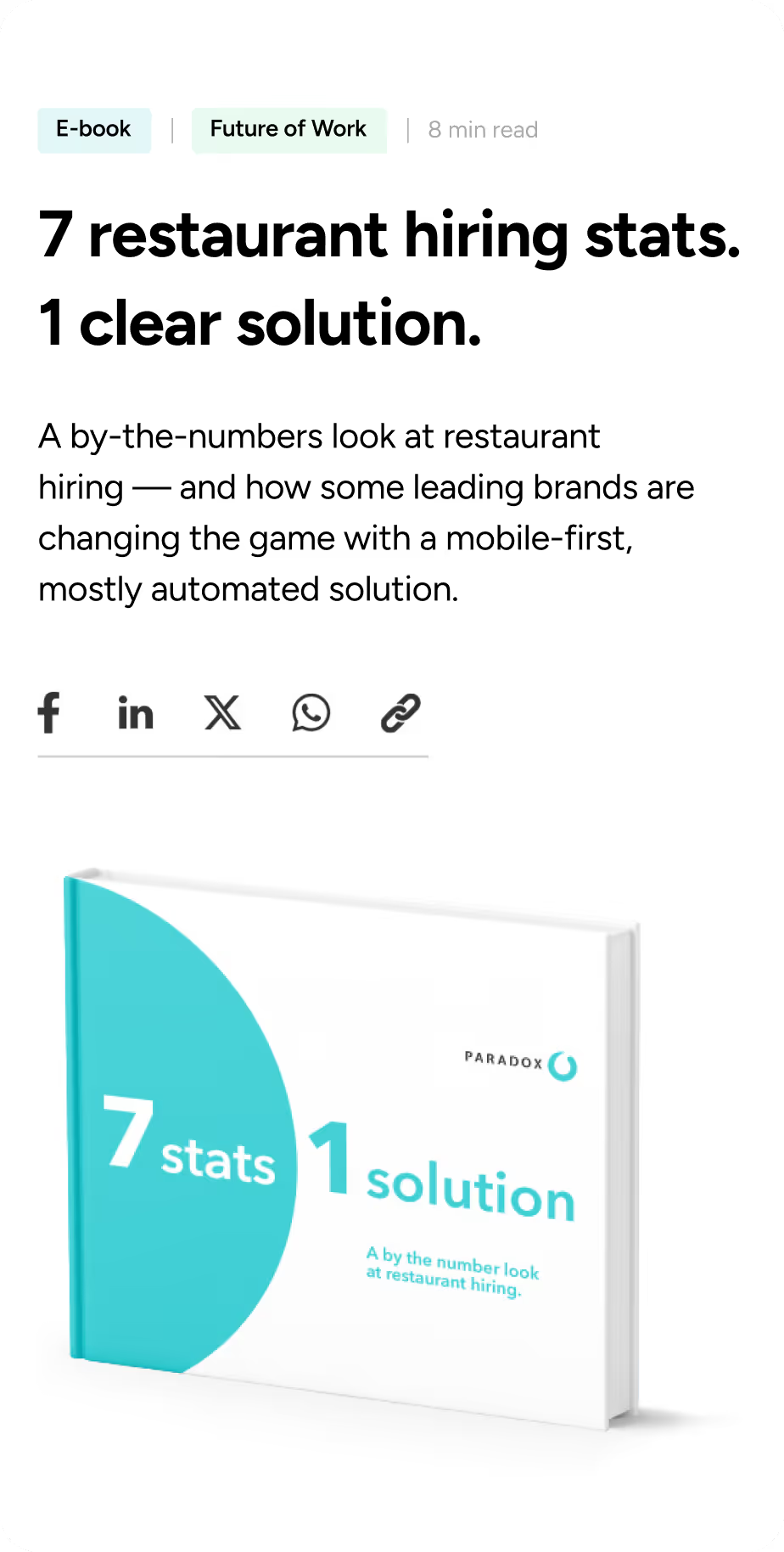
One key element of the resource center is its modular setup. Versatile templates support various content considerations—including sections that highlight impact or break off from the main content to increase user engagement.
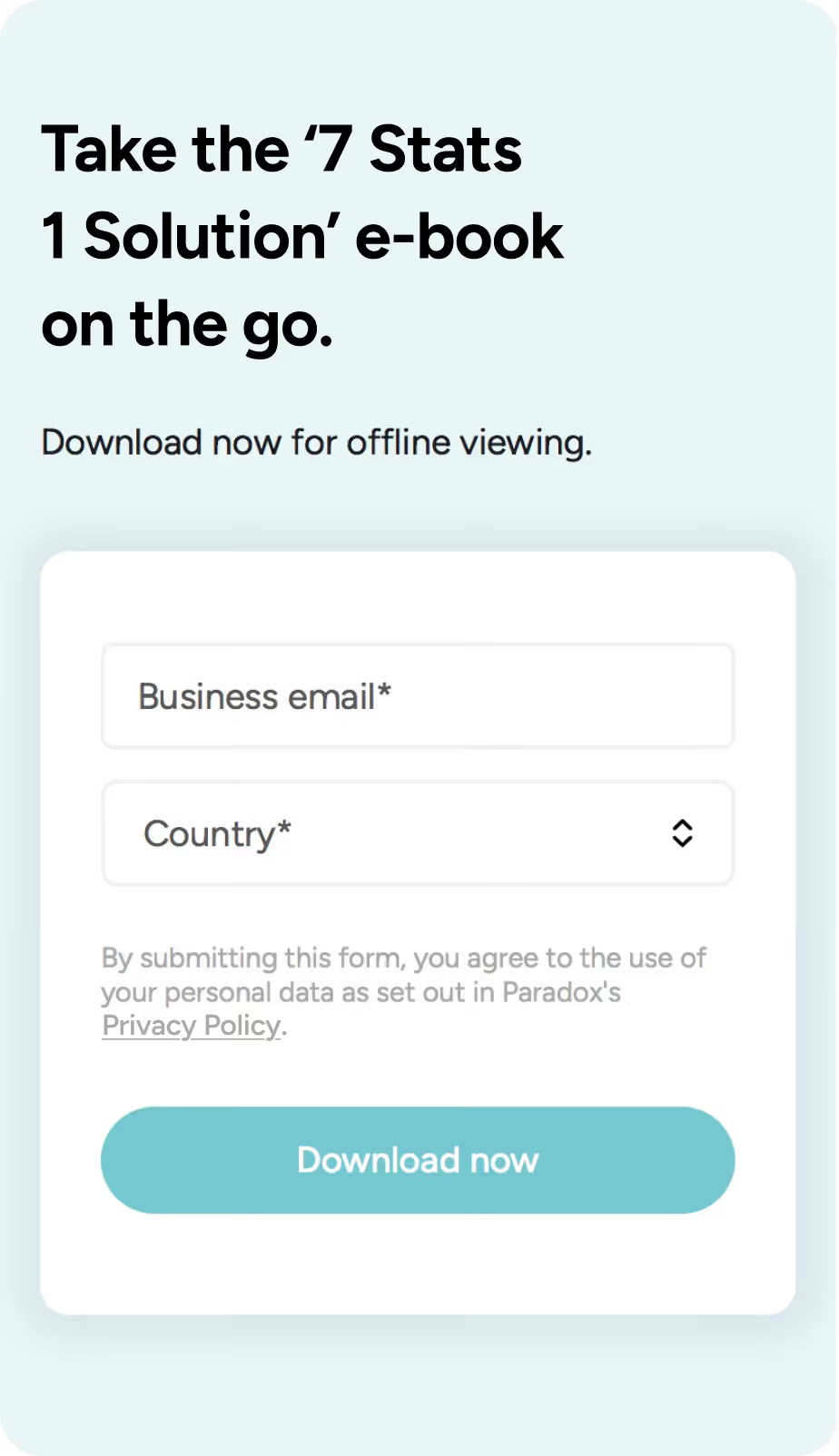
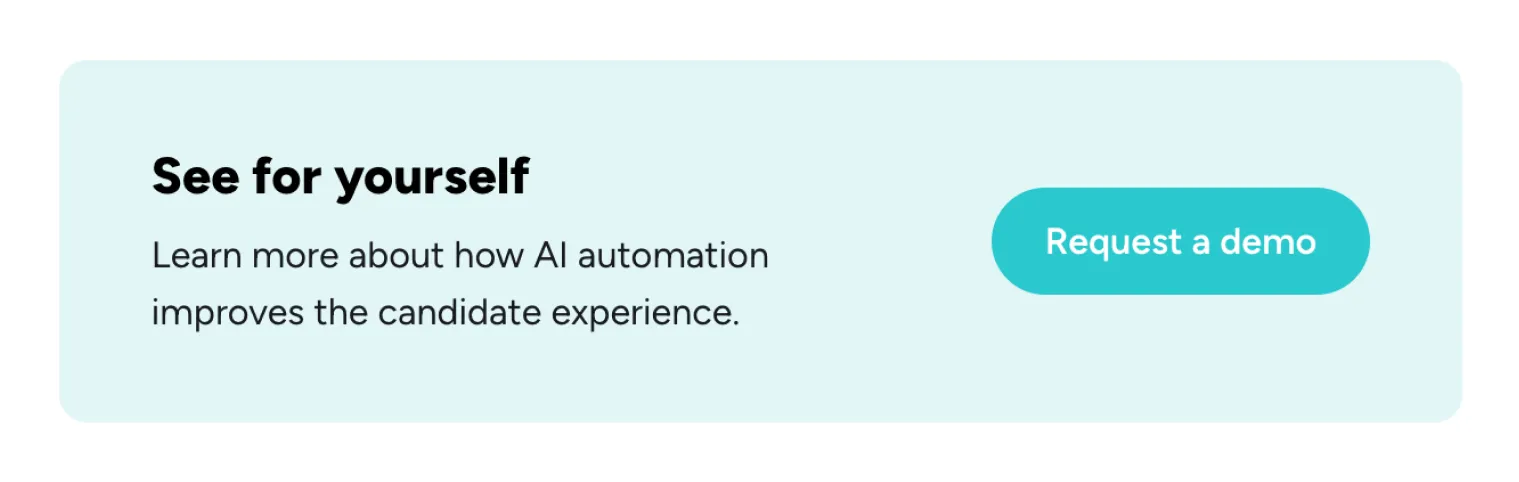
Another key element of the resource center is its demand-gen focus. Contextual CTAs and product-led previews help funnel readers towards core pages. Valuable content is left ungated, resulting in higher organic traffic and long term demand.
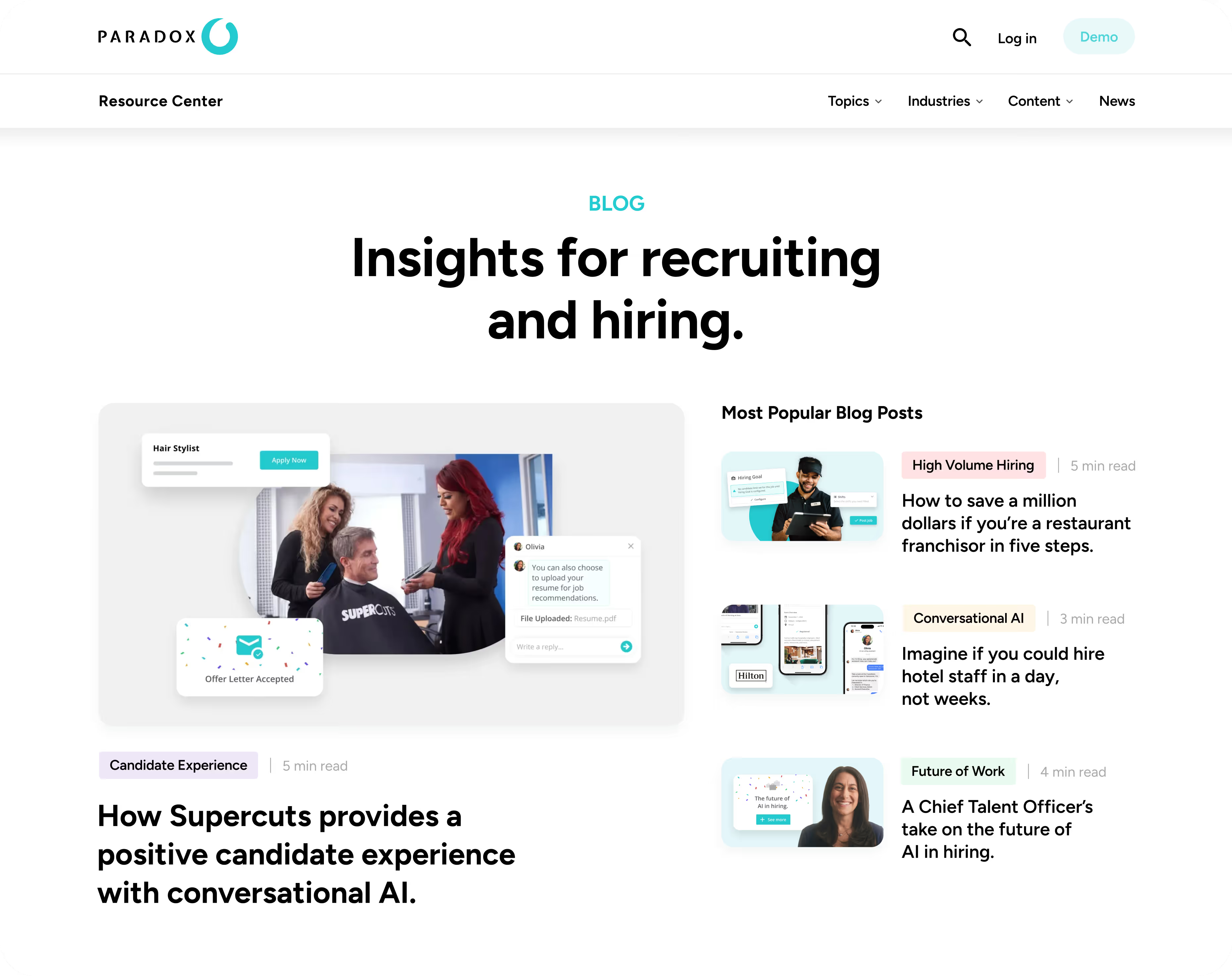
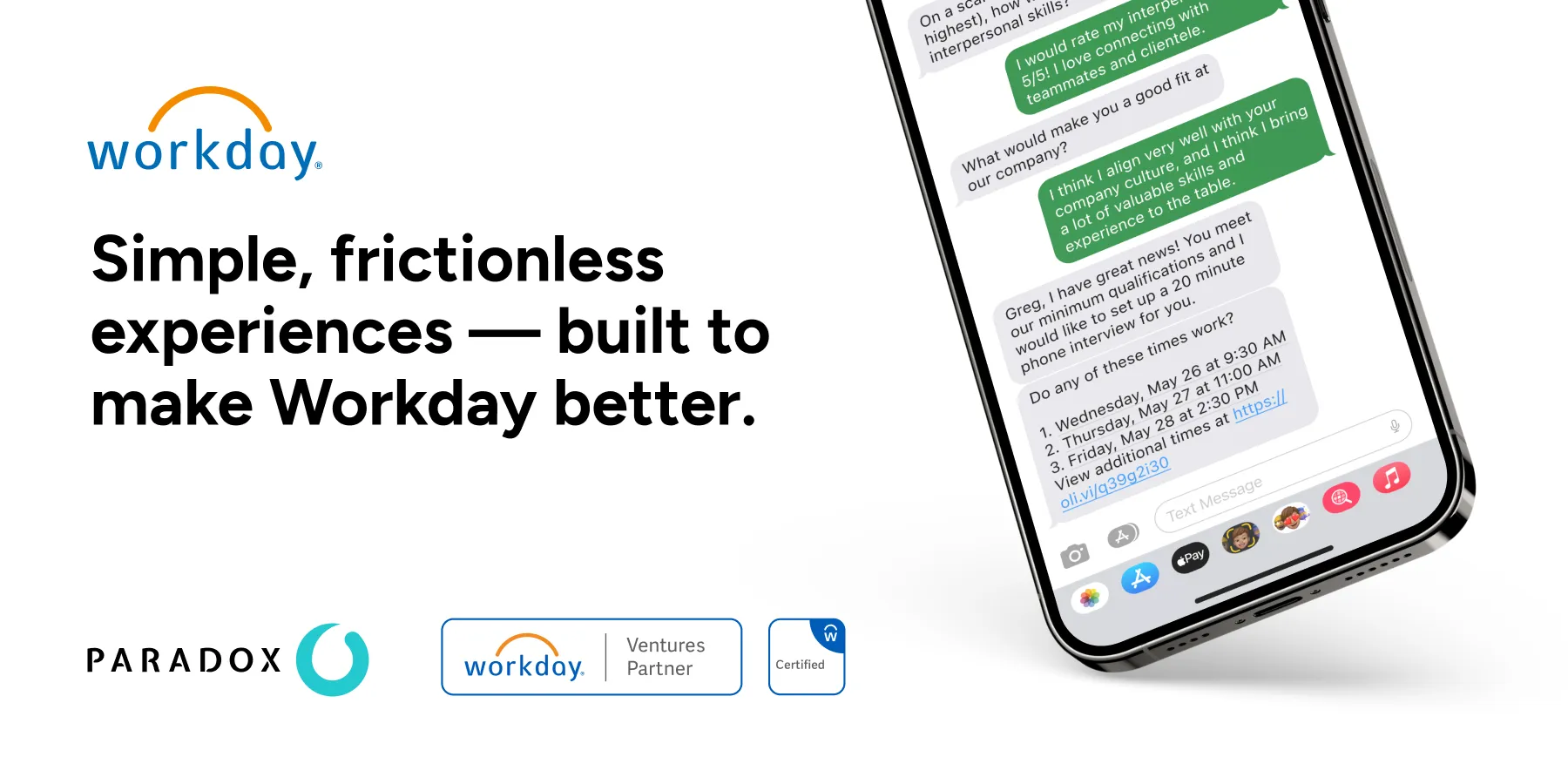
Now,
Are you ready to apply?
She’ll ask you some basic questions, and assuming you’re minimally qualified, send you a link to
our career site is education-first
. With just two clicks, you can find which roles are perfect for you (based on experience or location), and watch a video that showcases a day in the life of that role. Do you have any further questions? Our AI assistant, Olivia, can answer them immediately.Are you ready to apply?
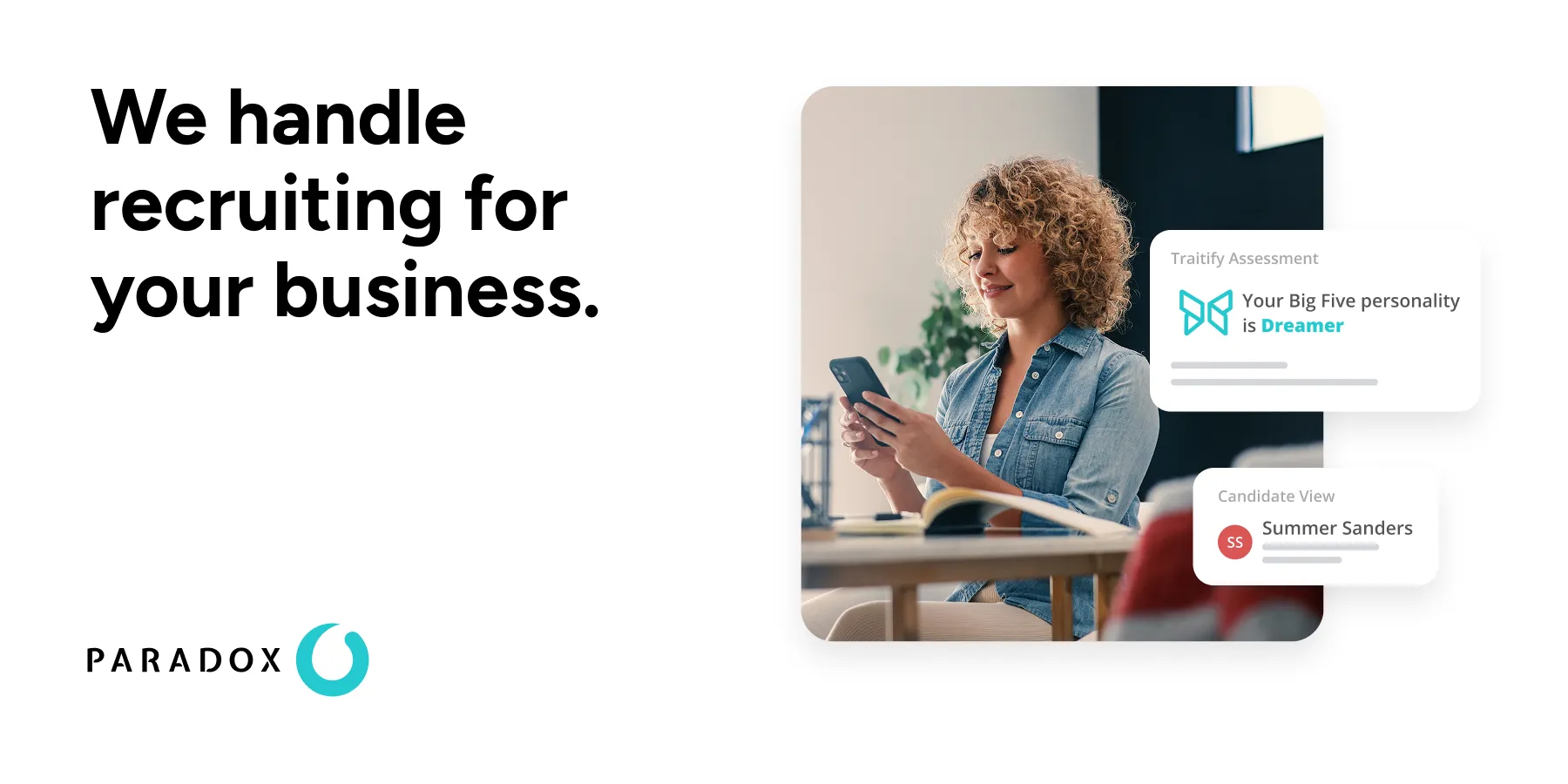
Olivia can handle that, too
— you don’t even have to leave
the page.She’ll ask you some basic questions, and assuming you’re minimally qualified, send you a link to
our assessment
. Don’t be too scared by that word:assessment.All you have to do is spend two minutes looking at pictures and deciding whether you resonate with each one or not.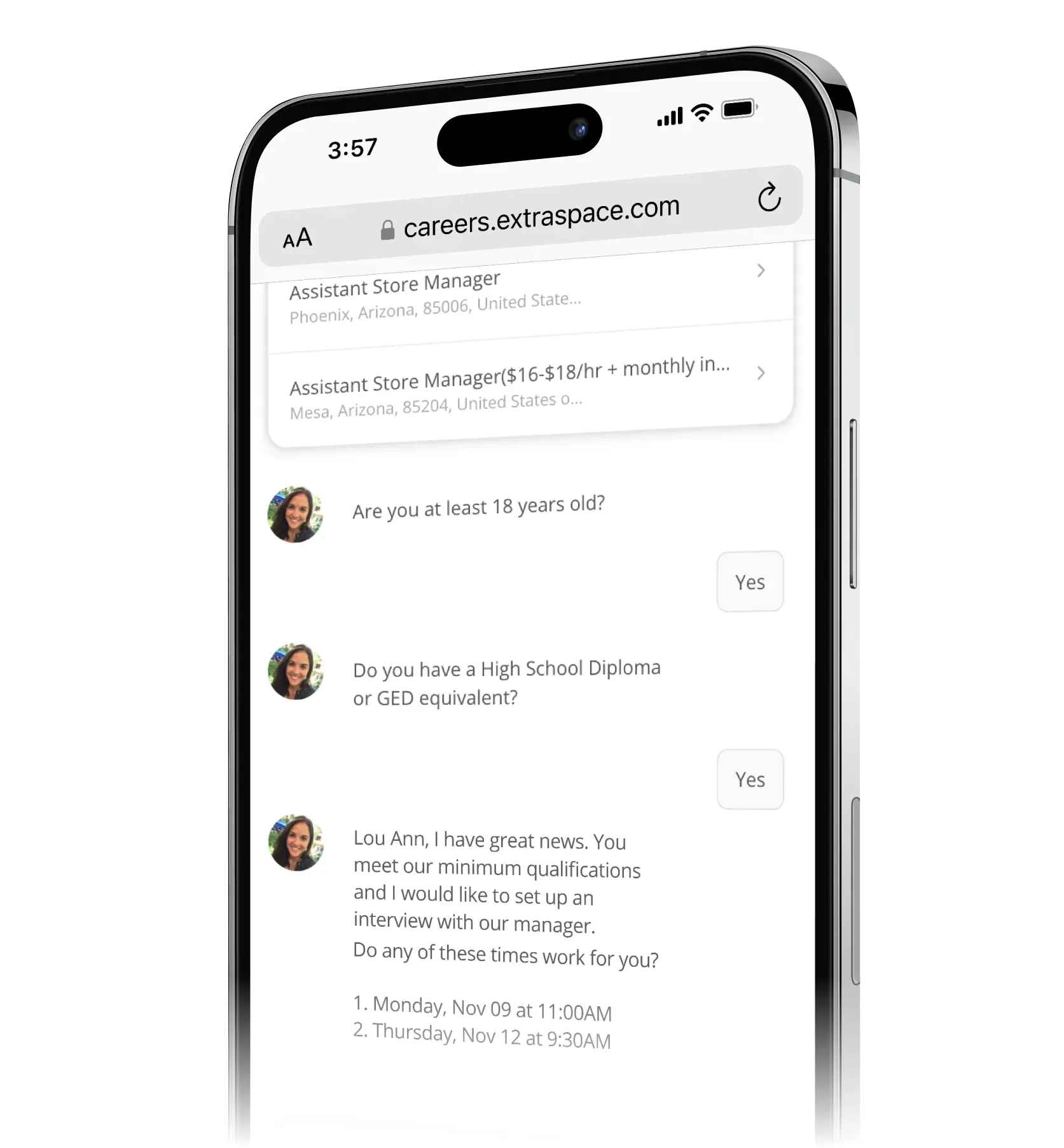

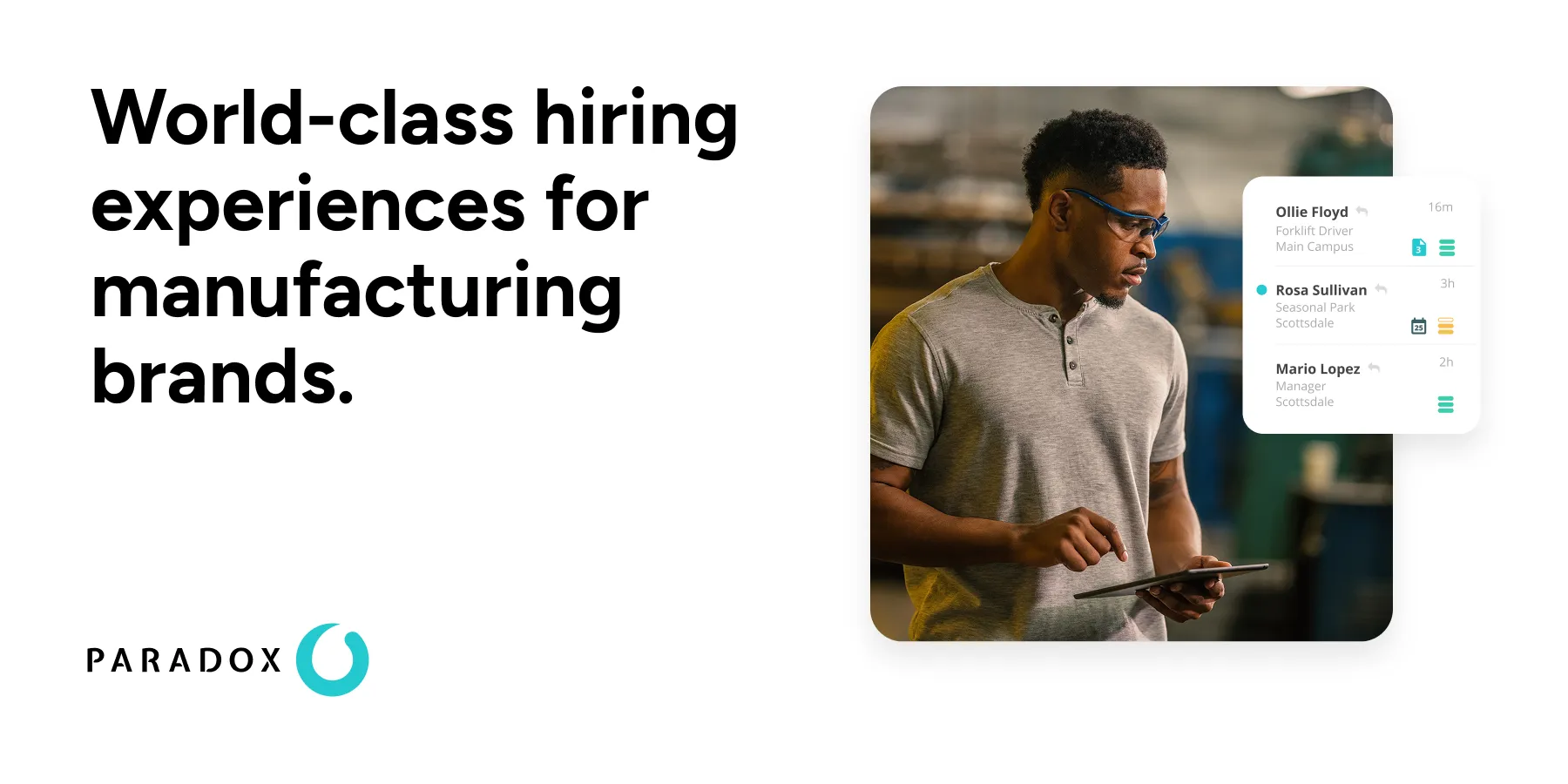
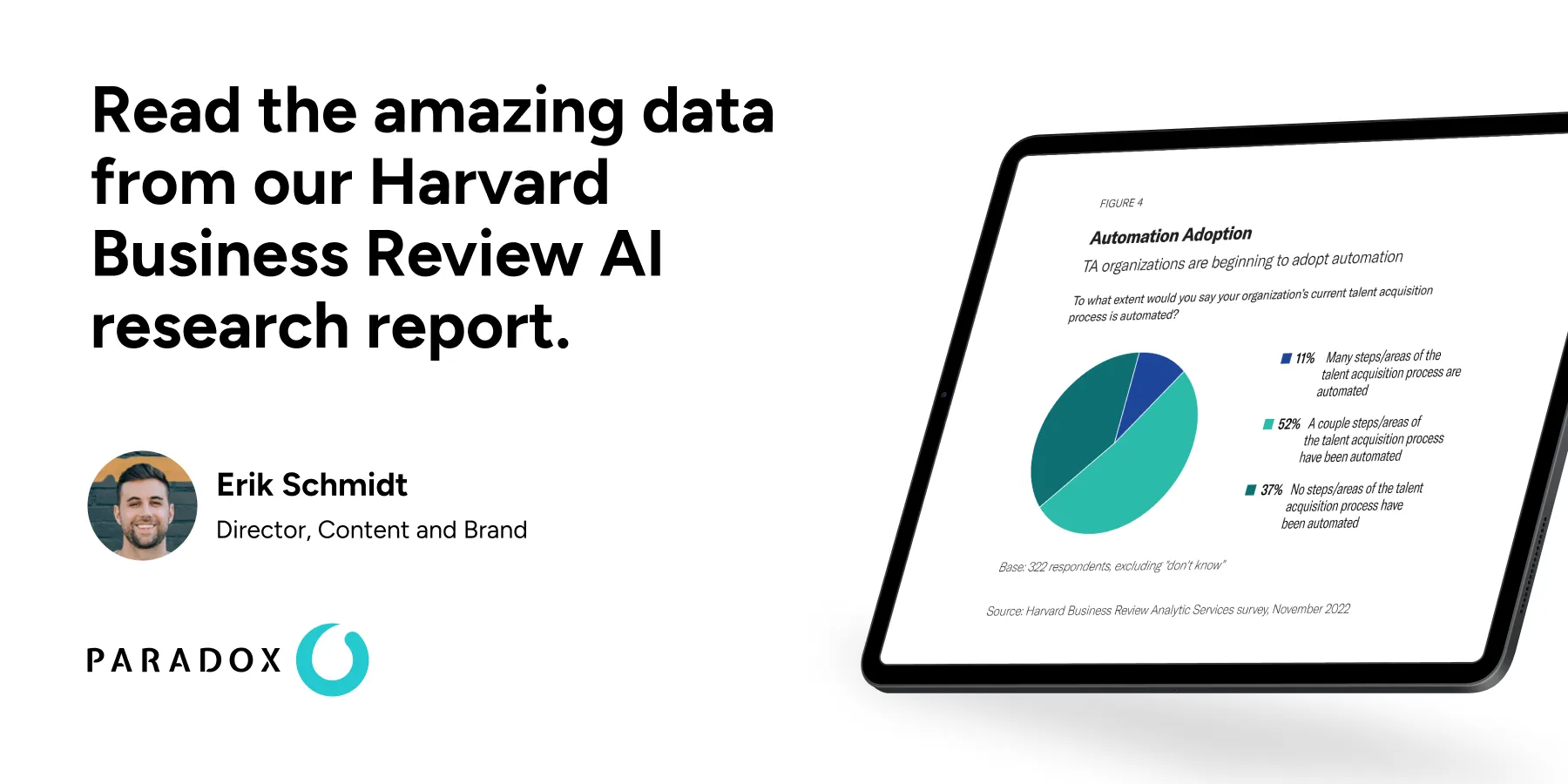
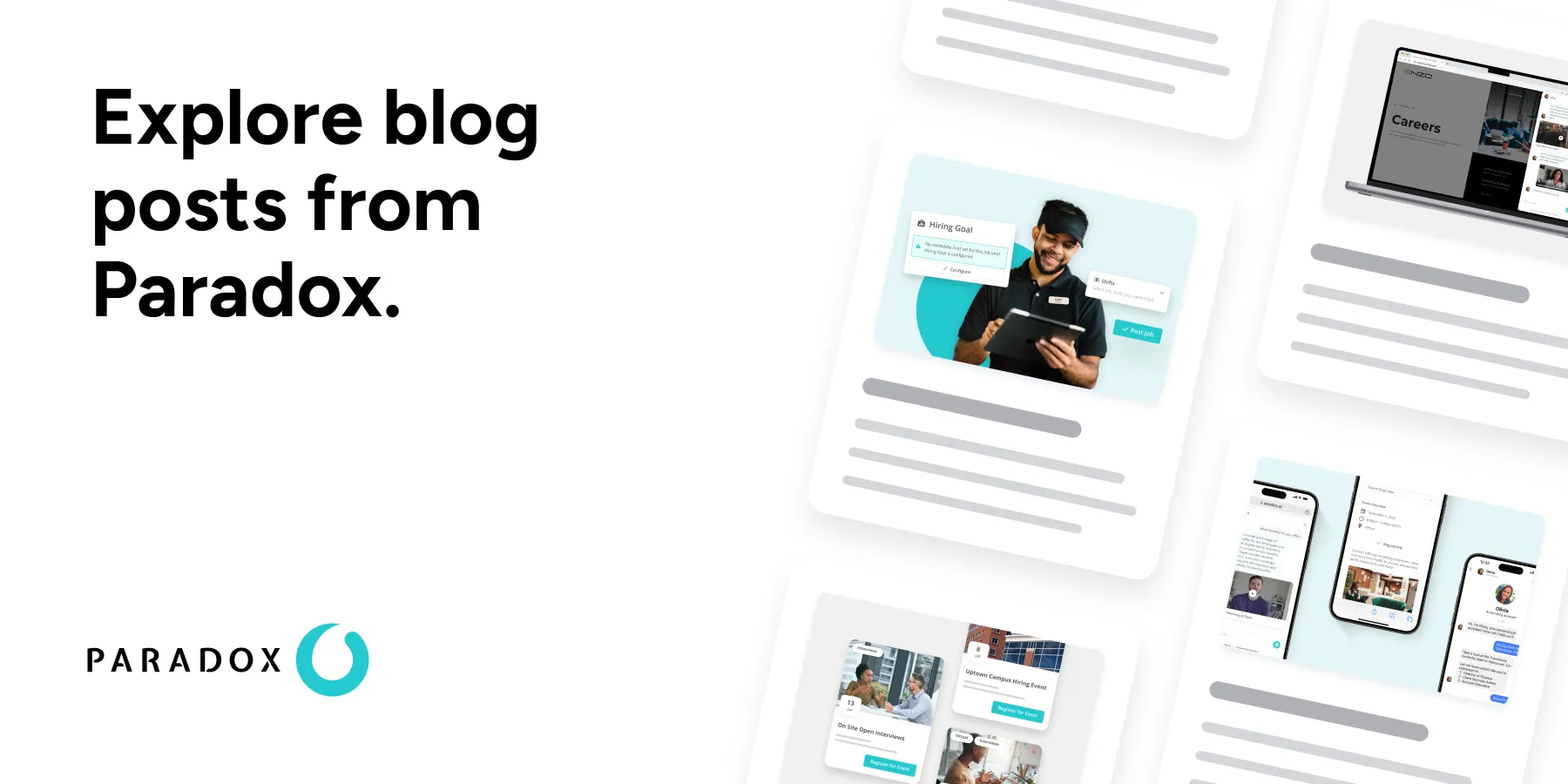

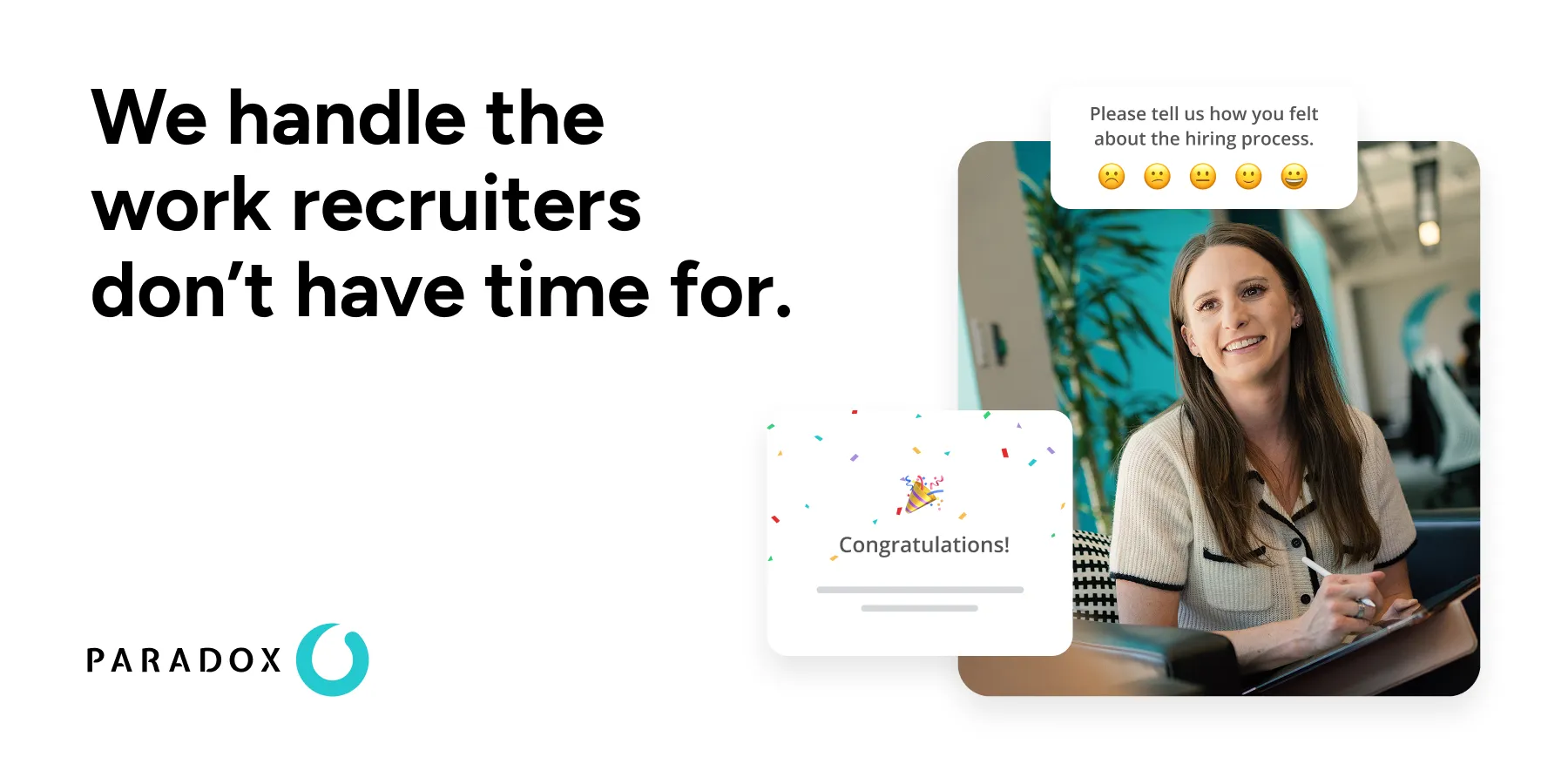
Client stories
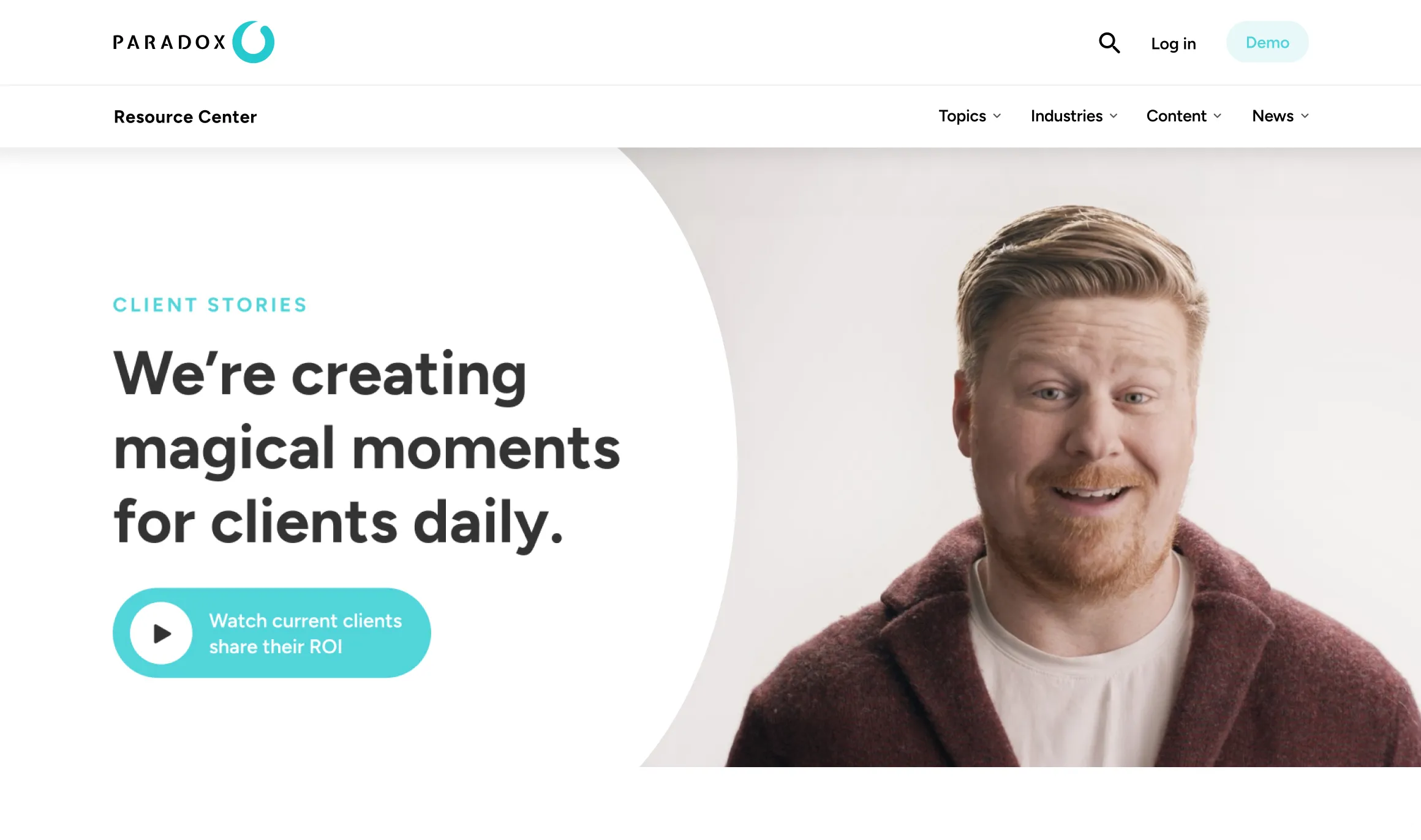
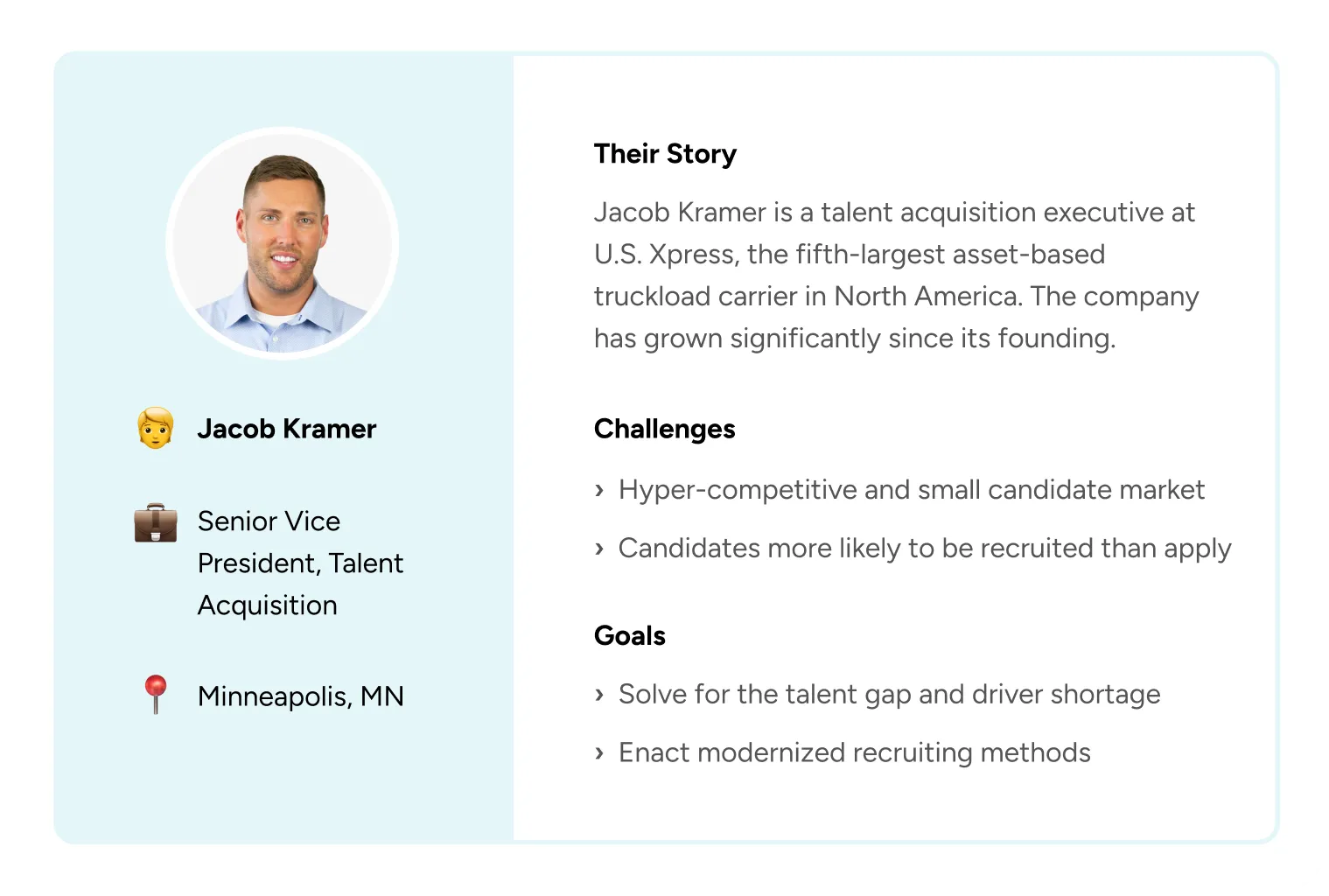
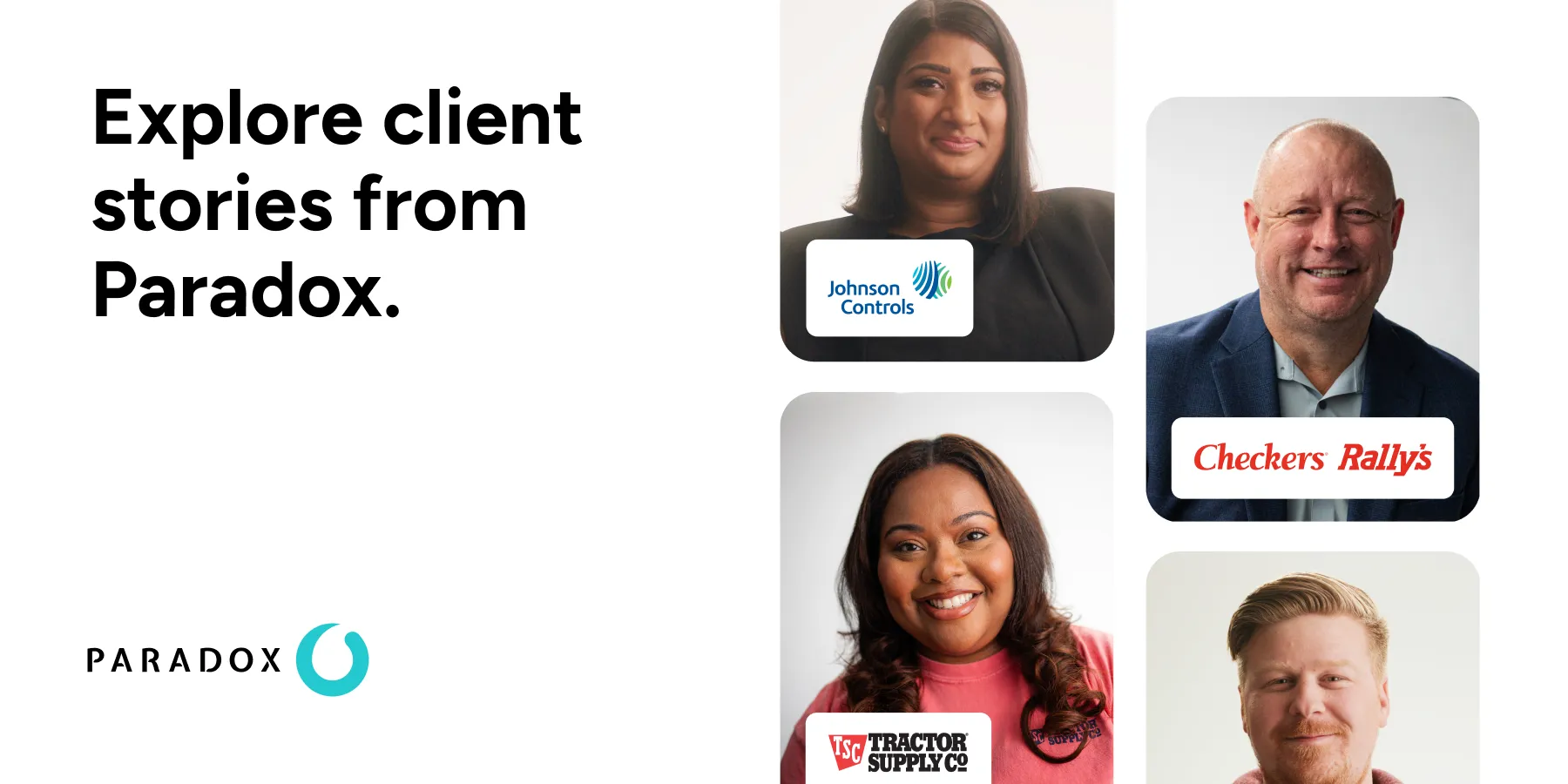
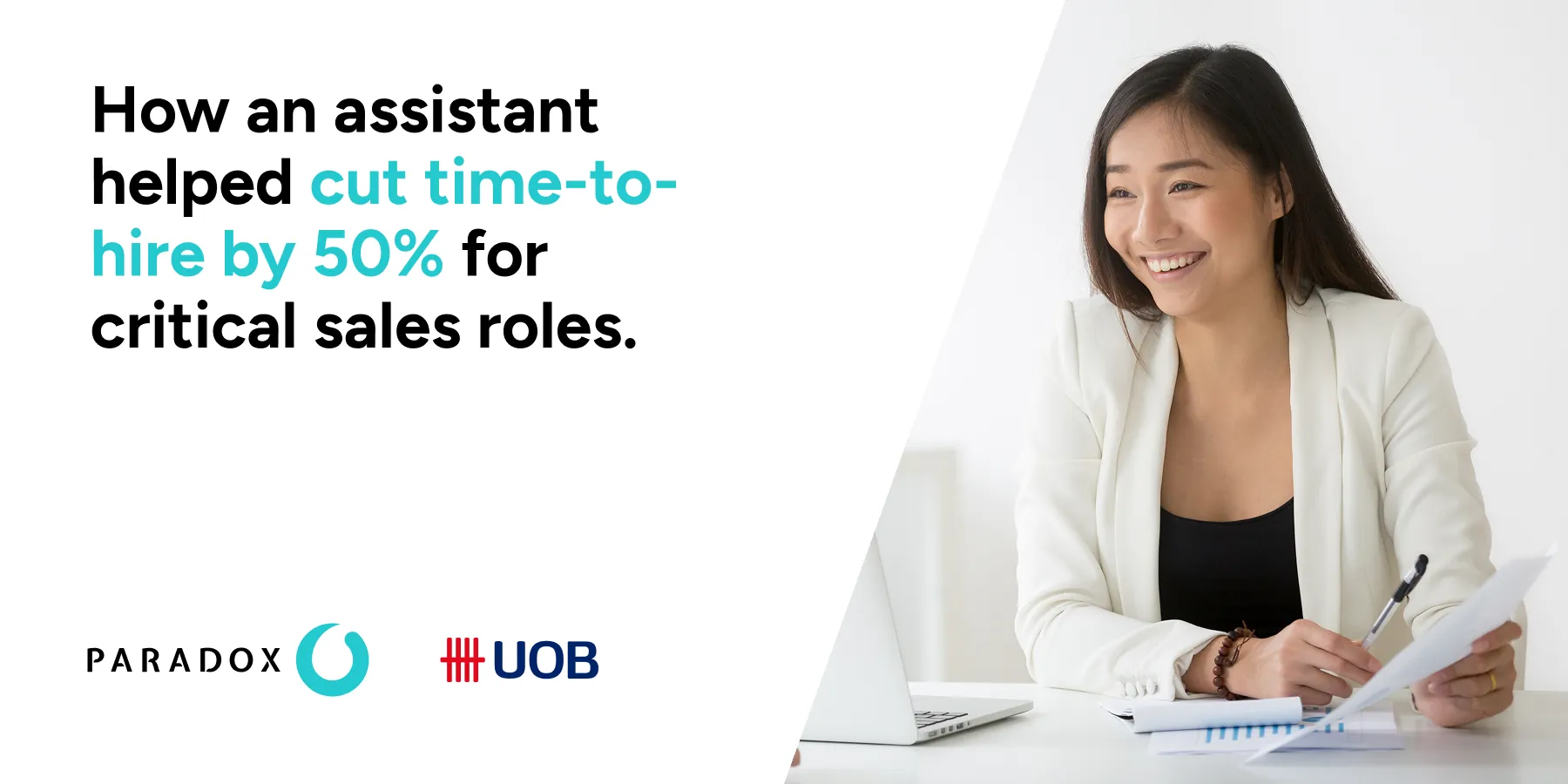
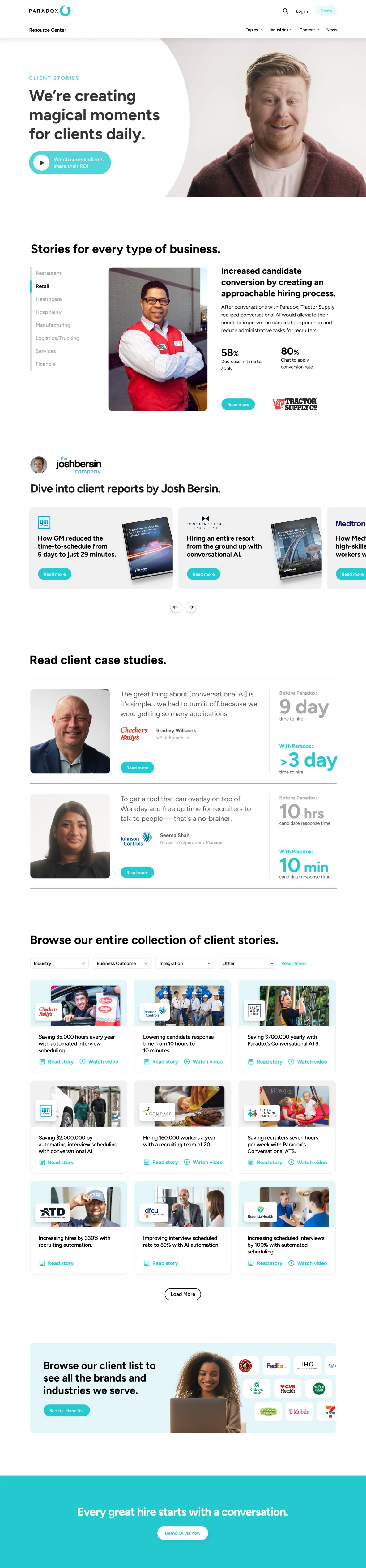
After the launch of the resource center, I reimagined the client story pages as an ecosystem in itself. While Paradox did host written case studies on the client story pages, they also had client-related blogs, videos, and reports that weren't being pulled into the client story CMS. My goal was to centralize over 175 pieces of client-related content into a self-guided experience. Prospects need to see peers from major global brands solving the same hiring problems they face.
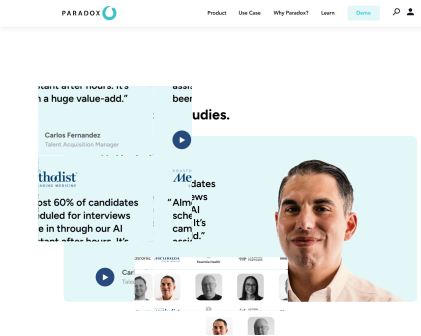
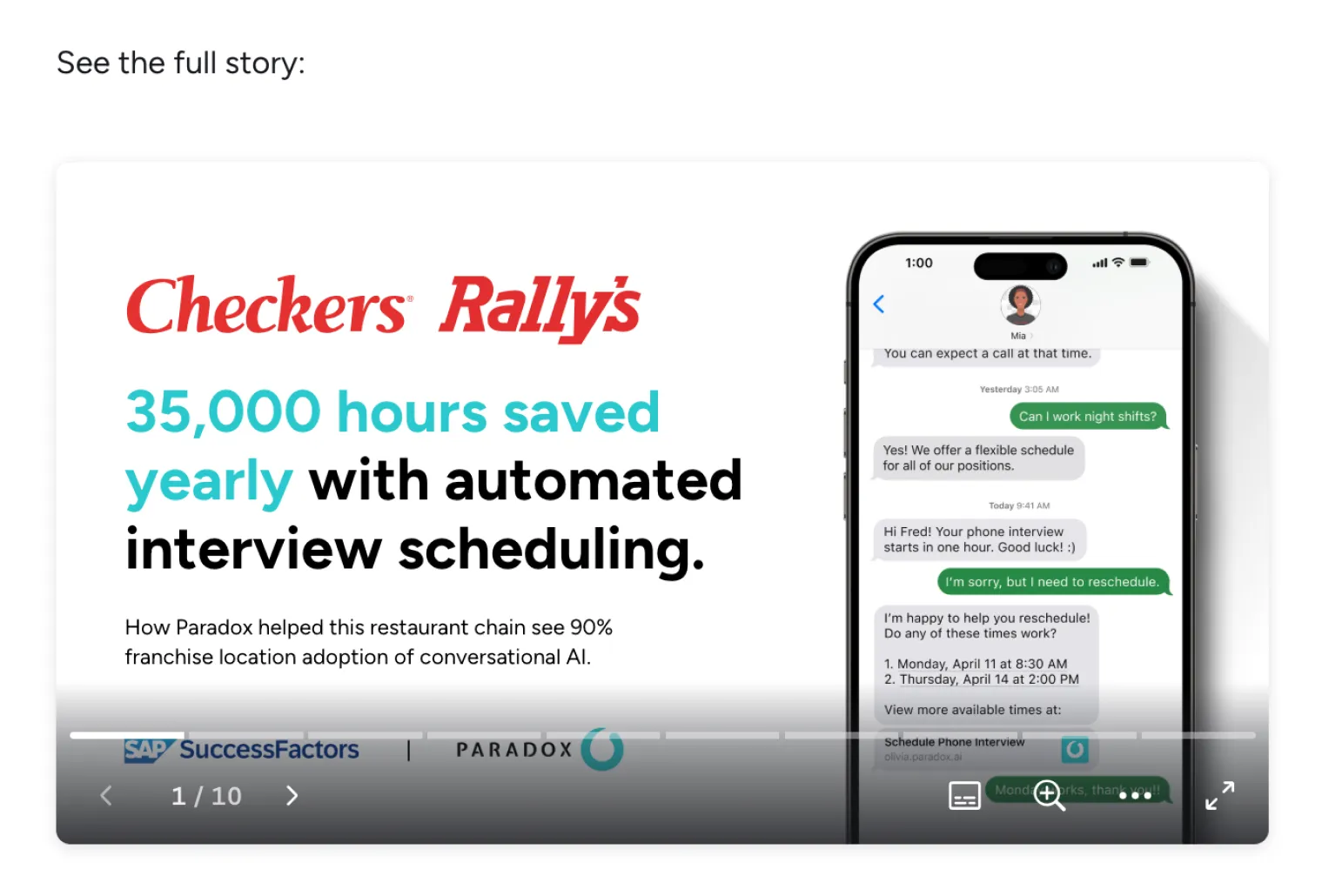
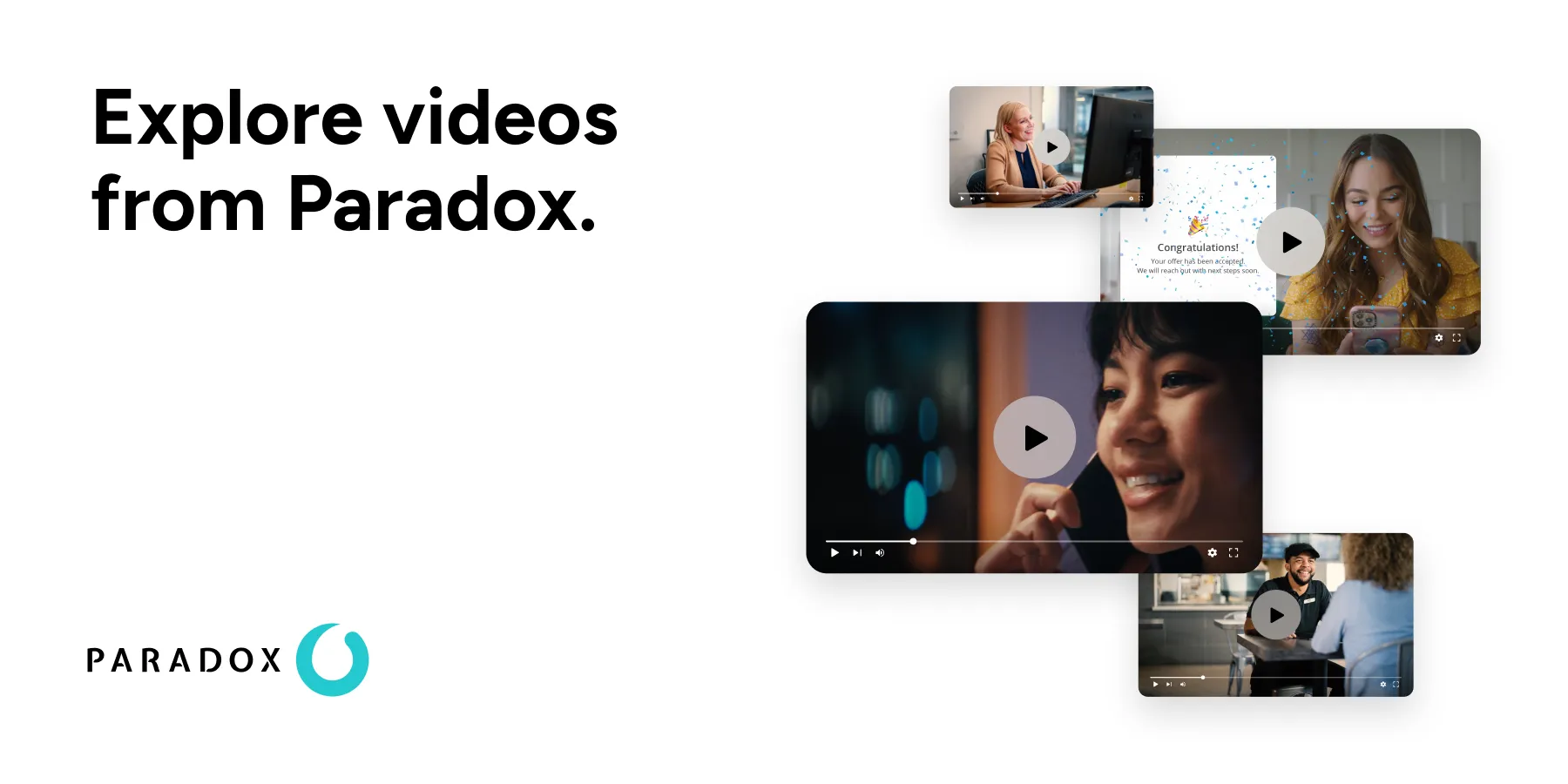
The redesigned client stories hub features dynamic video content above the fold, supporting Paradox’s conversational brand identity by showing clients talk about their successes. Curated entry paths allow buyers to find the proof they’re looking for through the channels they prefer. An elaborate filtering system allows prospects to sort from 60+ featured brands to find the success stories that align with their scenarios.
The redesigned client stories hub features dynamic video content above the fold, supporting Paradox’s conversational brand identity by showing clients talk about their successes. Curated entry paths allow buyers to find the proof they’re looking for through the channels they prefer. An elaborate filtering system allows prospects to sort from 60+ featured brands to find the success stories that align with their scenarios.
For individual story pages, I designed a flexible system that could house up to 7+ distinct content types without compromising the user experience. Quick summaries of the client’s challenge, solution, and results allow users to identify vital ROI and tech stack details in seconds—while also ensuring the page provides enough context whether it houses one piece of content or several.
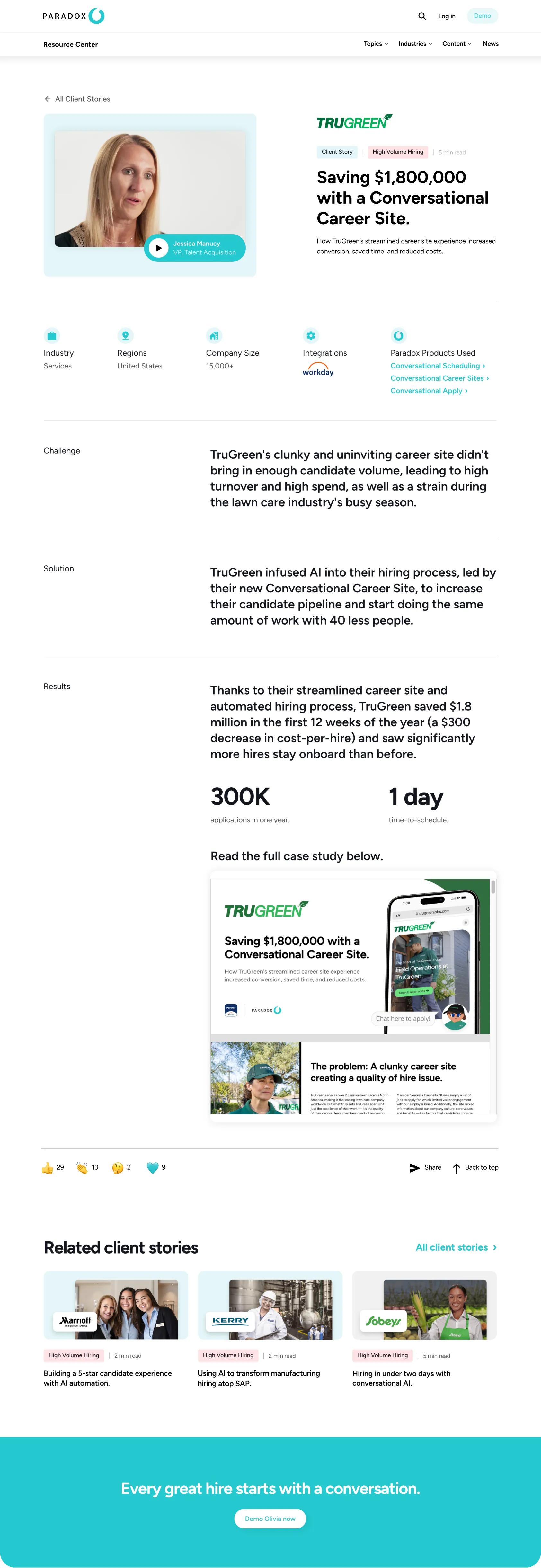
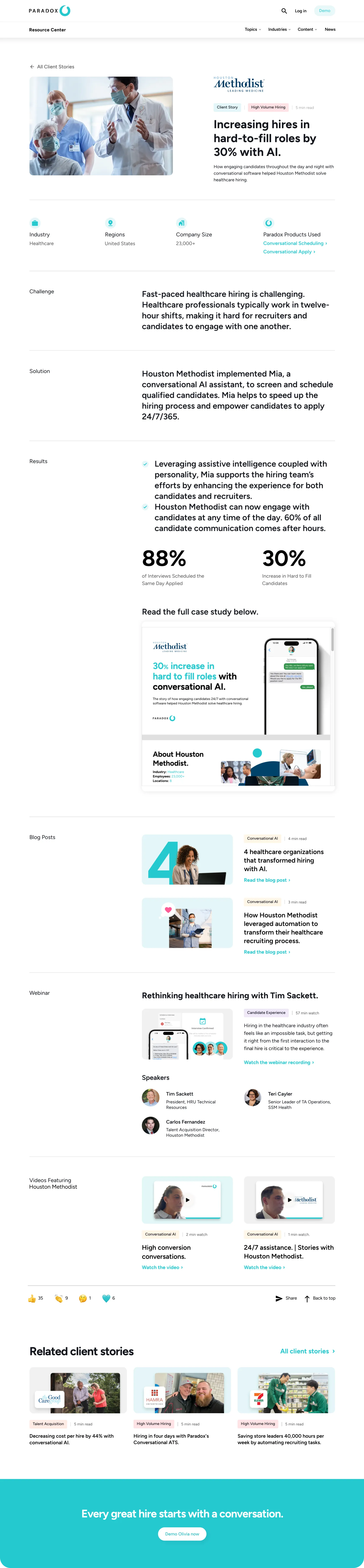
This ecosystem brought together all of our client content and became a major differentiator in the market—no other HR tech competitor came close to Paradox’s volume of client success stories. These became widely shared outside of the website, humanizing our storytelling and solidifying Paradox as a trusted leader.
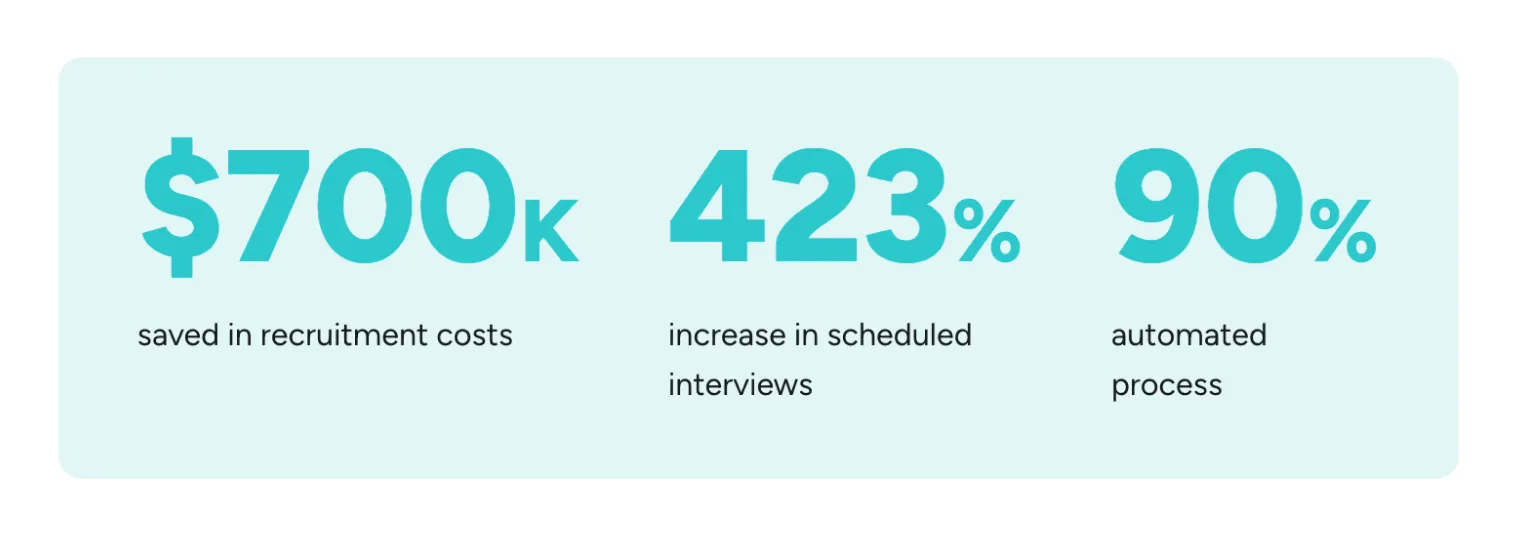
The redesigned client stories hub increased conversion by 70%, making it the second-highest converting page within the resource center. After the launch, client story contributions to total website MQLs more than doubled from 9.19% to 22.7%.
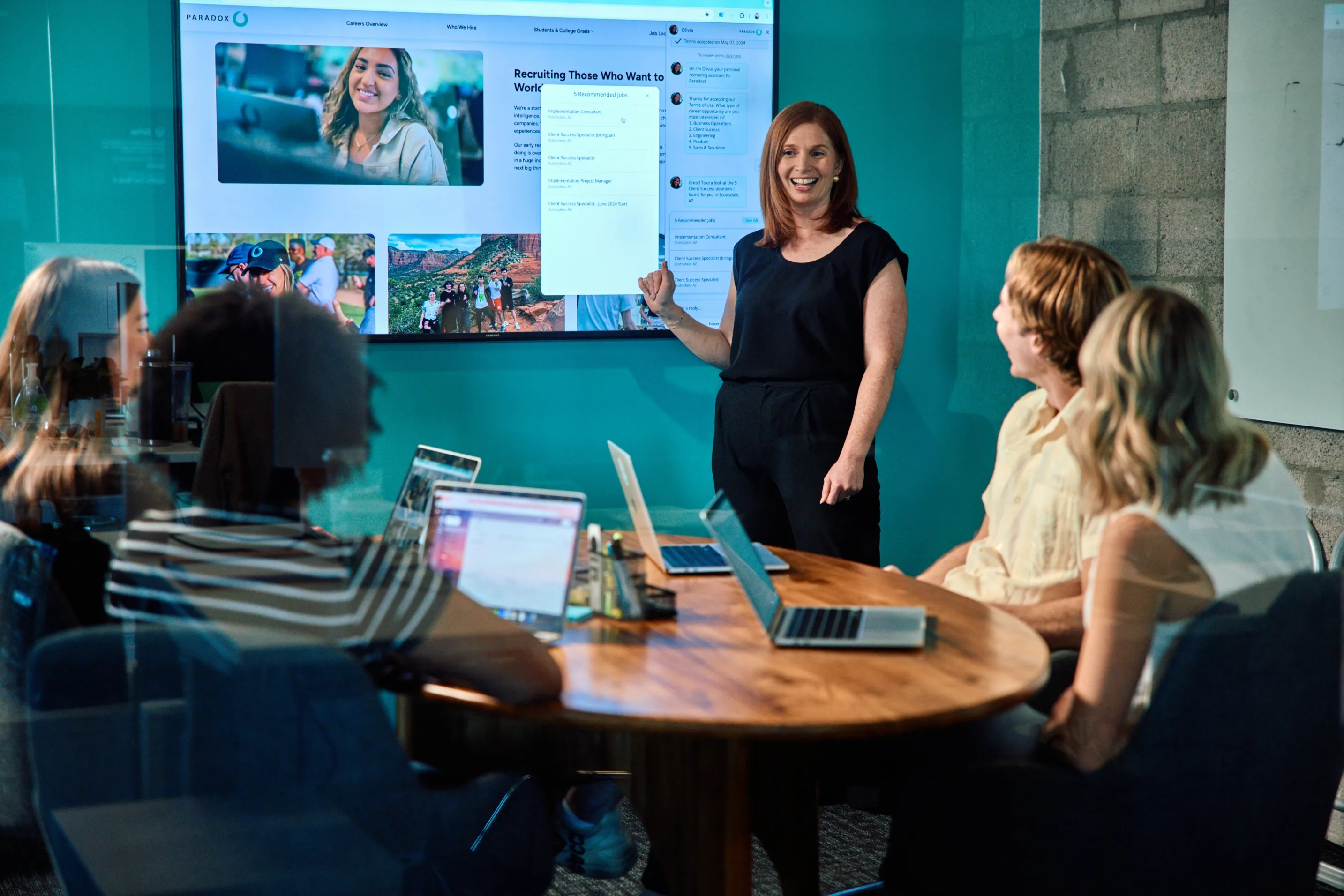

Home and product web pages
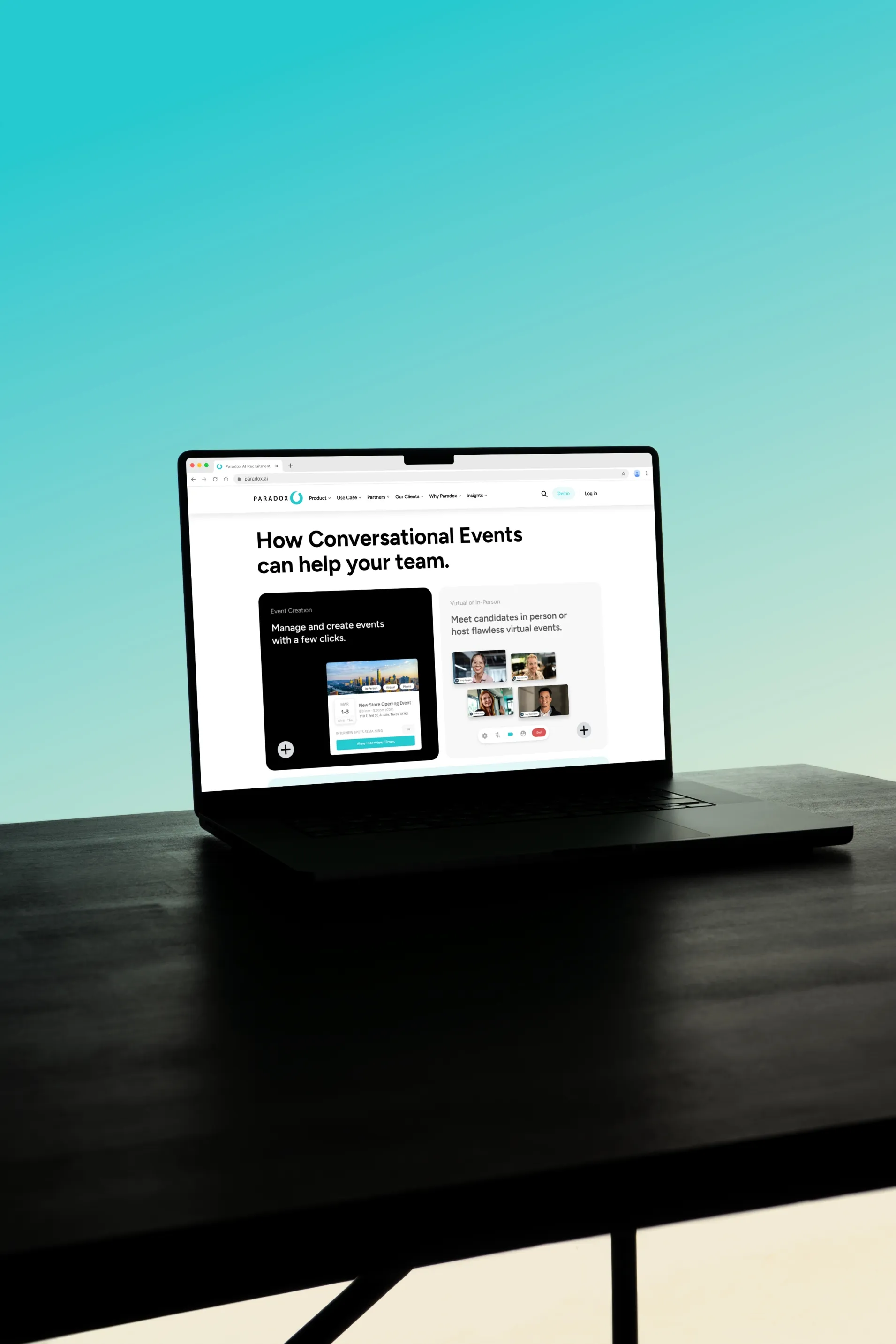
I led the UX and visual direction for our core site pages to create experiences that converted. My web strategy focused on feature validation, improving AI and brand education, and enhancing the user journey with elements like dynamic visuals and layered information. By using a structured grid, subtle interactions, and strong typographic hierarchy, I helped users navigate information with ease. With this, I also reimagined “request demo” sections and CTAs to increase demo signups.

.webp)
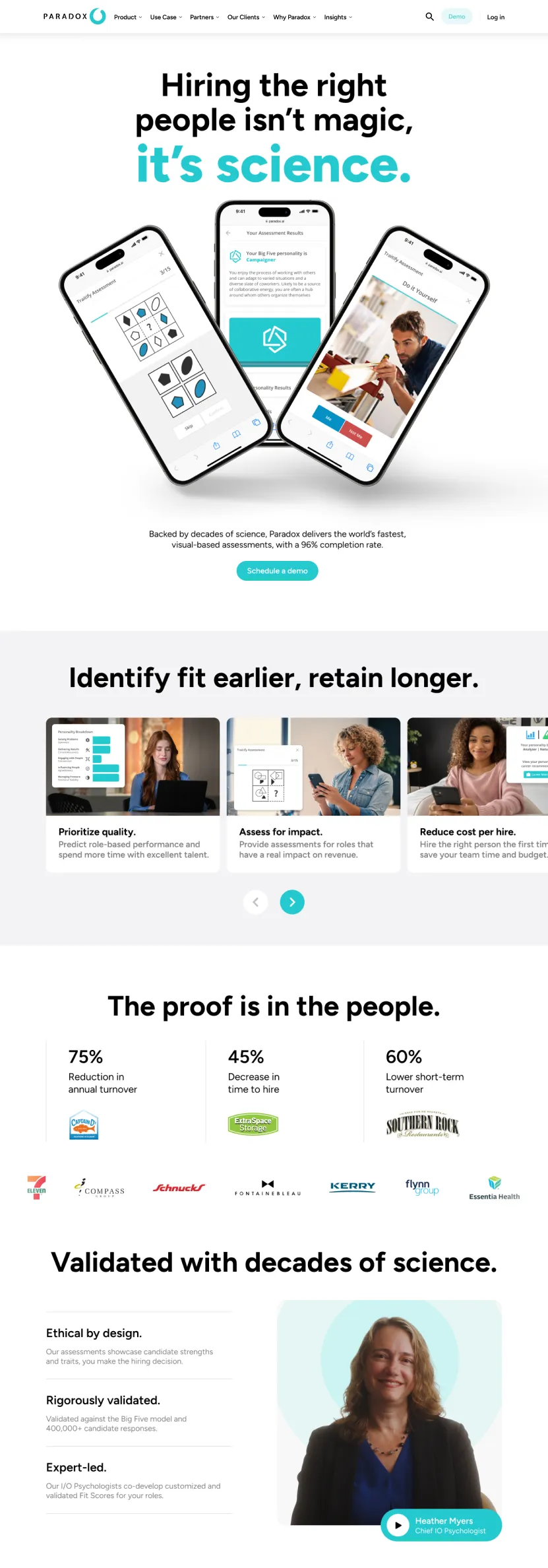
To showcase the product’s functionality, I used bento-style modules with a blend of 3D animations, expressive stills, and digestible copy. These modules allow users to quickly scan key features or dive deep into finer details. Animations required close collaboration with motion designers and developers to ensure site performance was up to par. When longform animations threatened site load times, I led the pivot to refine their execution and maintain a premium feel without sacrificing site speed.


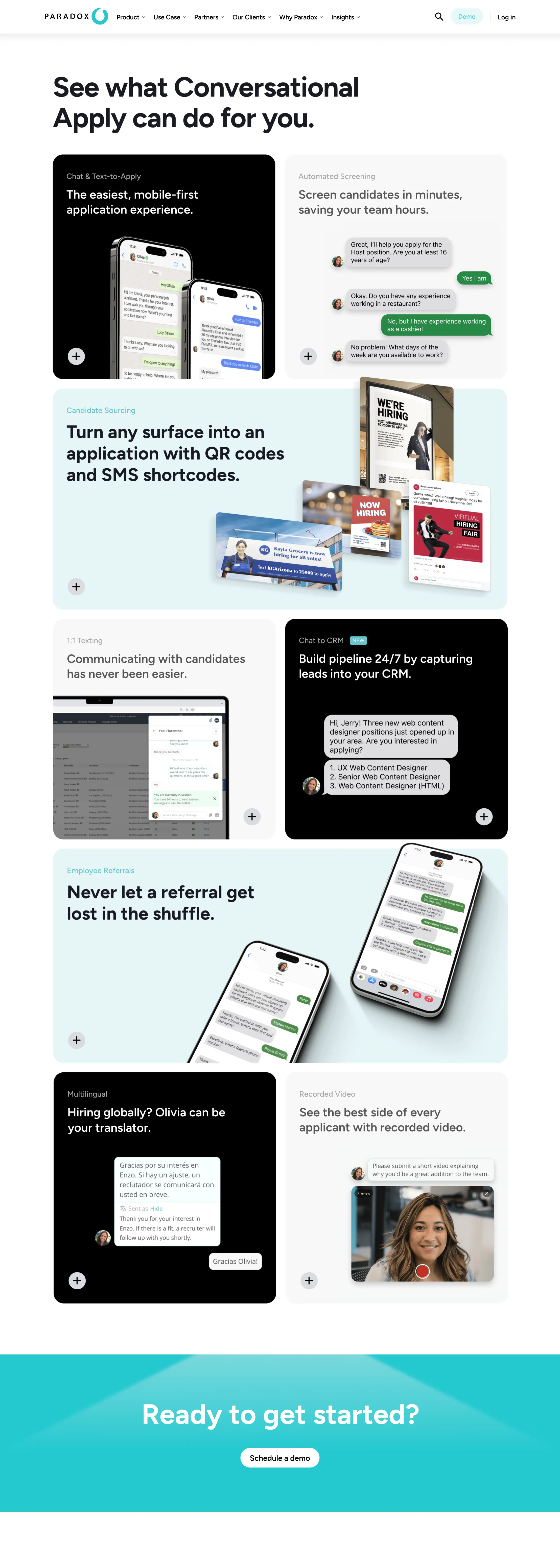
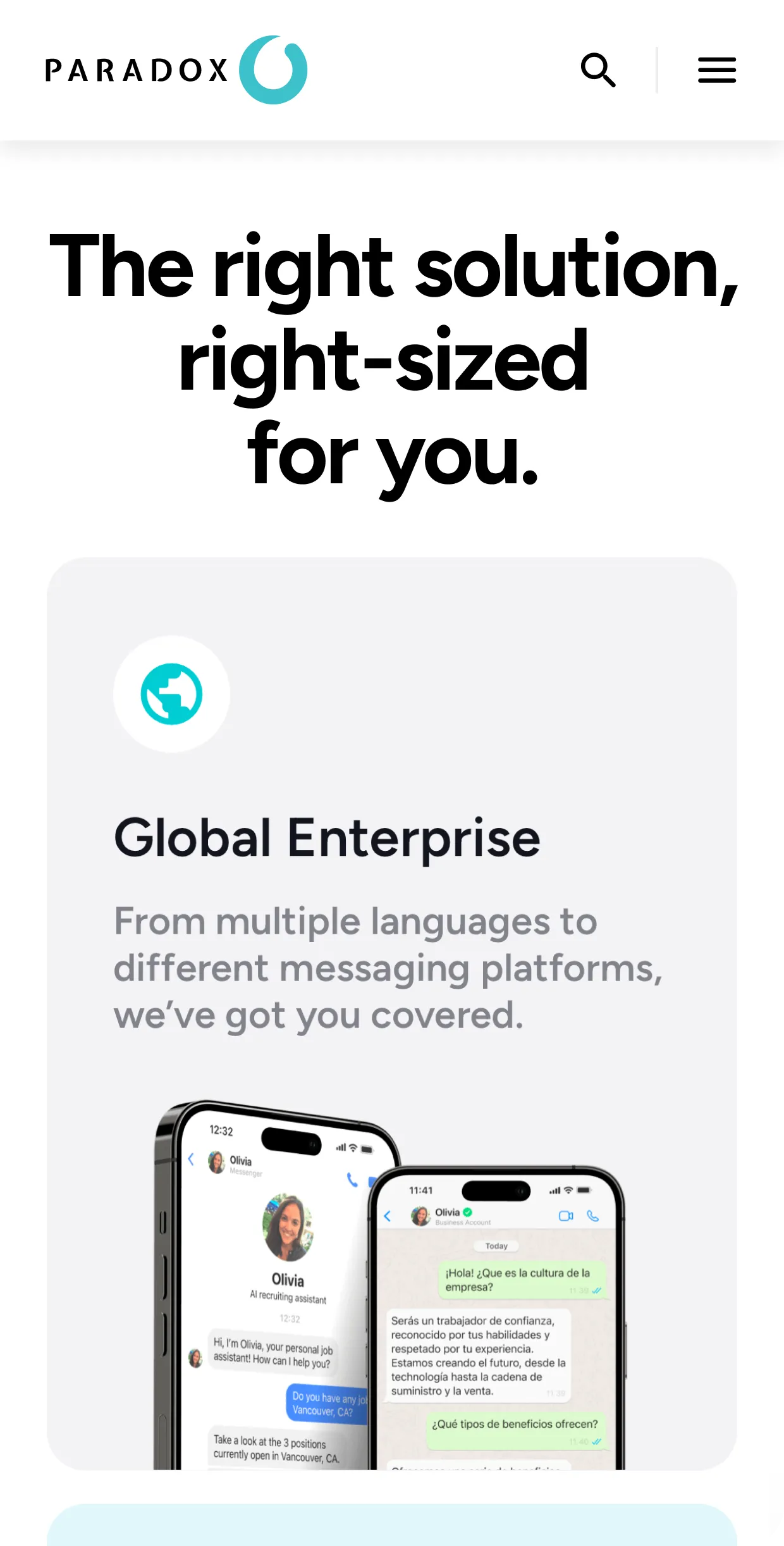
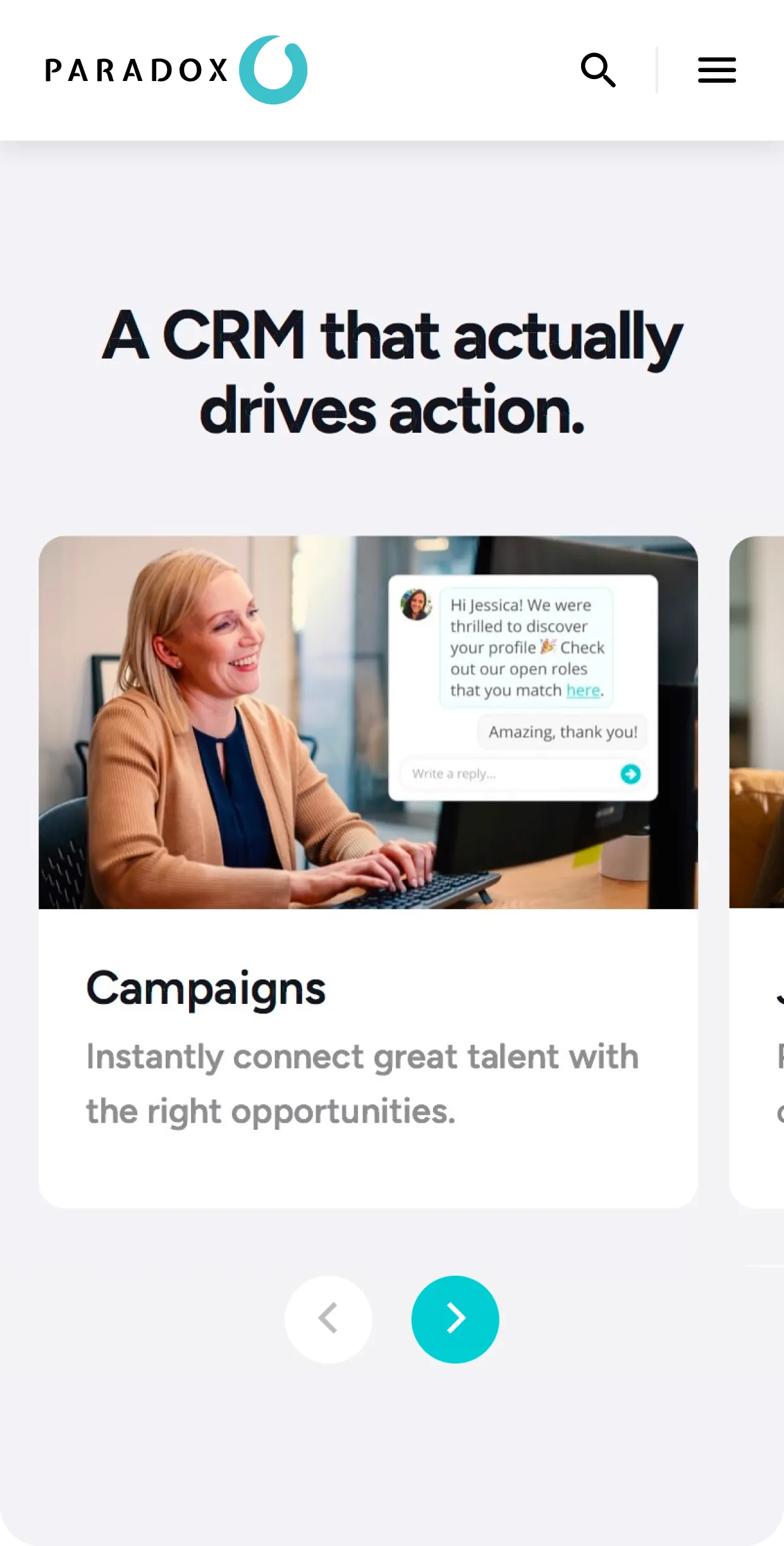
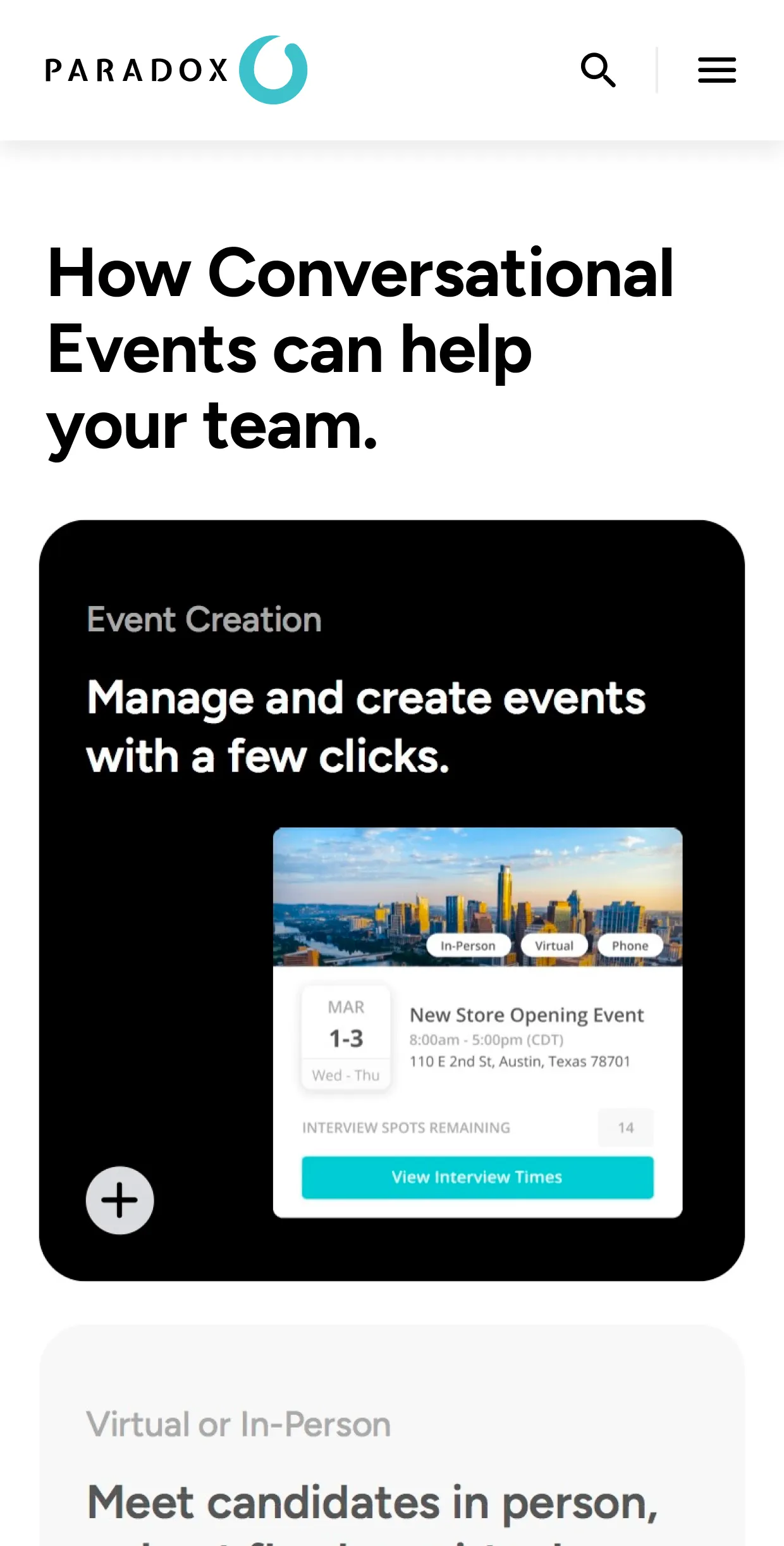
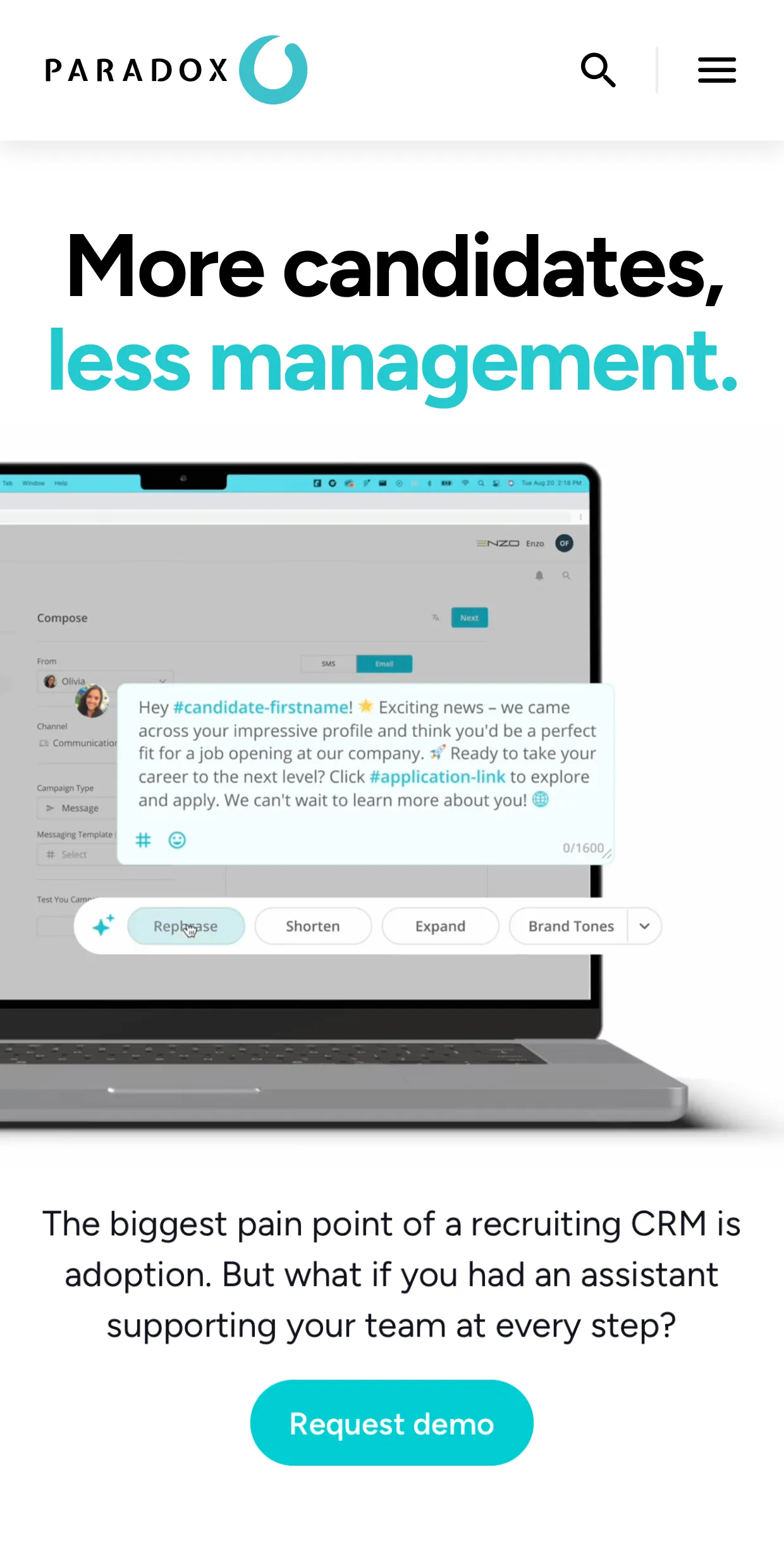
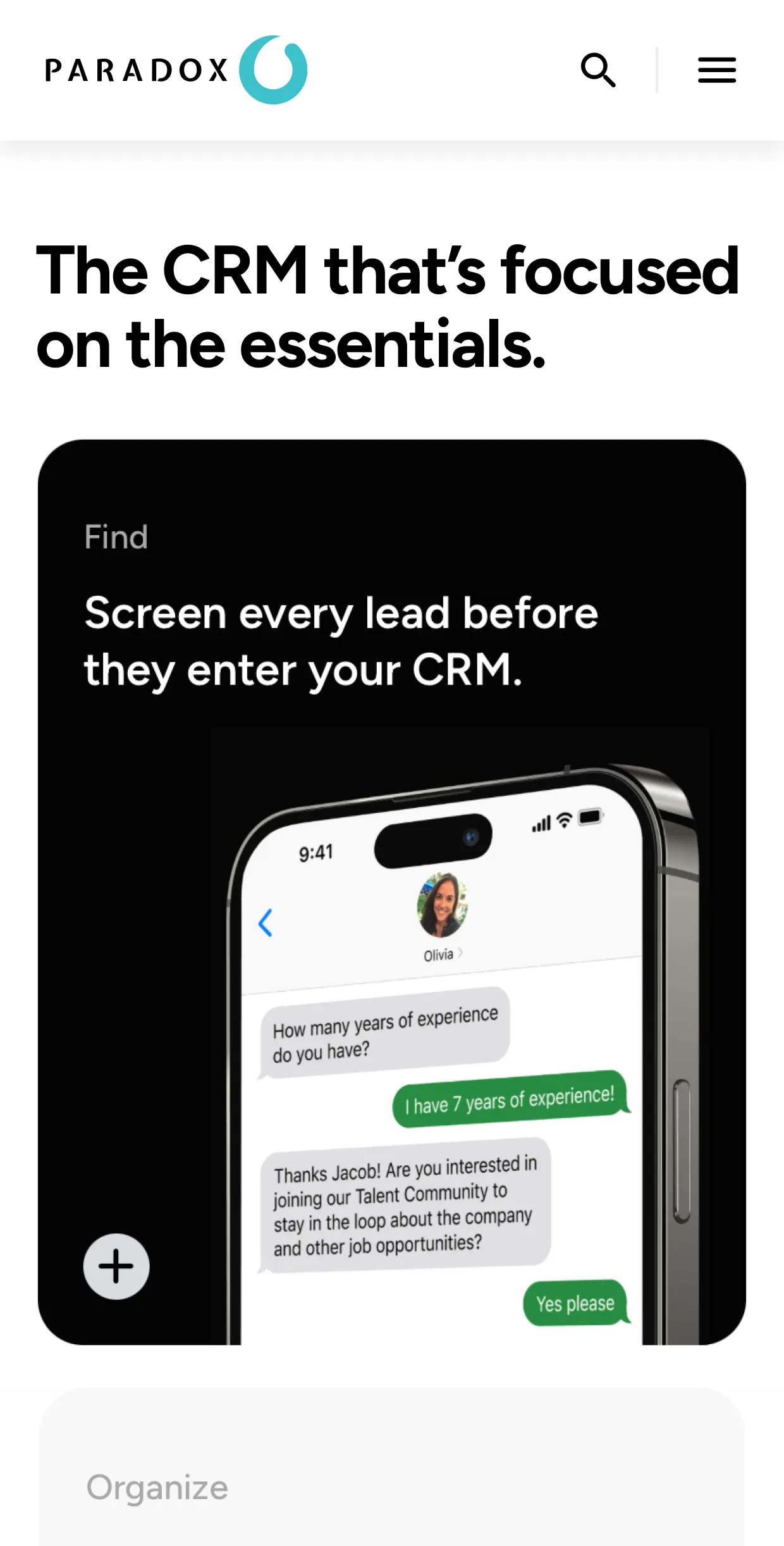
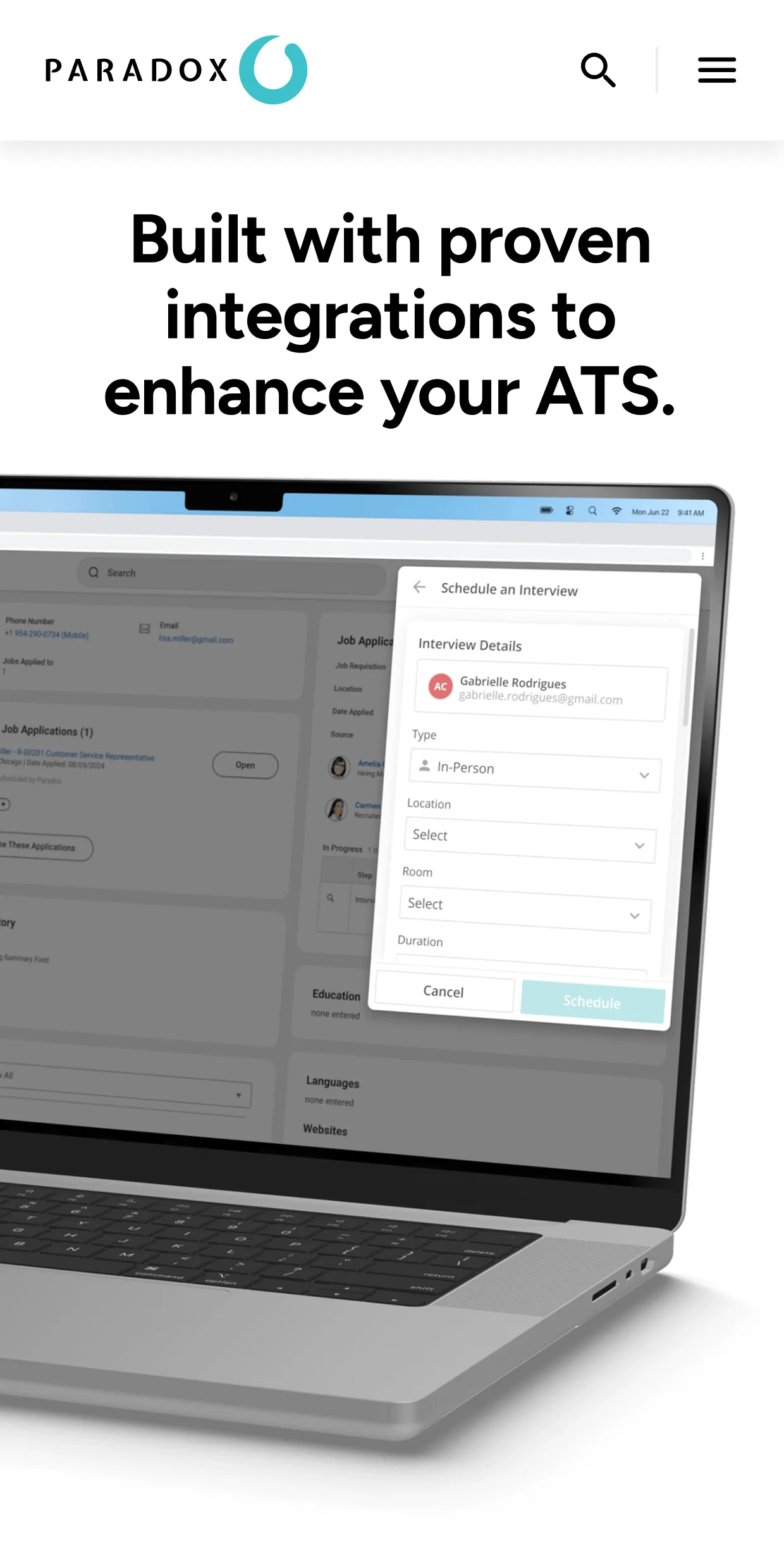
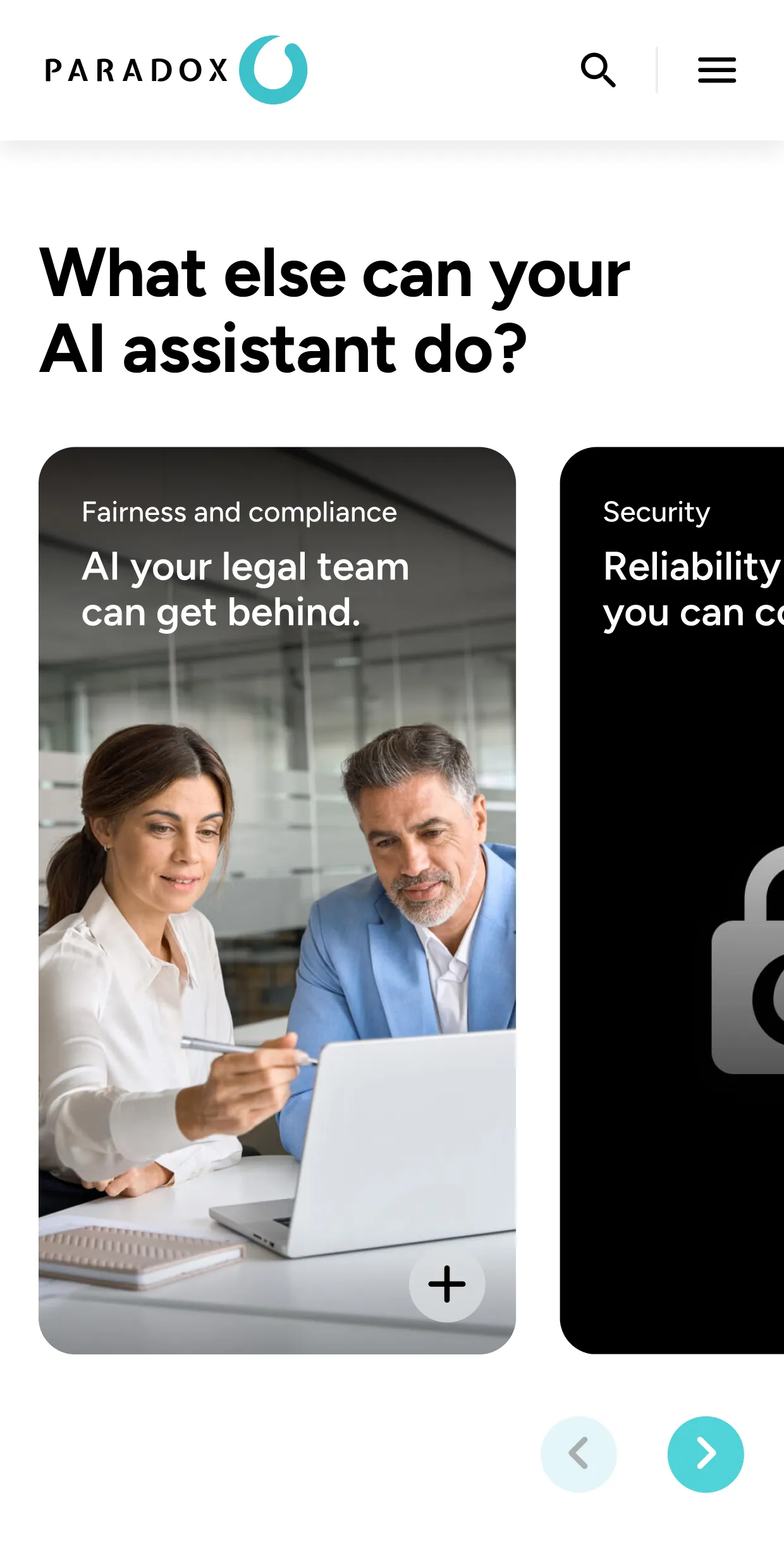
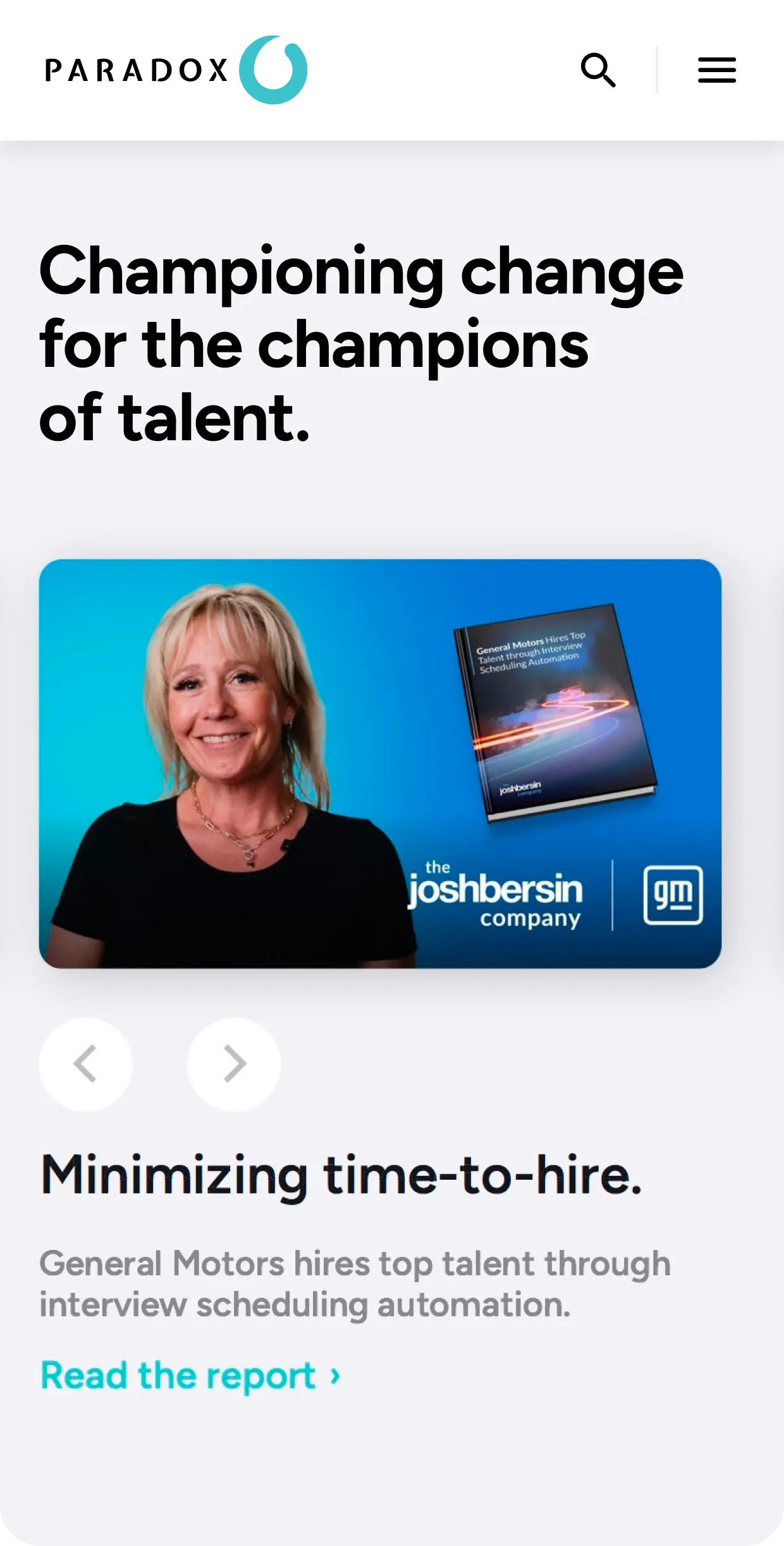
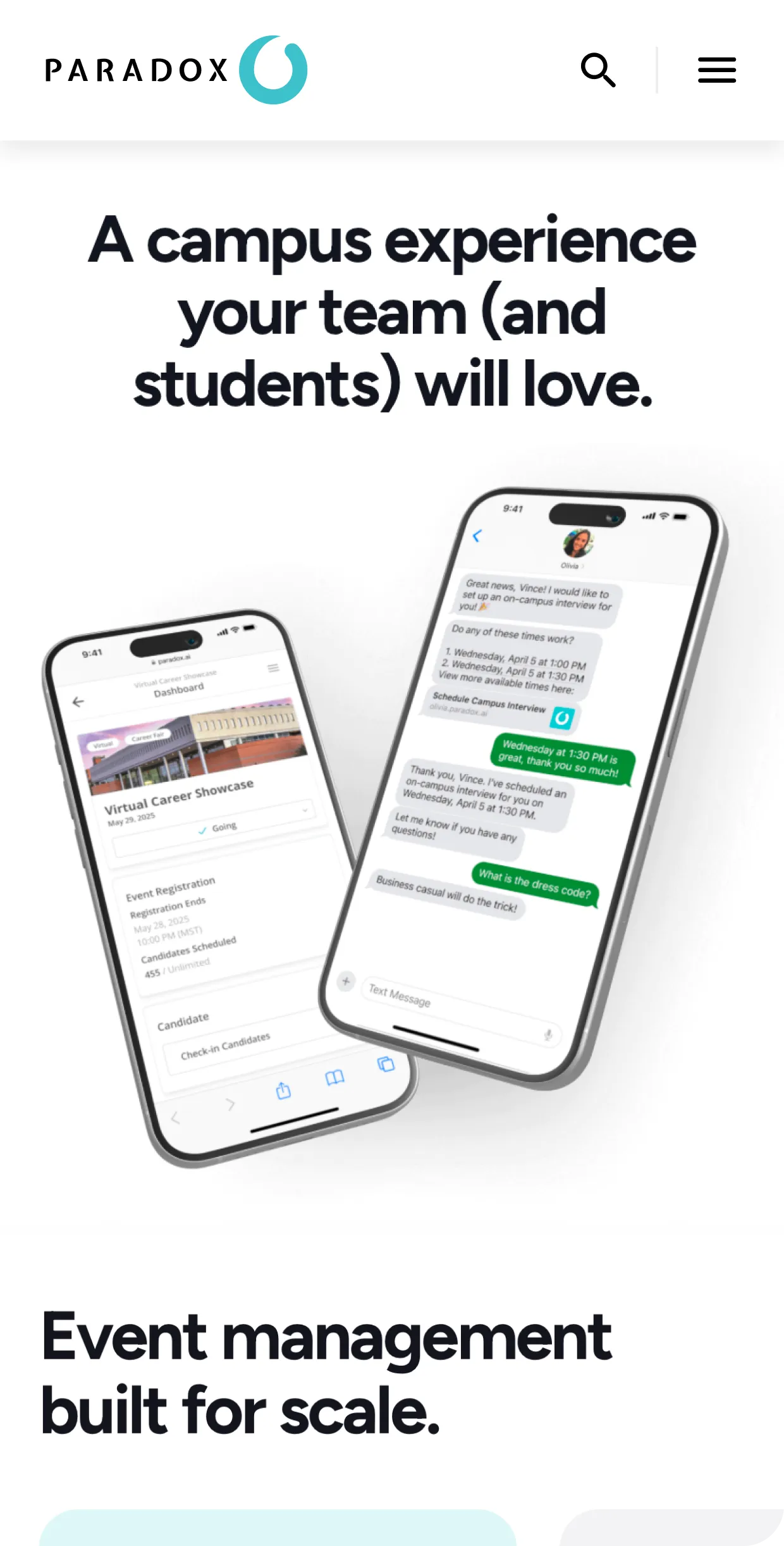
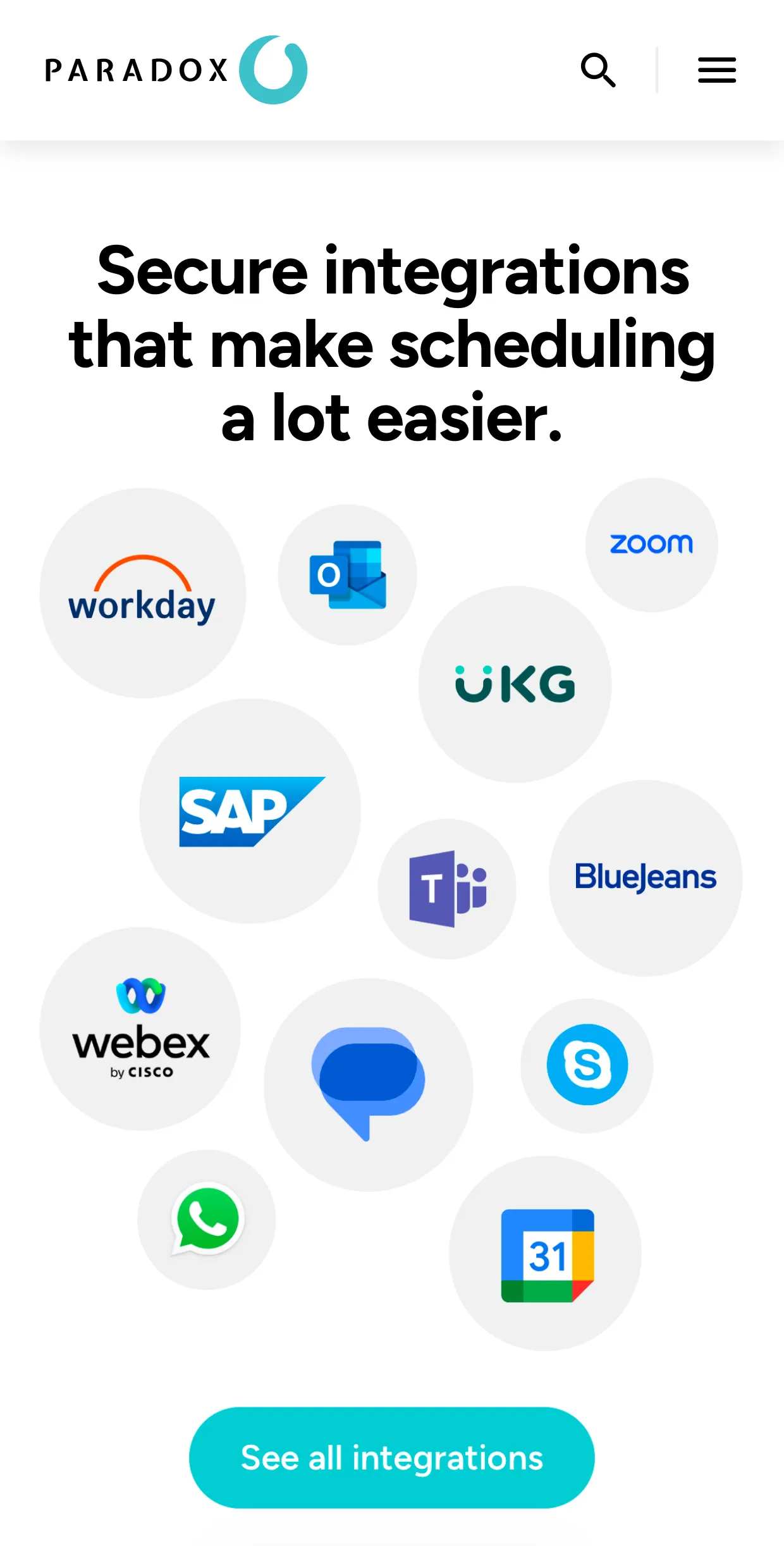
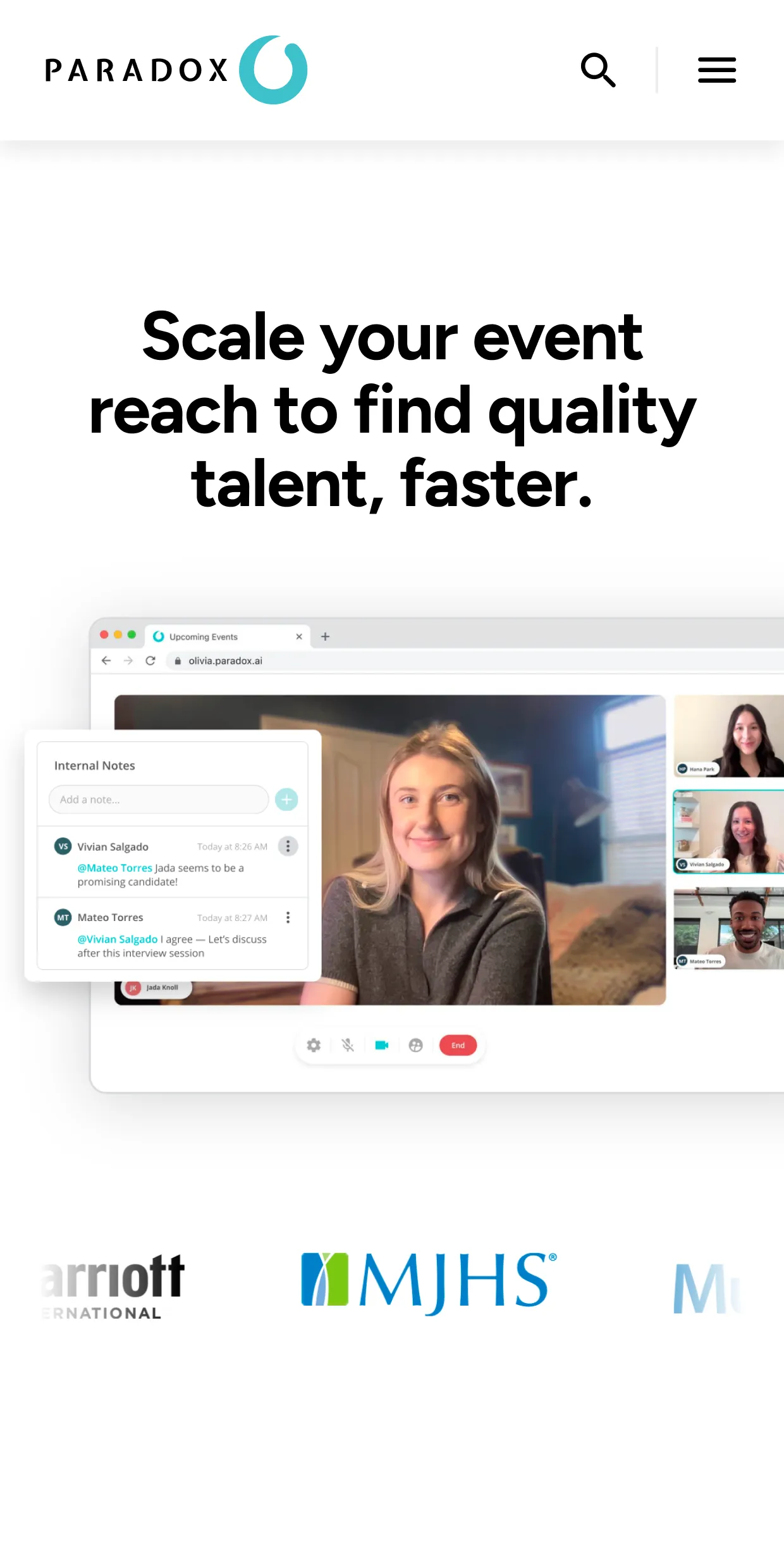
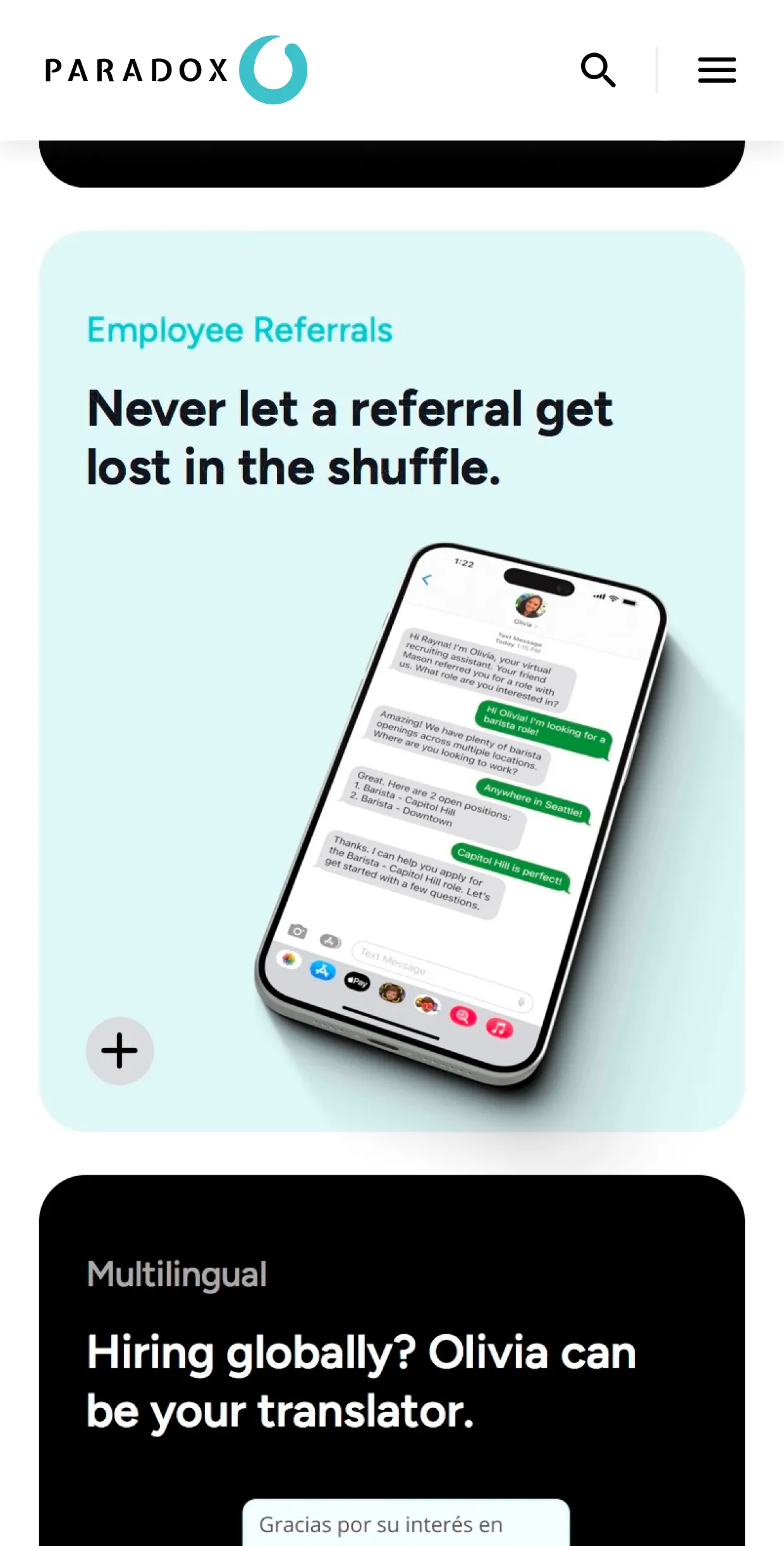
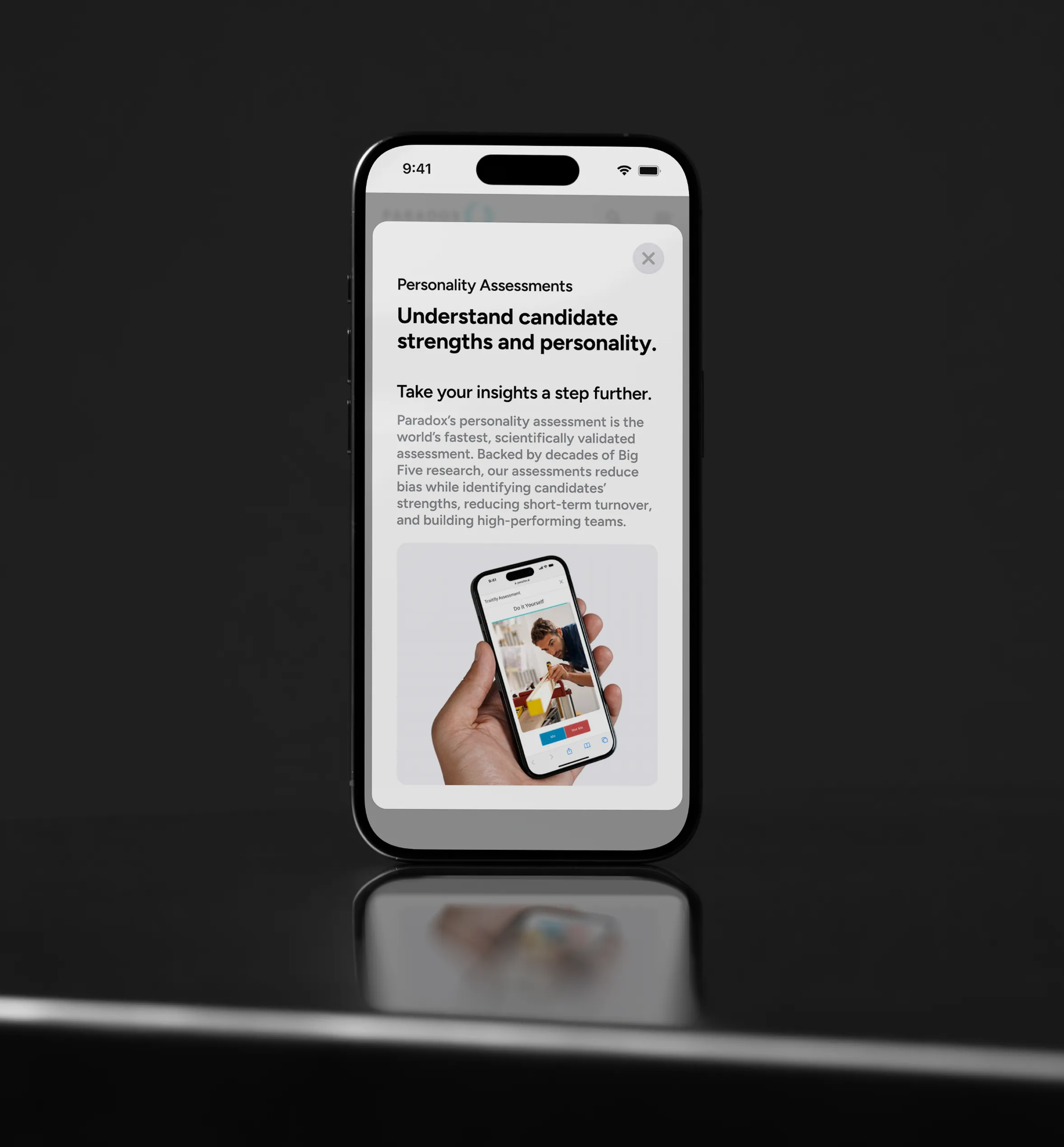
Aligning the core web experience with the final brand identity drove immediate and measurable growth. The product pages saw a 236% YOY increase in MQLs and a 33.5% jump in engagement, while the home page redesign increased page conversion rates by 223%
and page engagement by 10%.
Events
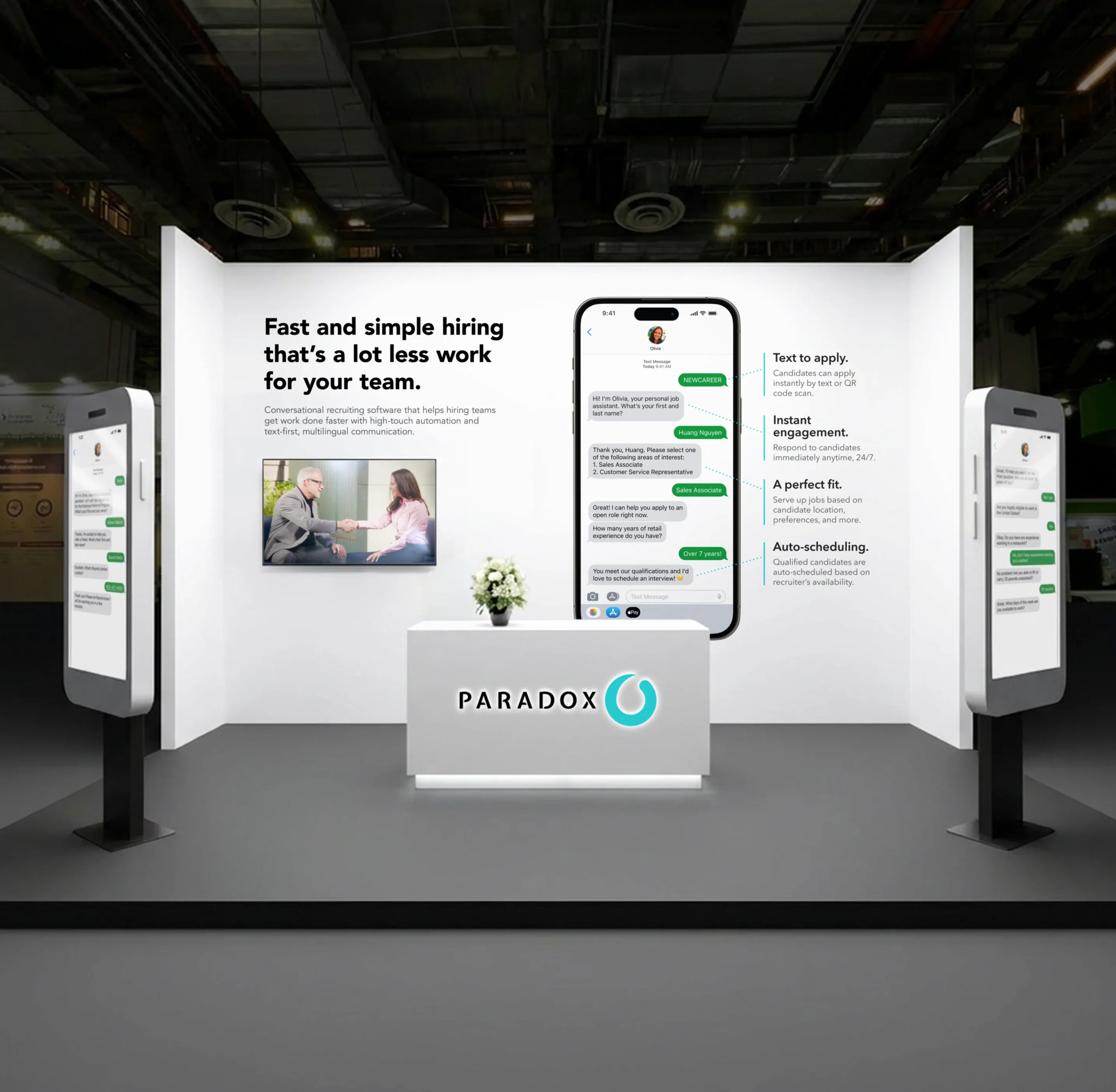
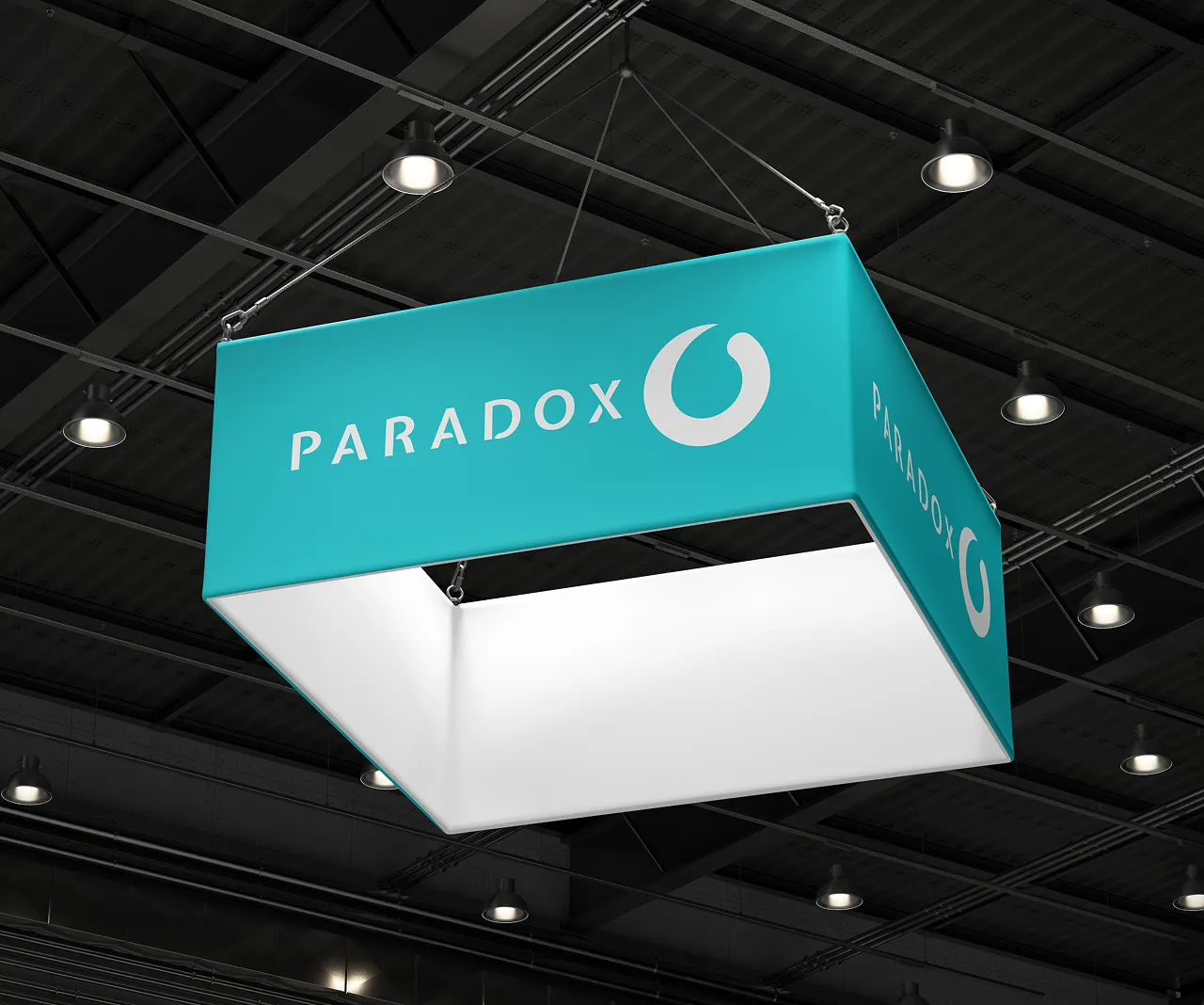
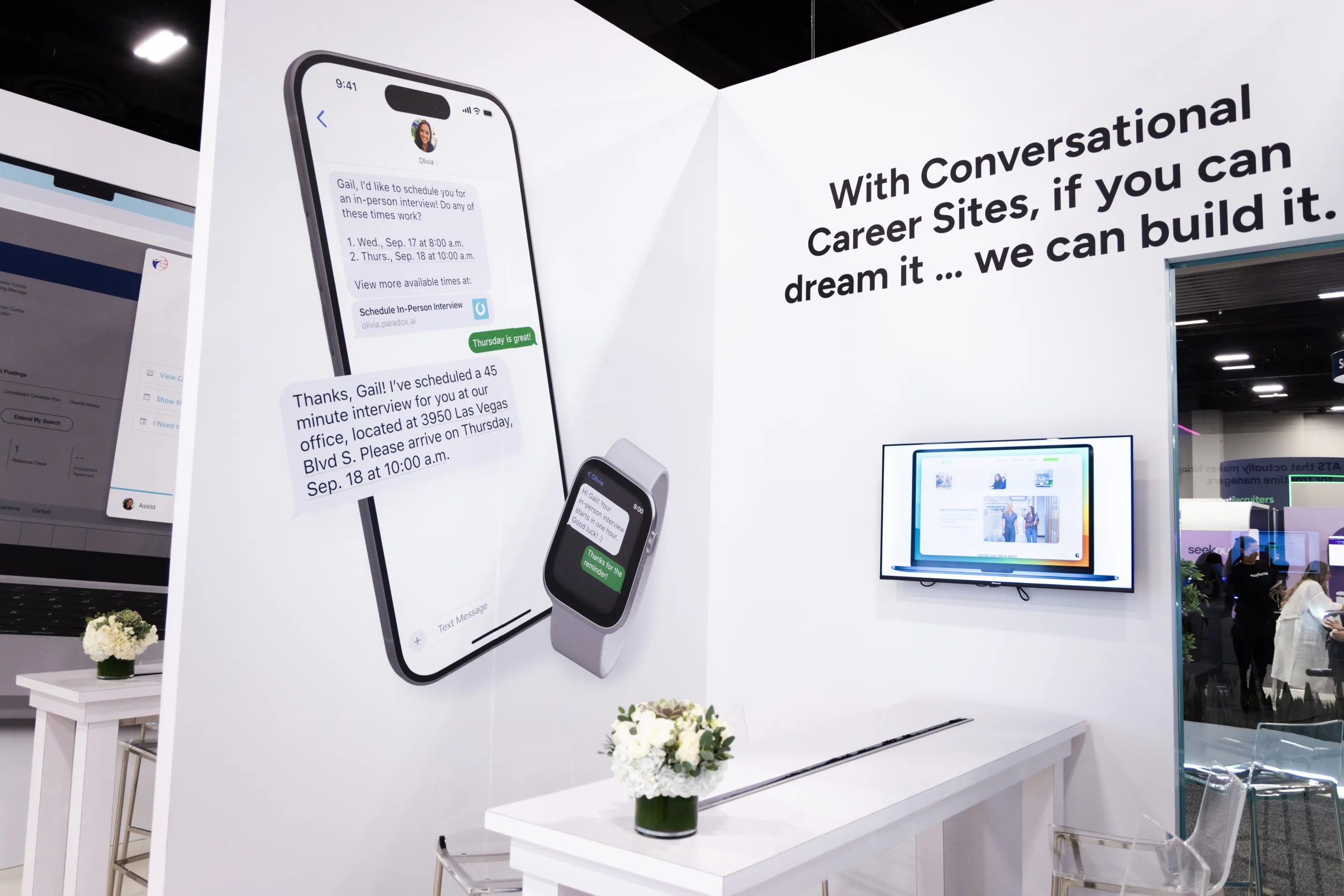
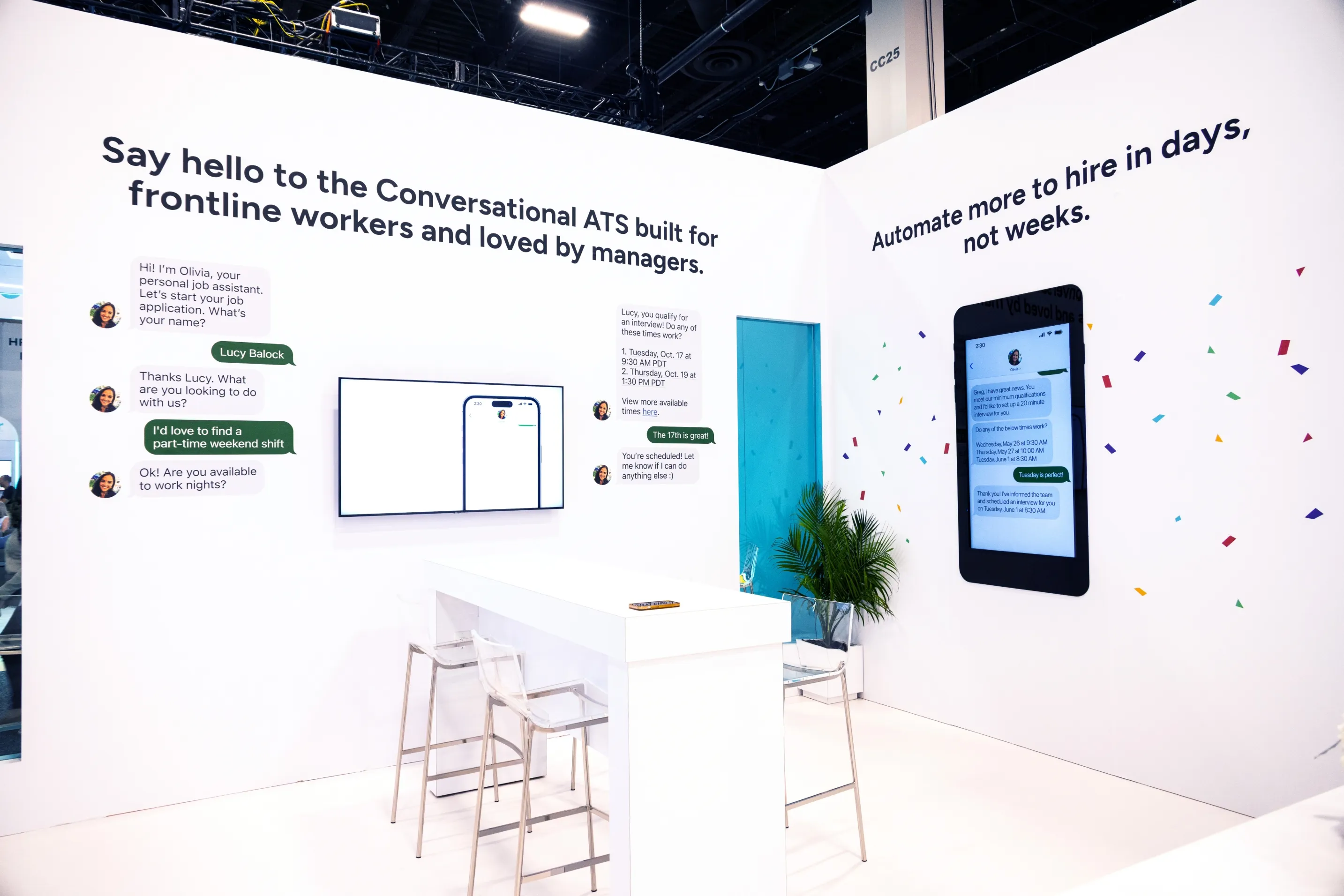
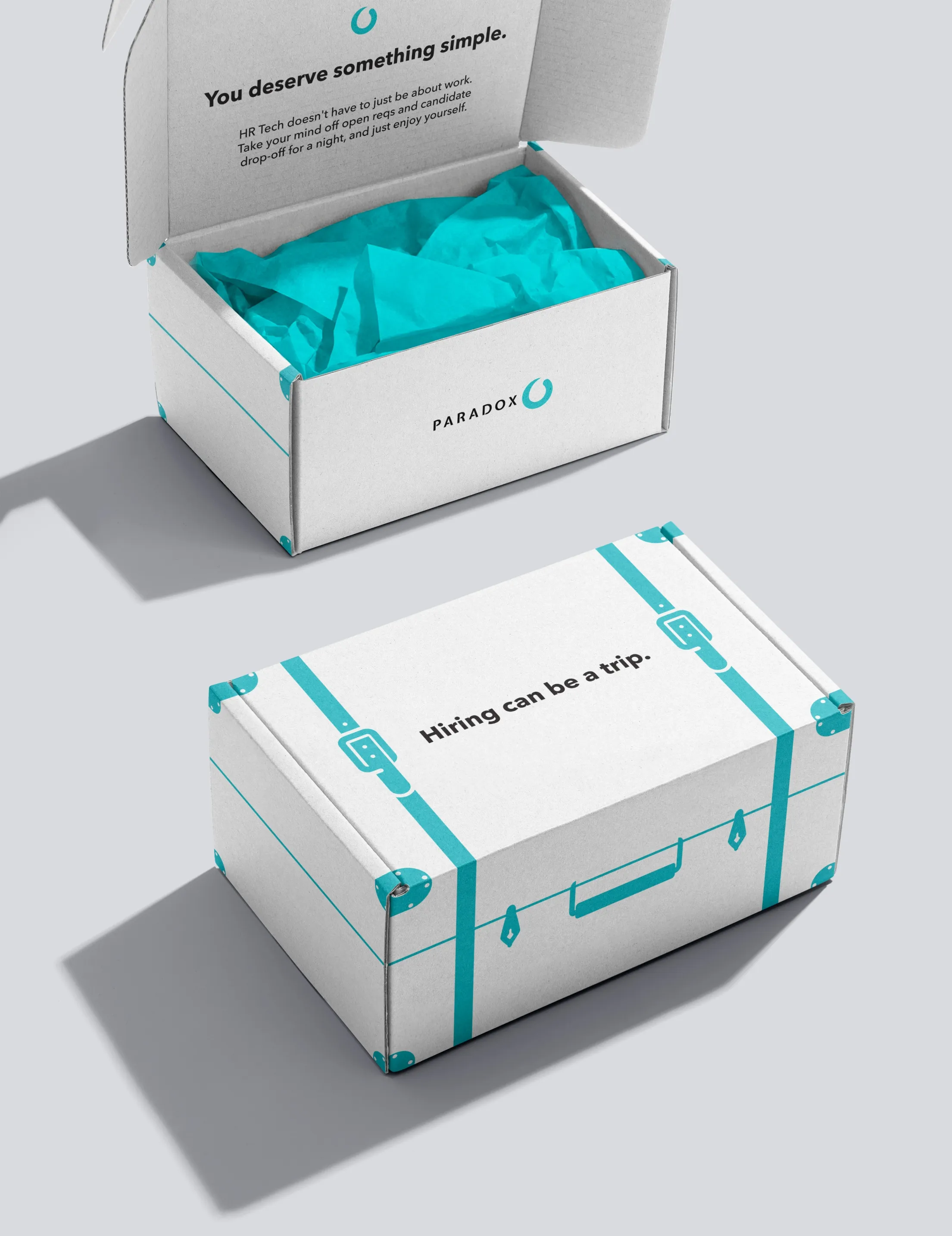
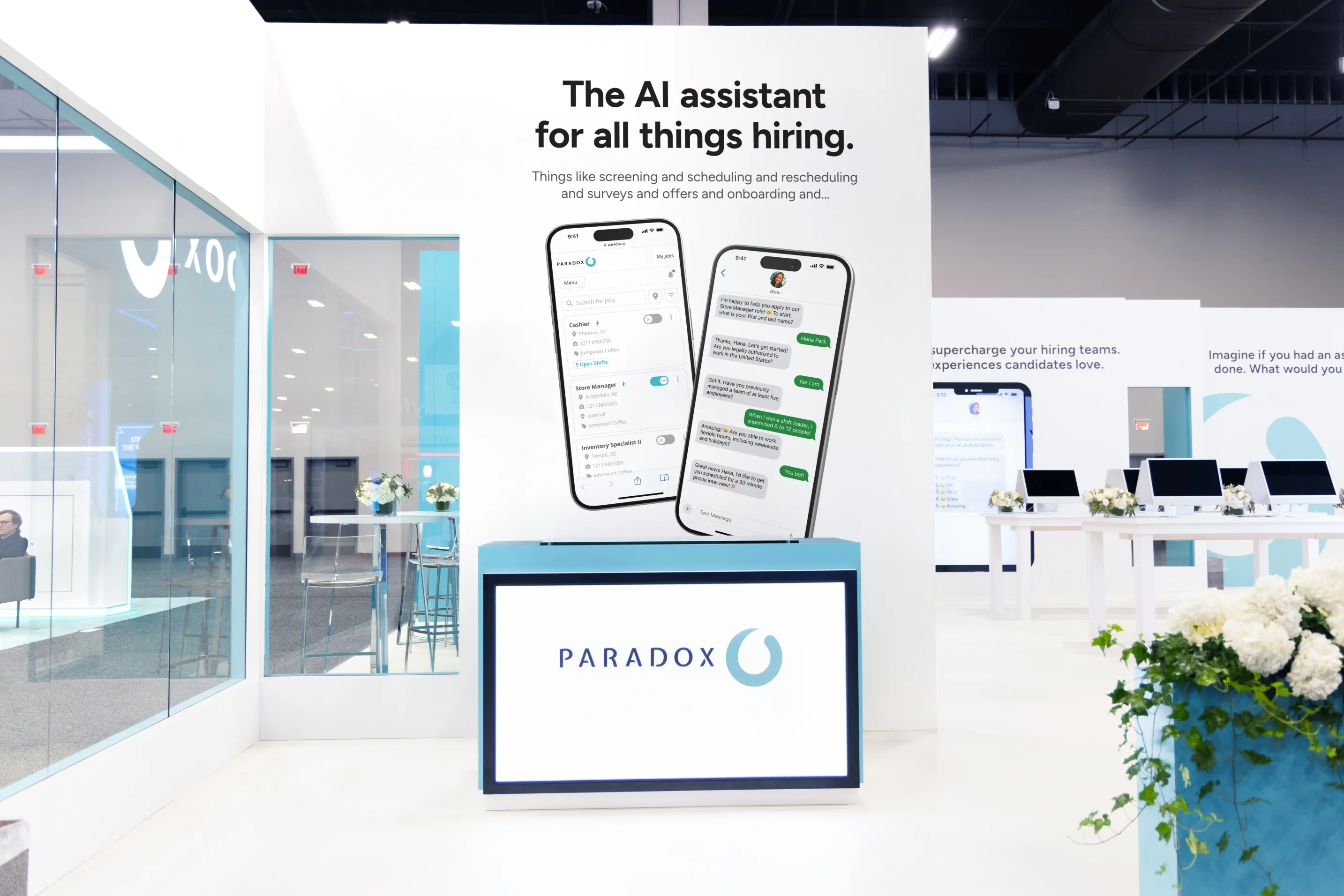
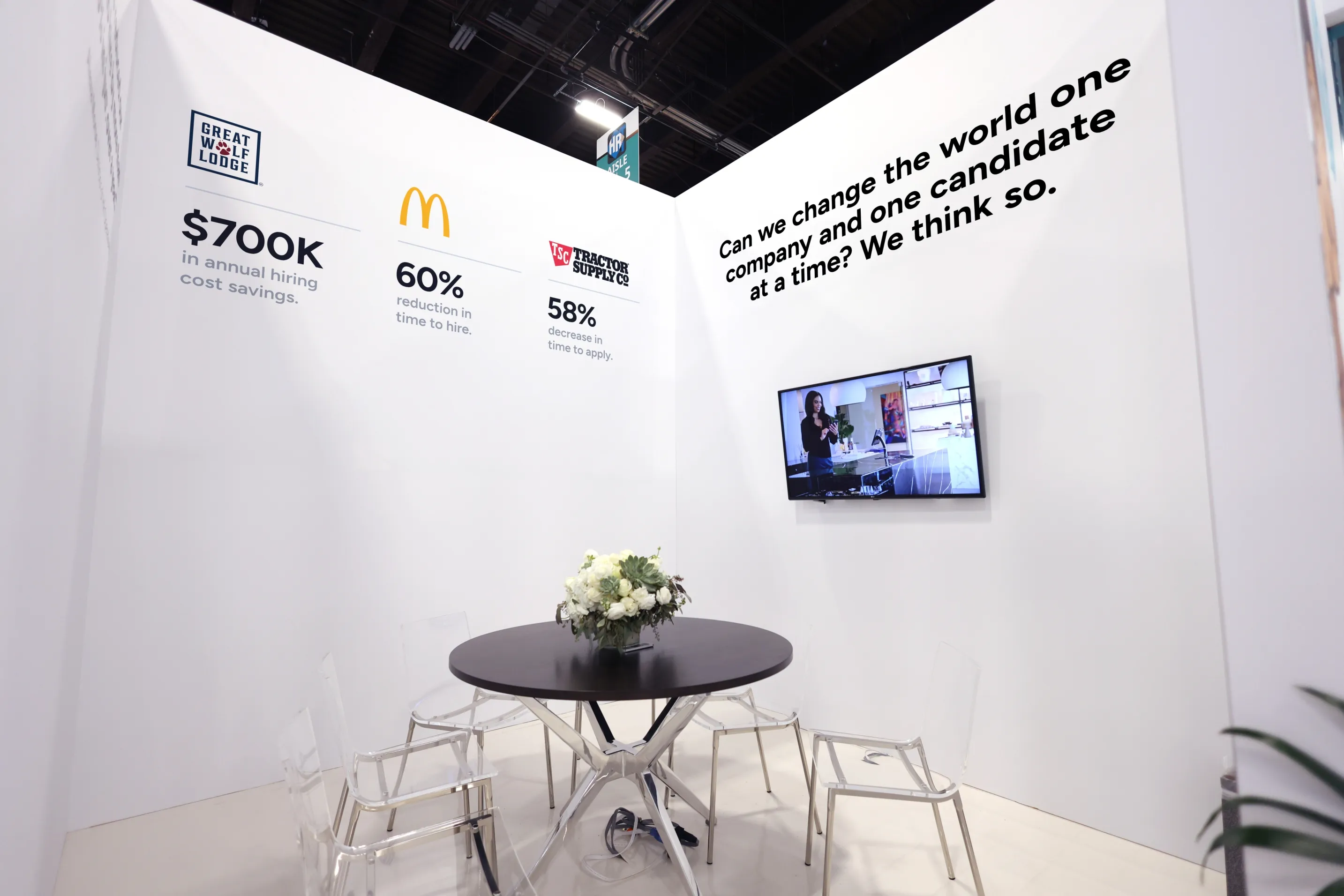
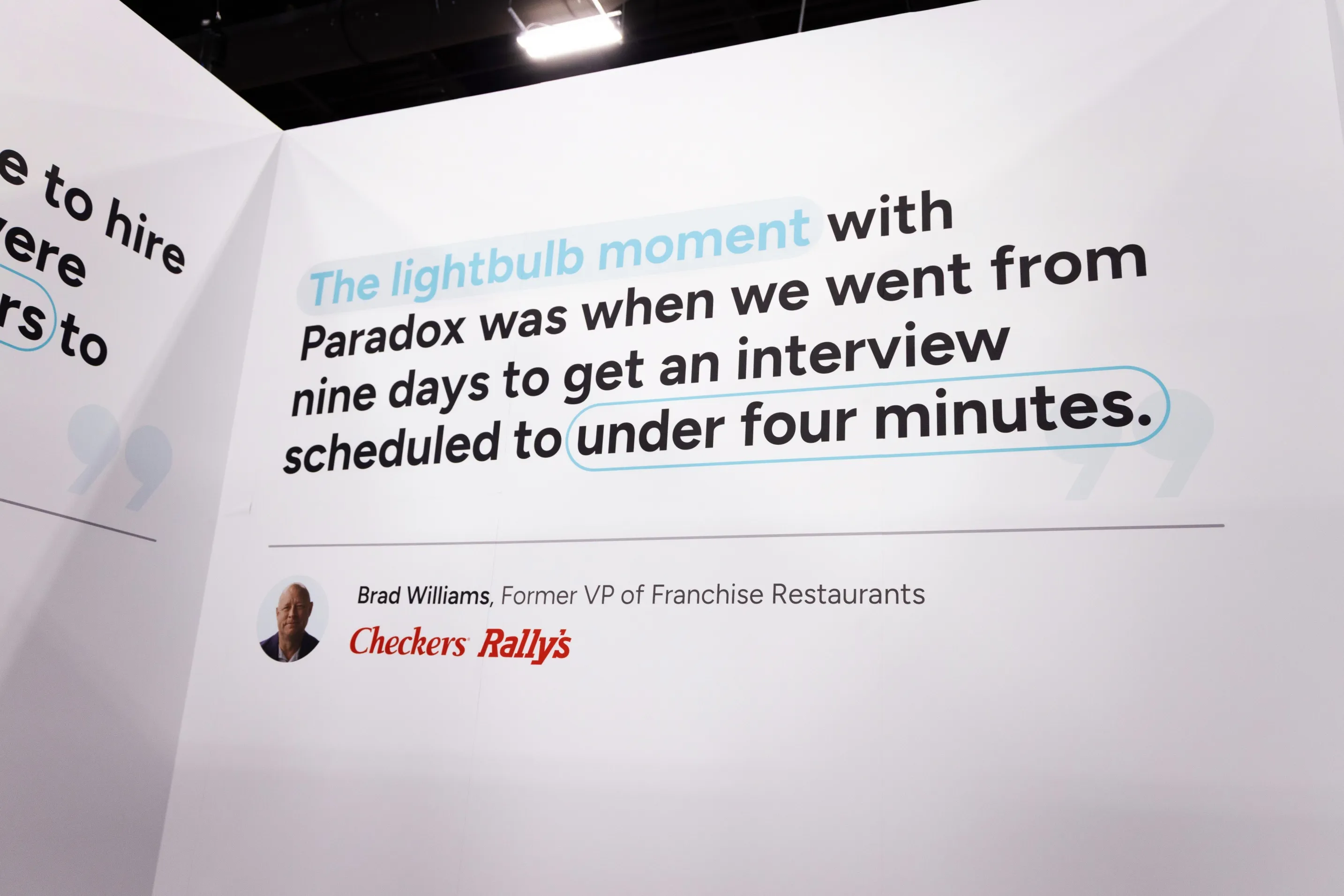
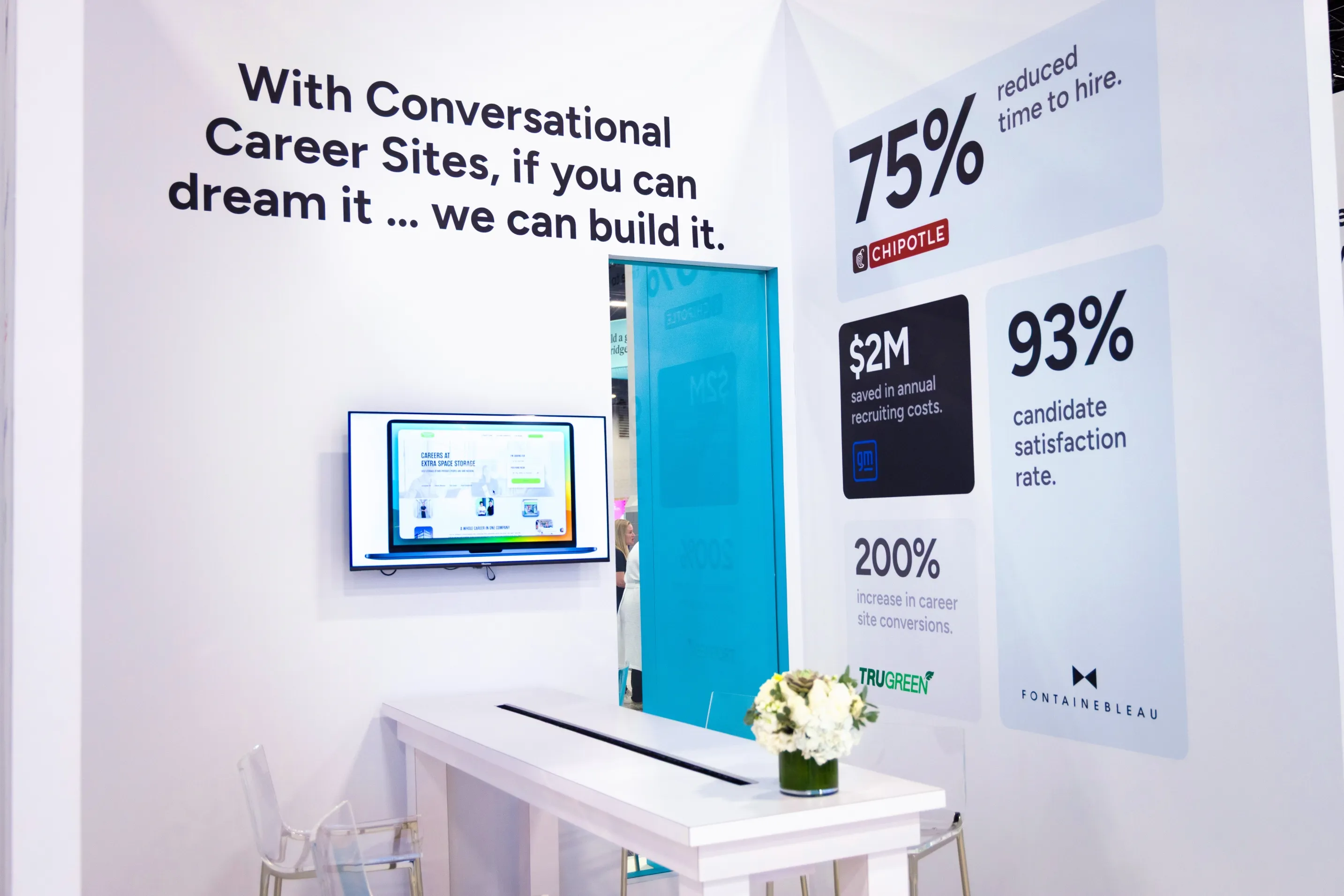
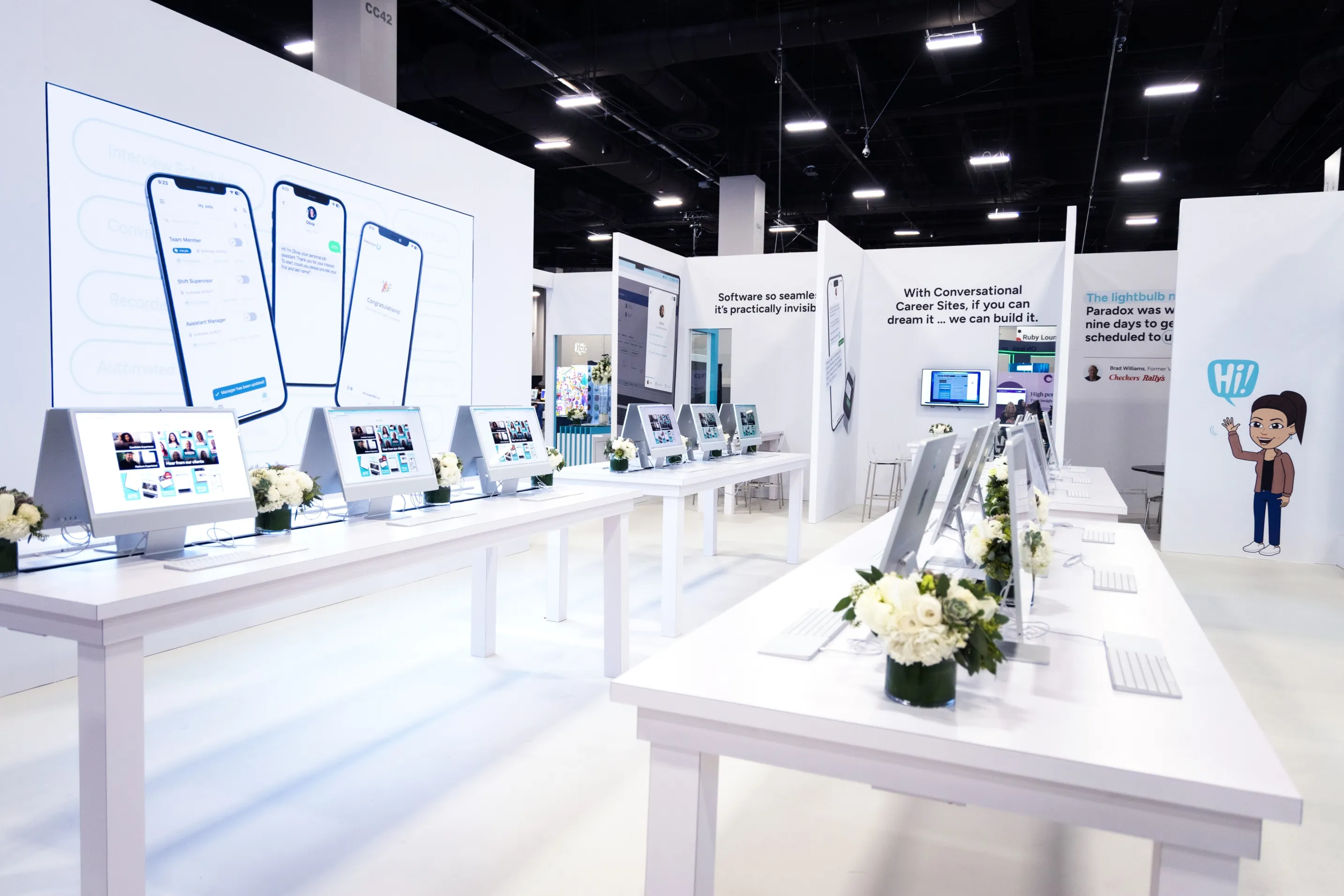
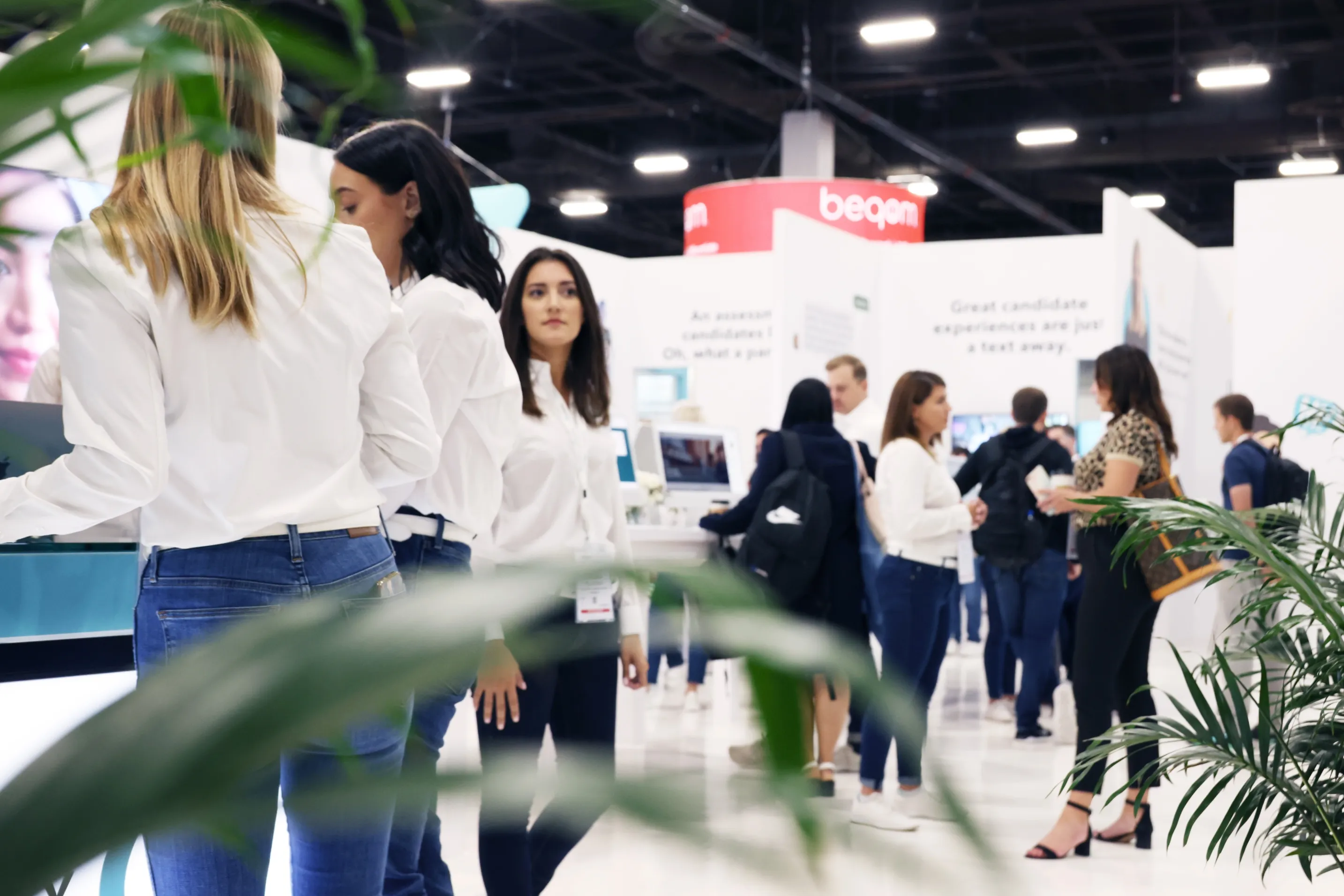
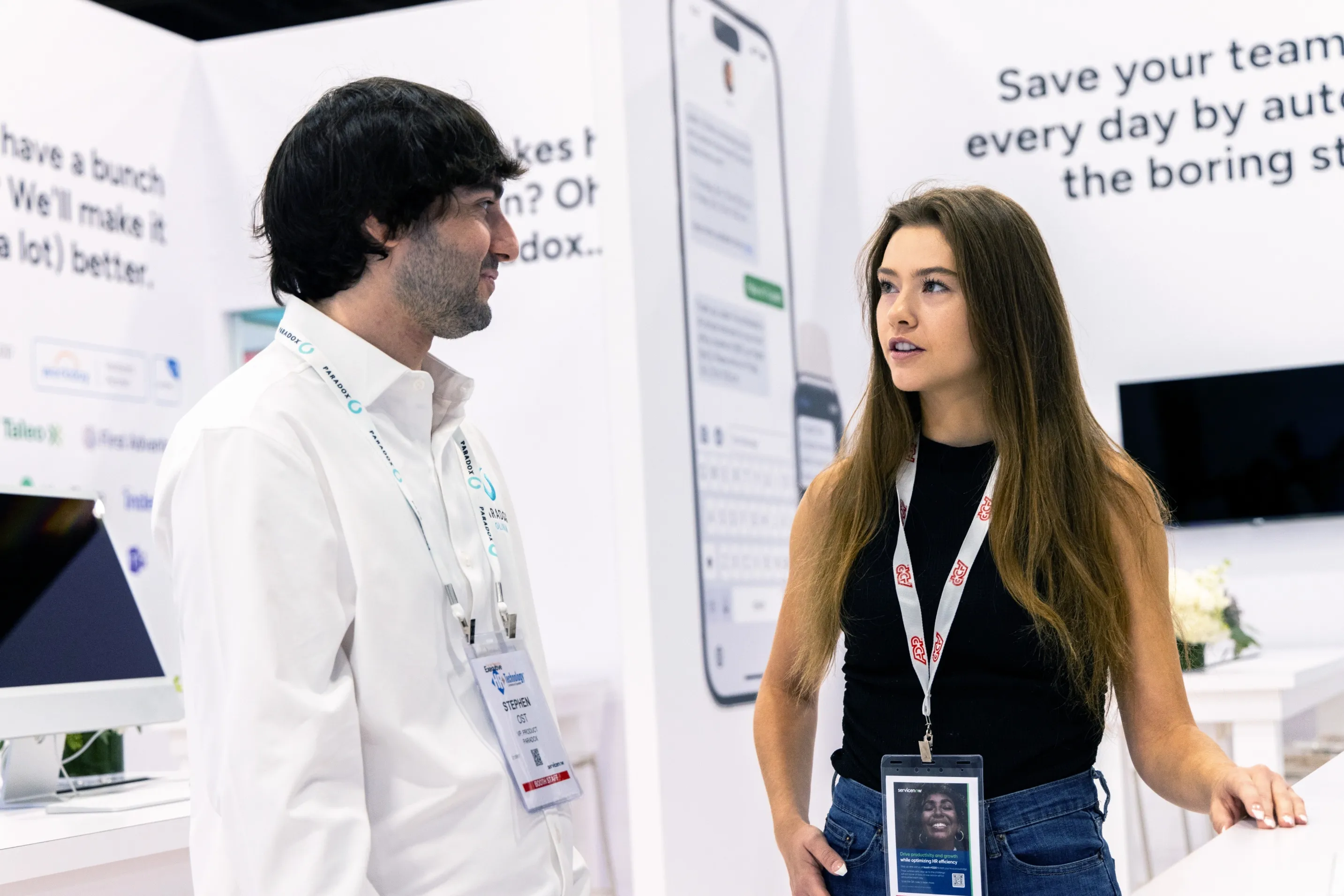
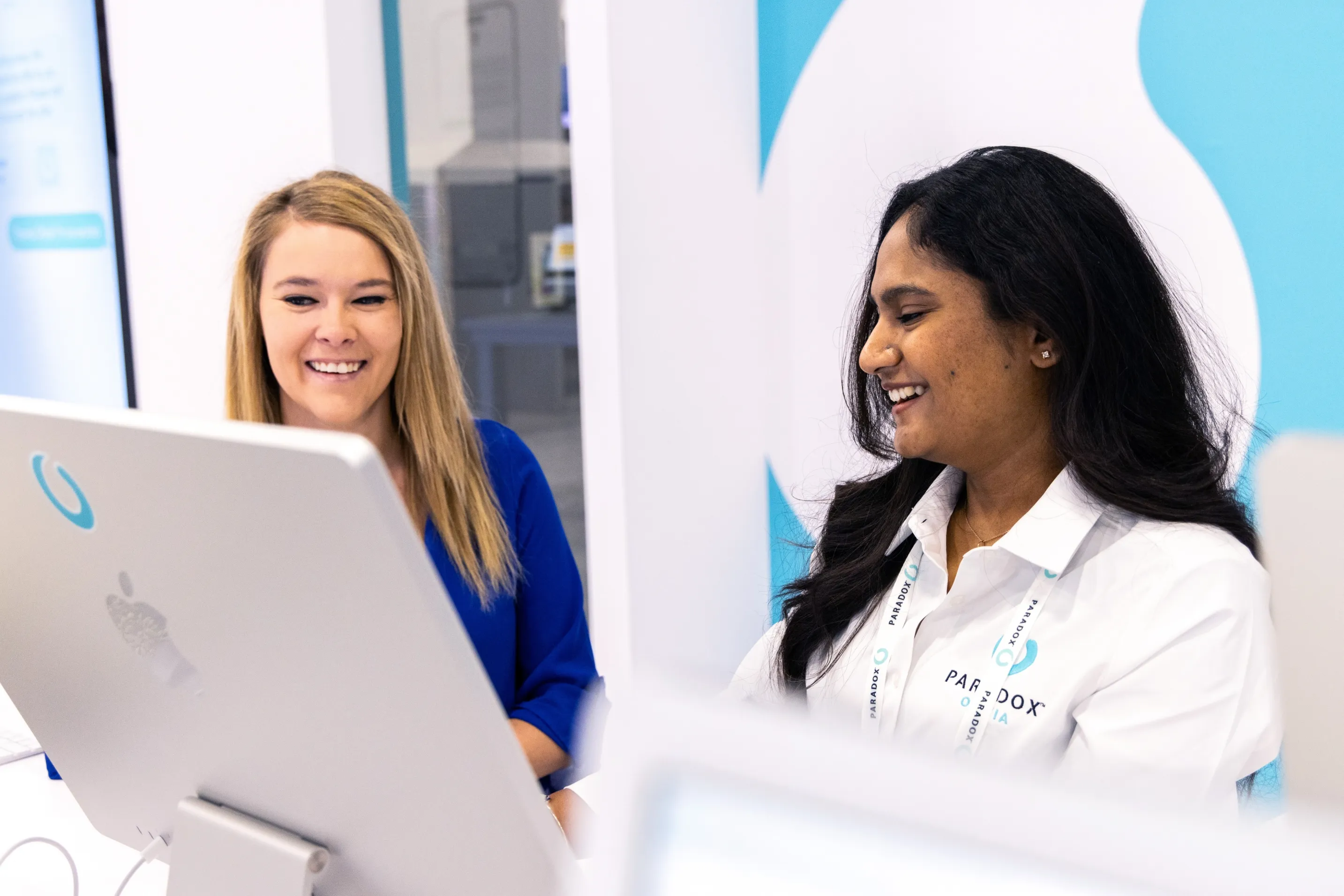
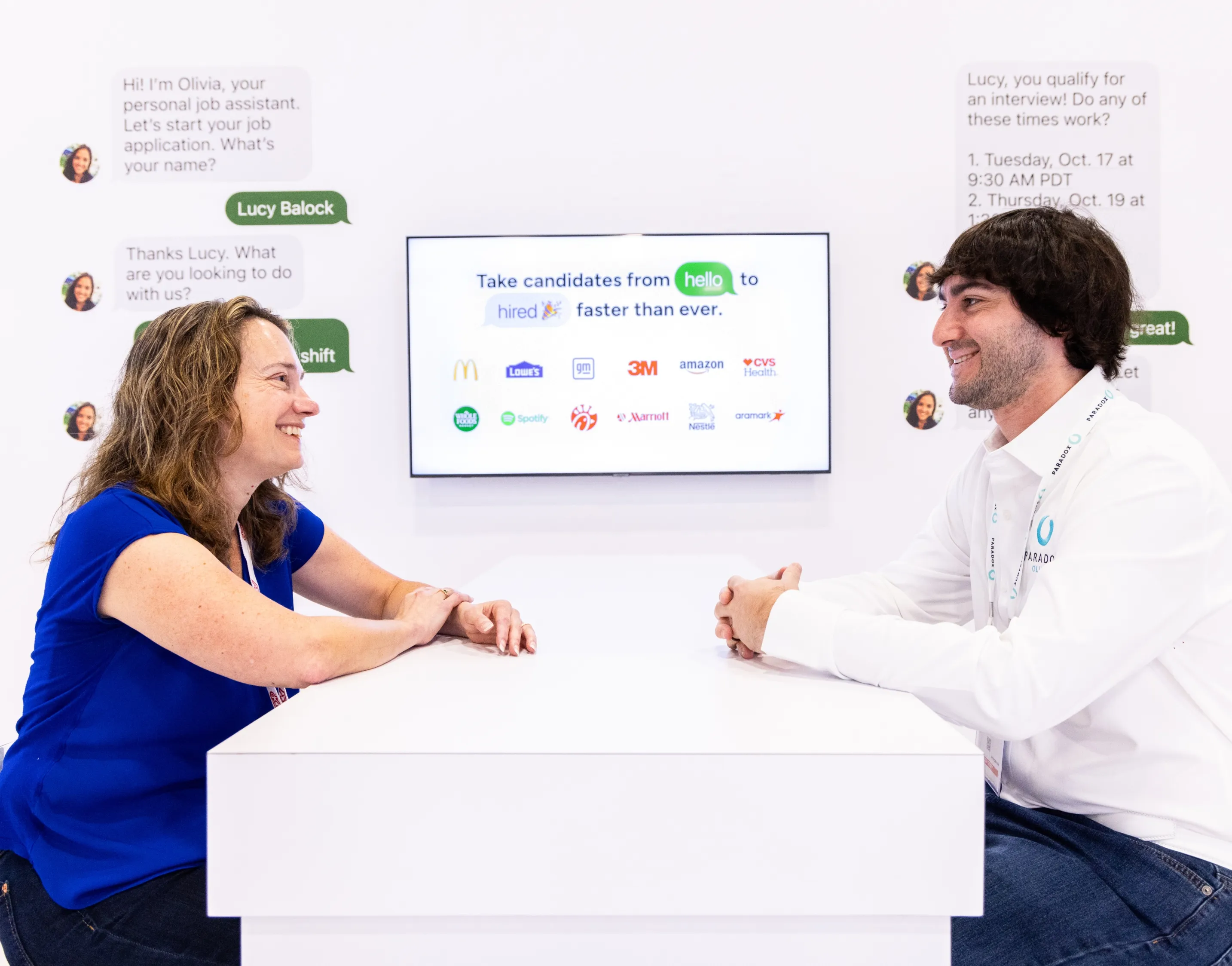
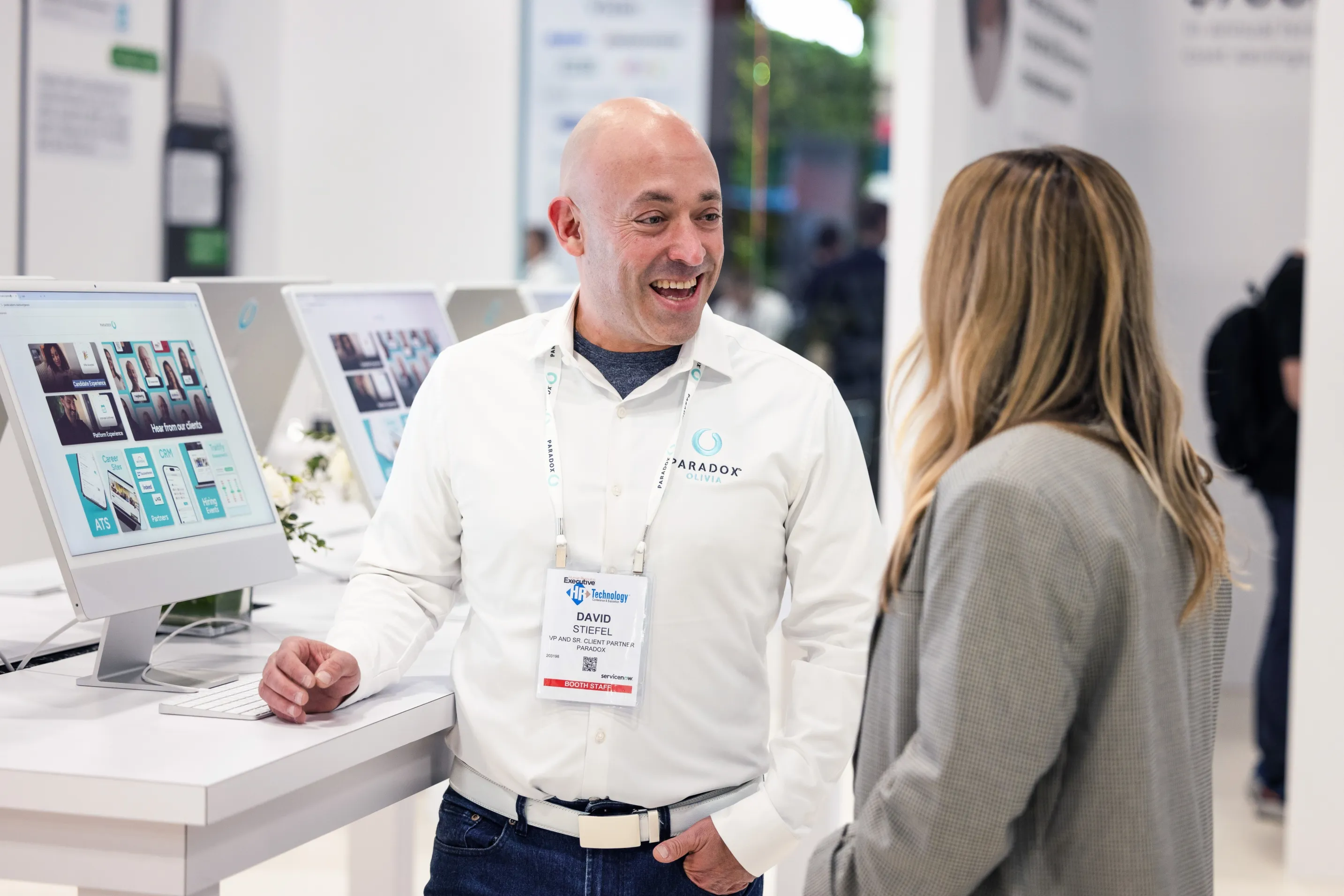
At tradeshows and conferences, I leveraged the Paradox identity to turn foot traffic into qualified leads. I scaled our presence from small pop-ups to large multiroom exhibits, ensuring every touchpoint felt premium and consistent. By leading with bold, overhead ROI statements instead of promoting generic giveaways, we attracted SaaS buyers who actually needed our software. Every booth was a tailored experience, using relevant social proof and product visuals to build authority and align with our larger go-to-market strategy.
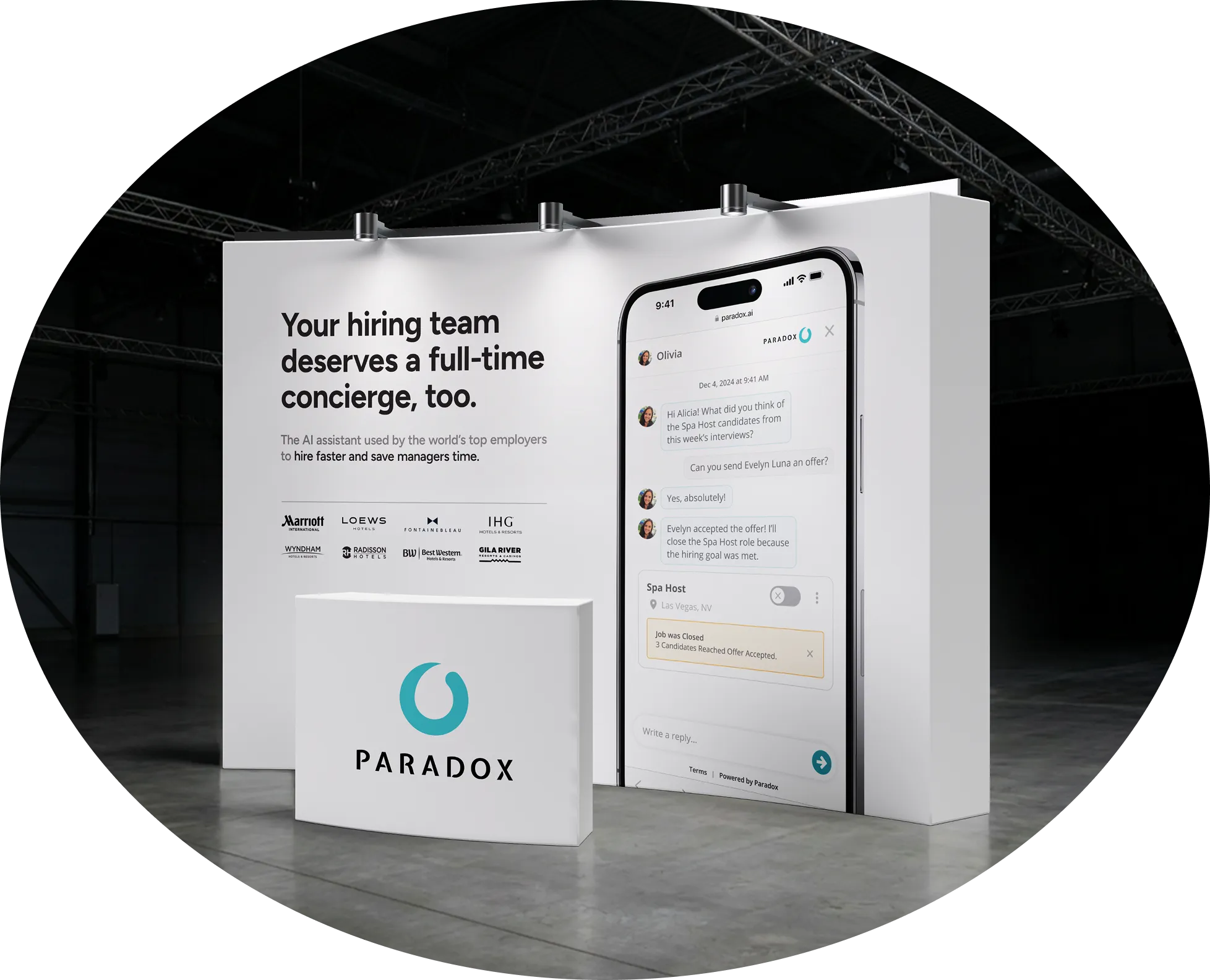
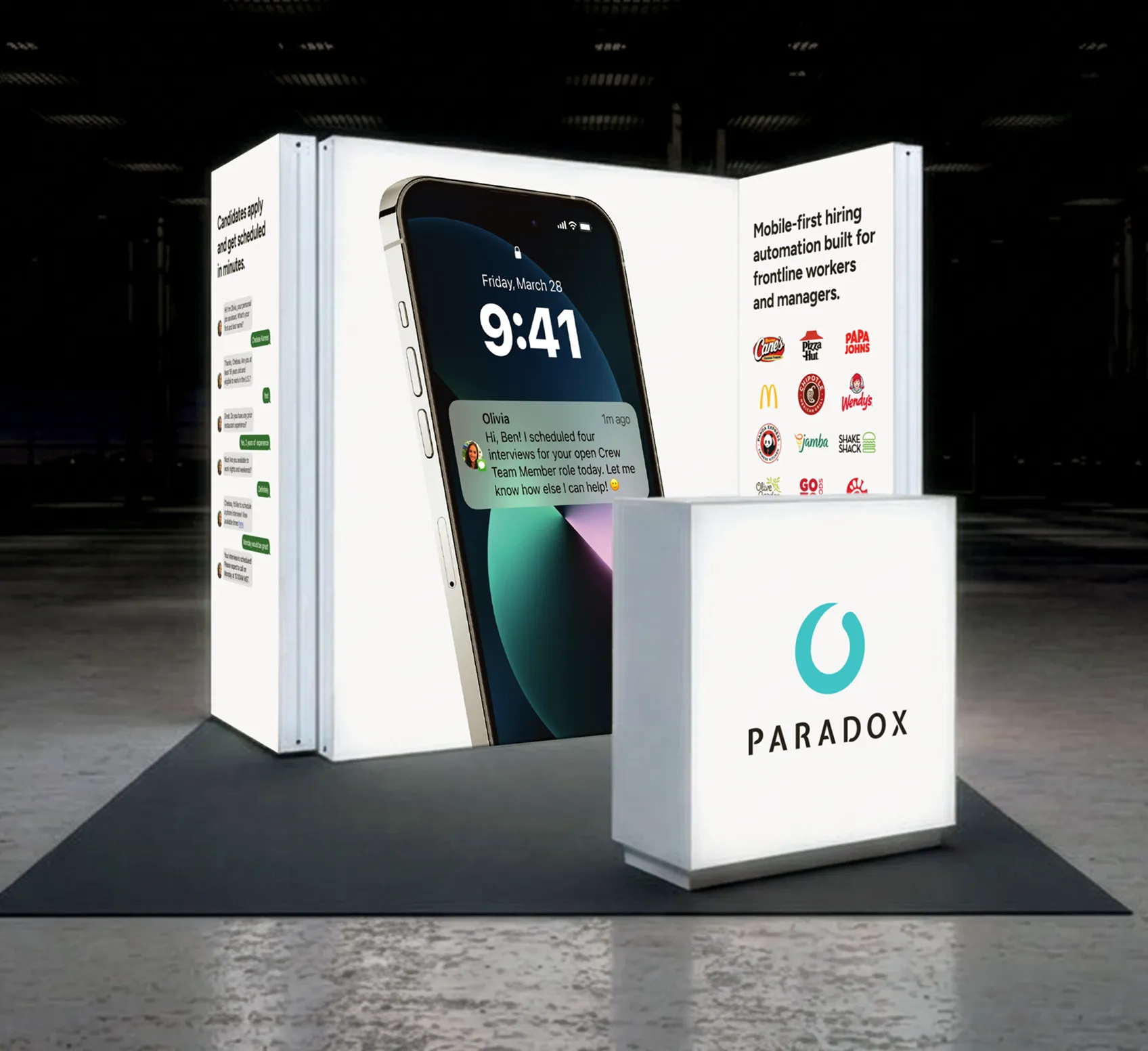
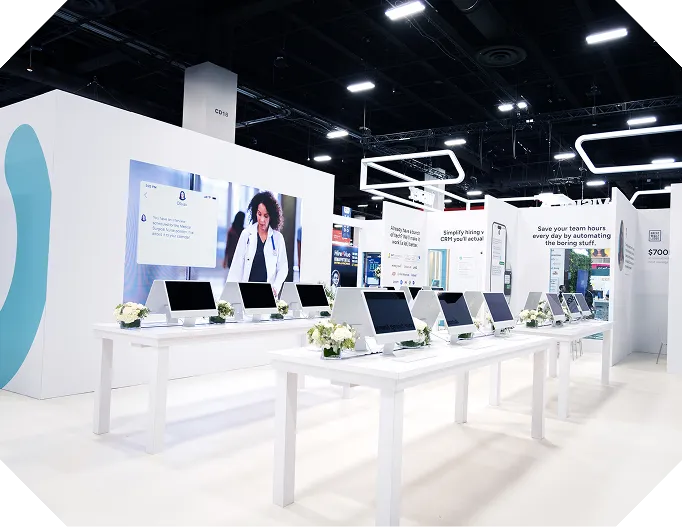
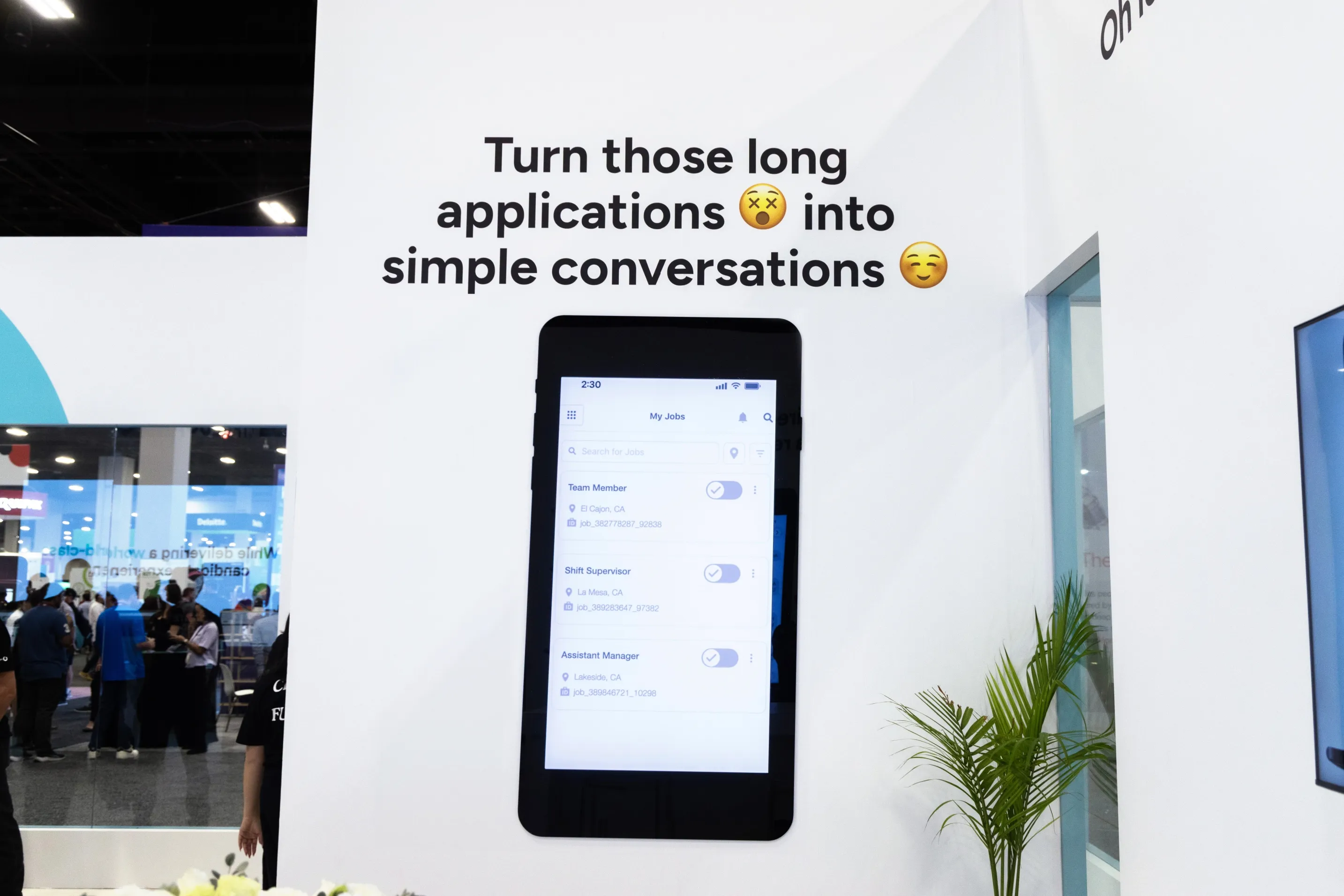
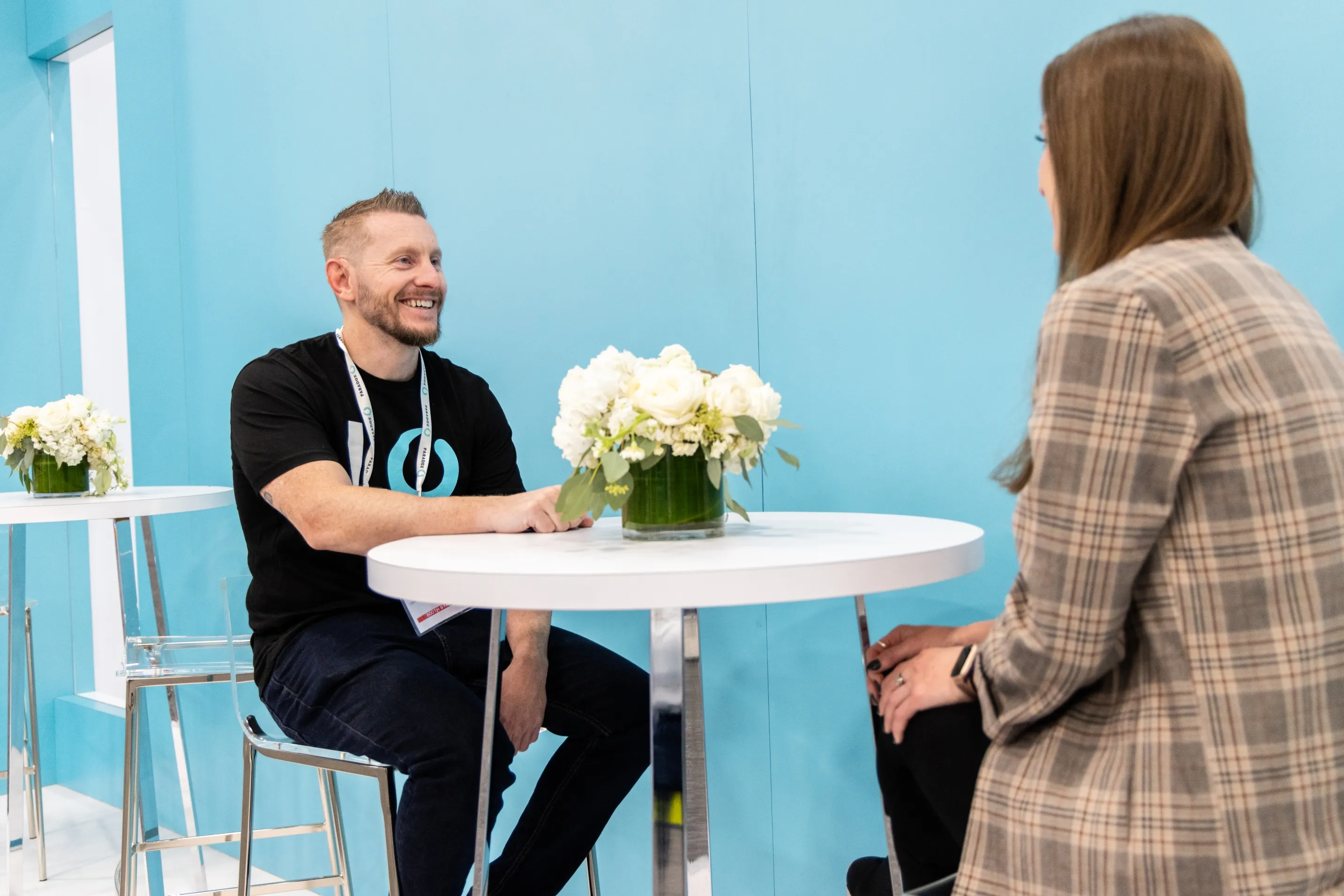
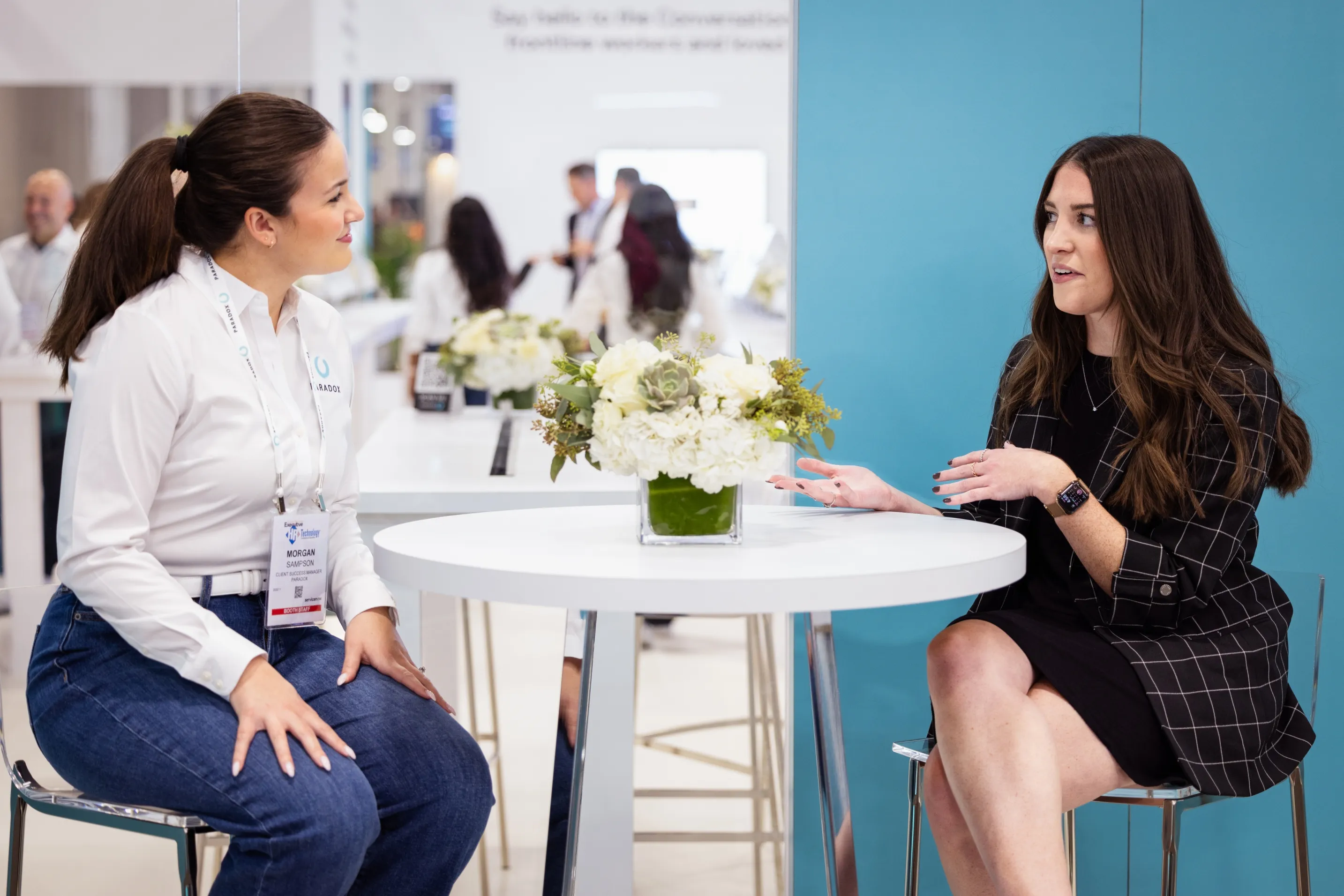
The HR Technology Conference & Expo required an especially eye-catching design strategy as the leading industry event. I designed our 40'x60' booth—the largest on the expo floor—to feel more like a high-end retail experience. Rather than a standard open layout, we used a tall exterior with “peek inside” sightlines to spark curiosity and draw attention.
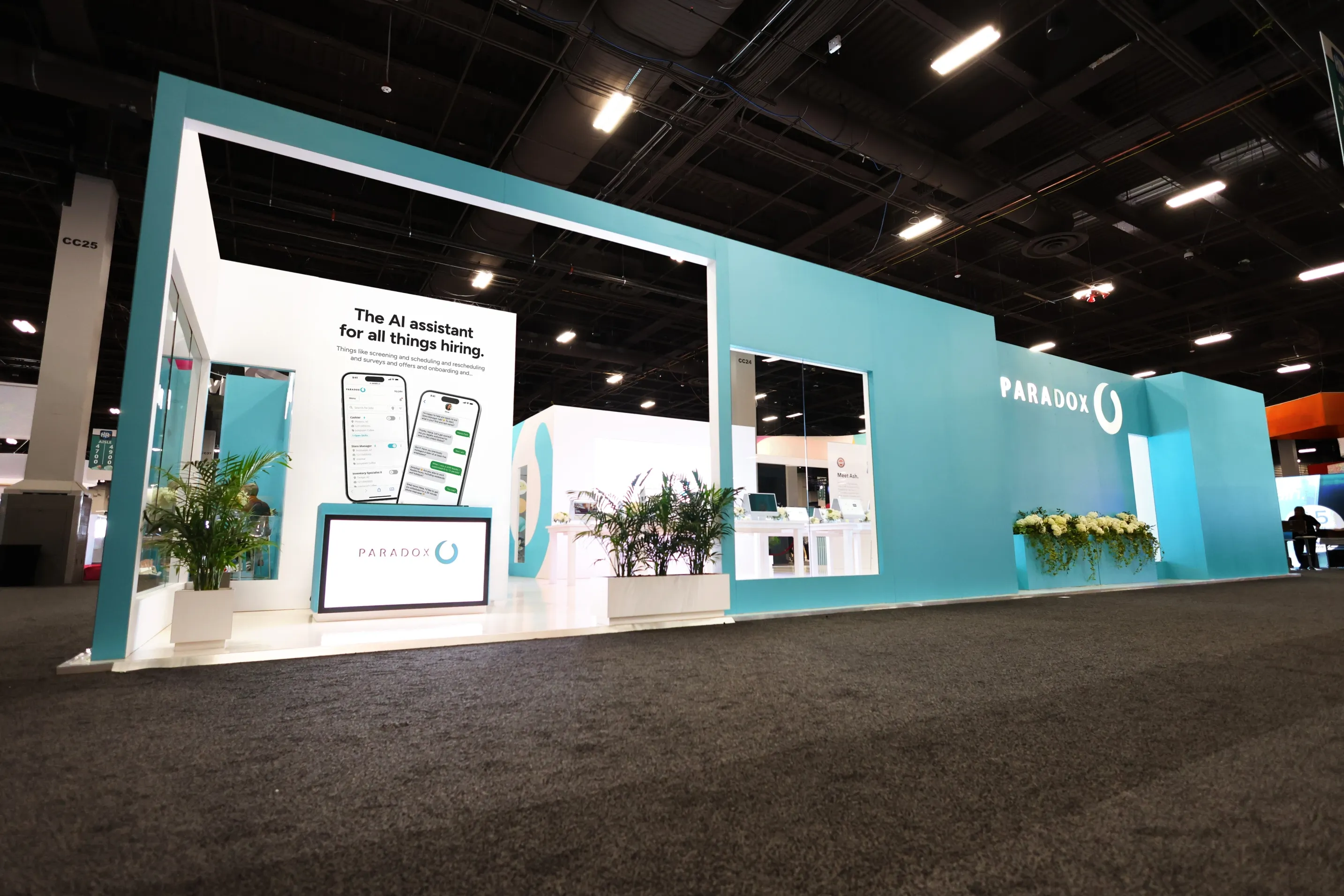
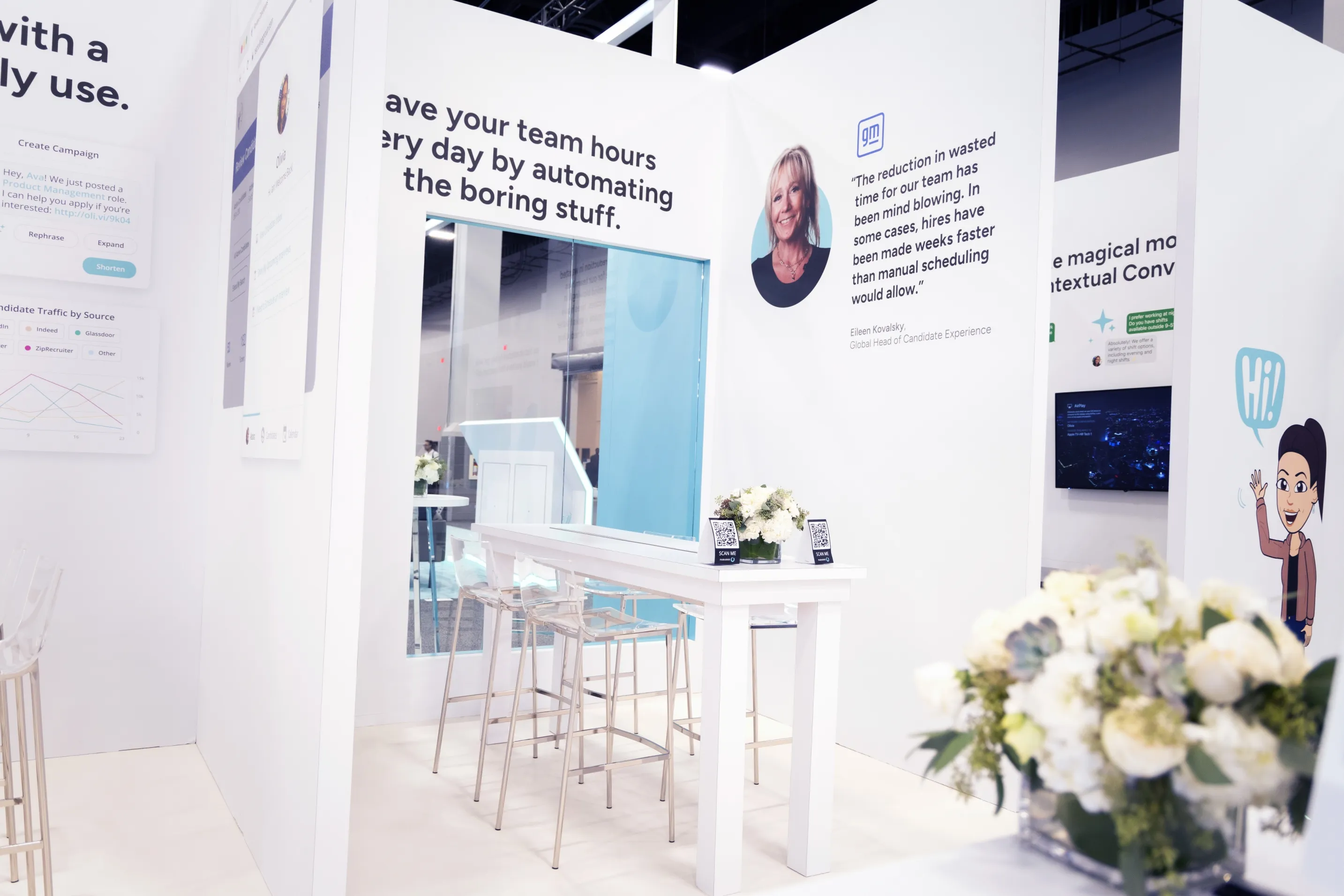
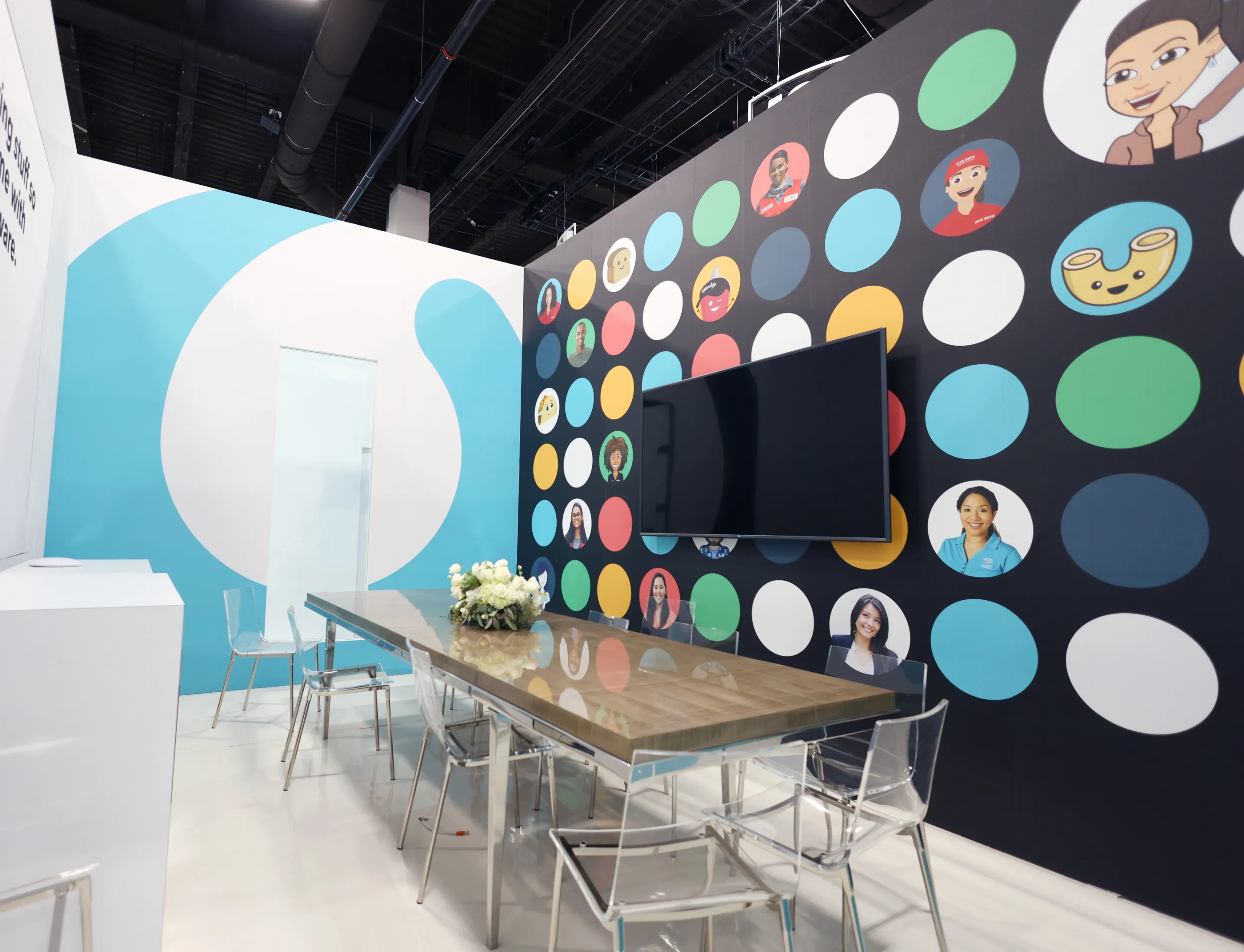
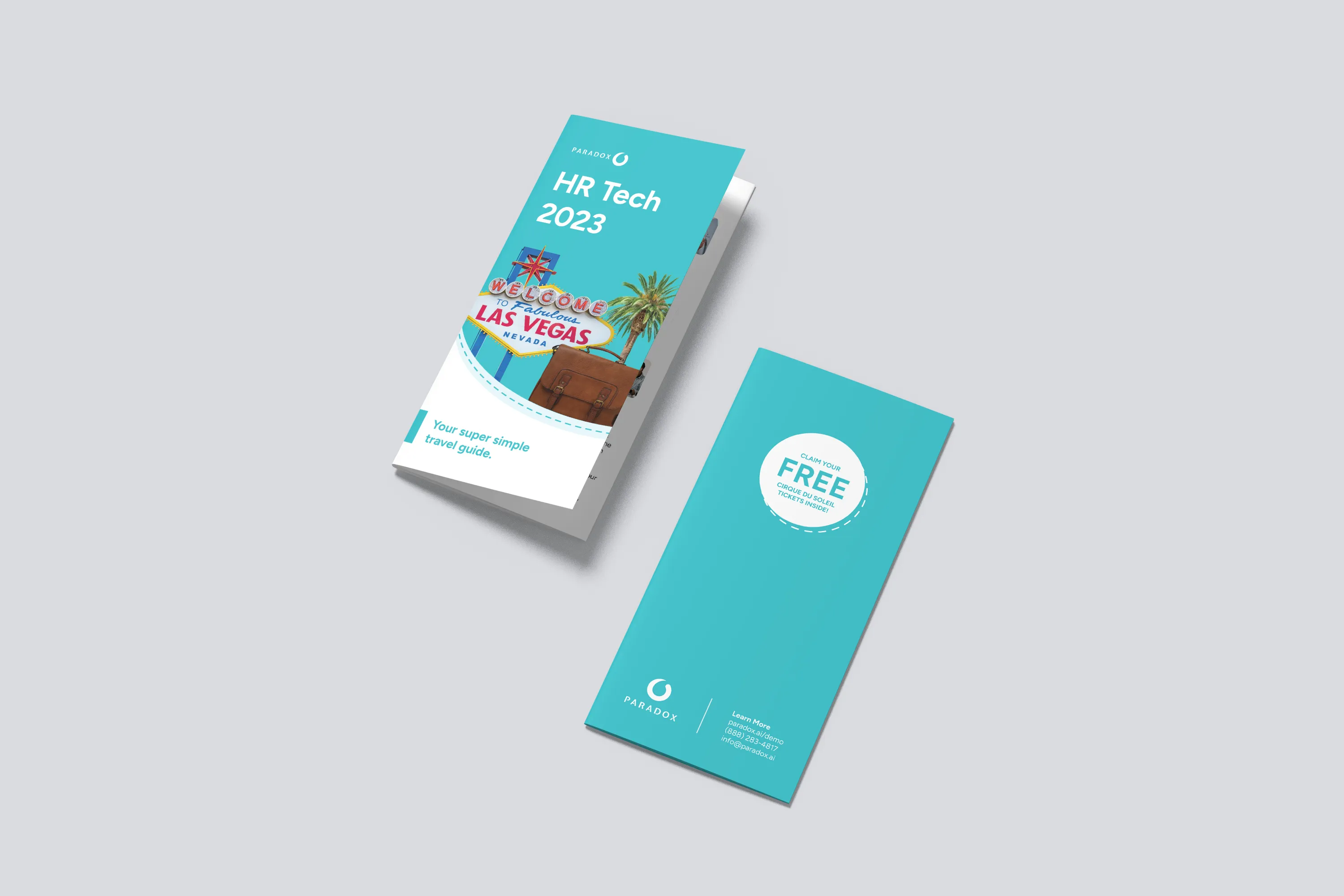
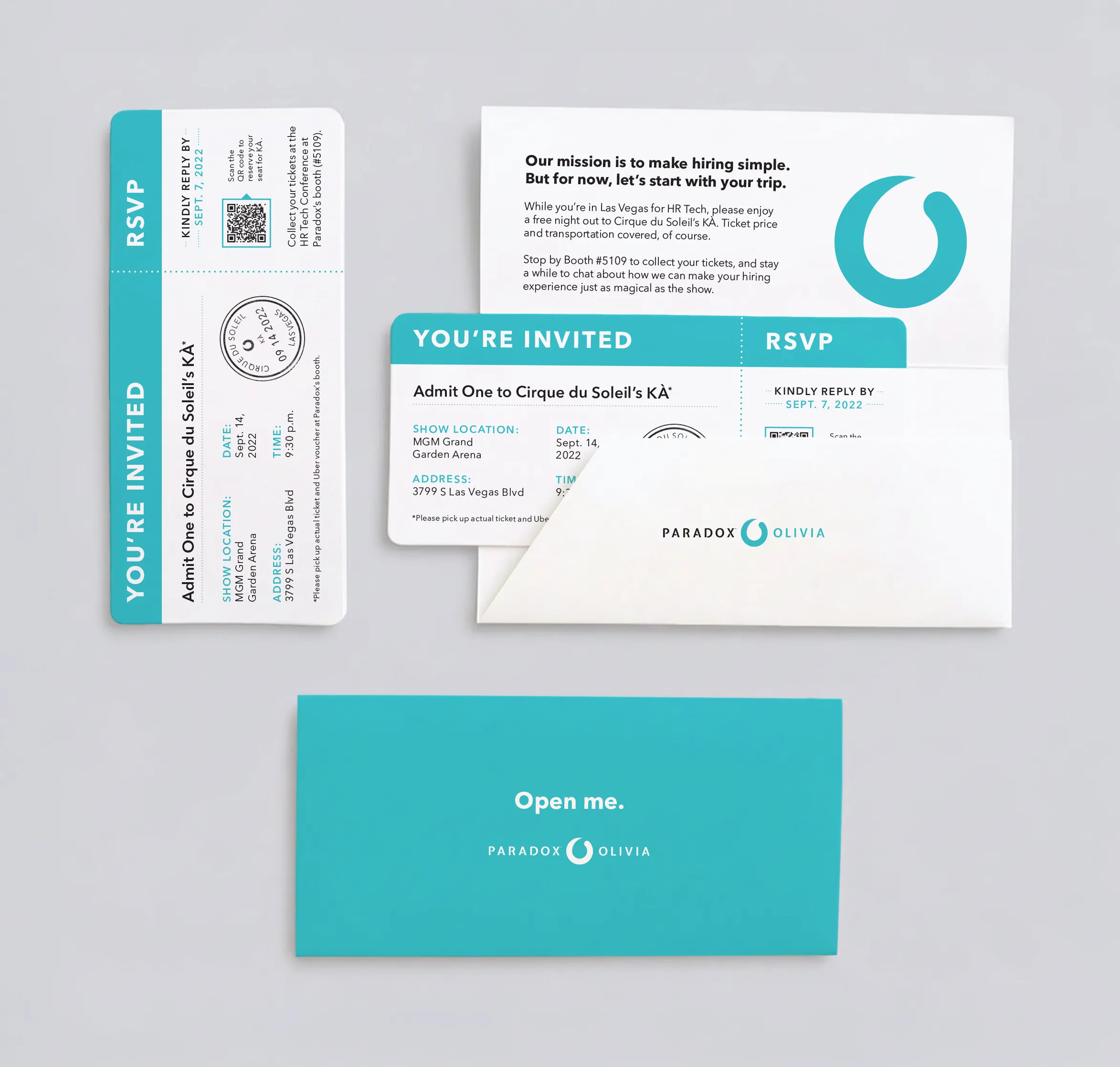
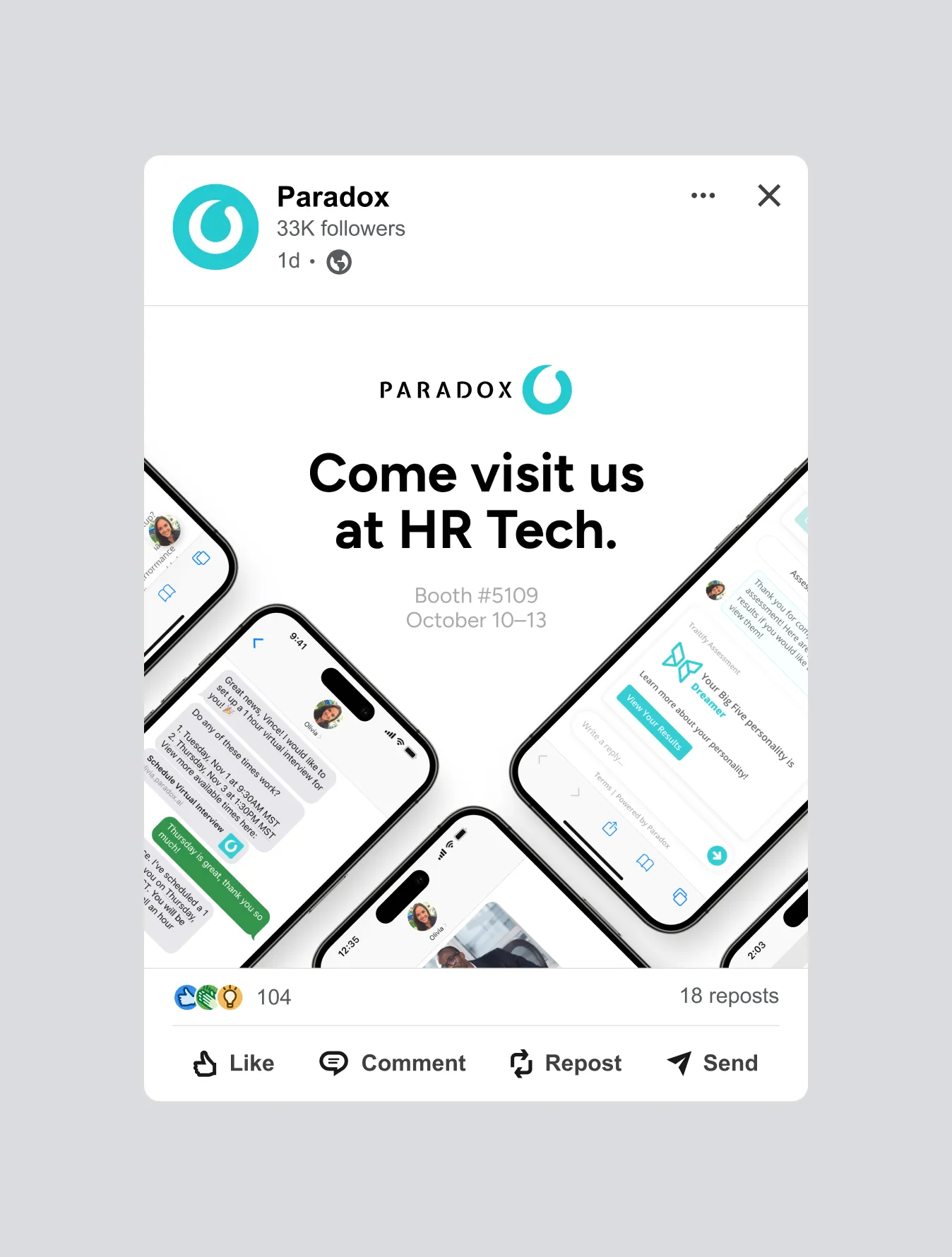
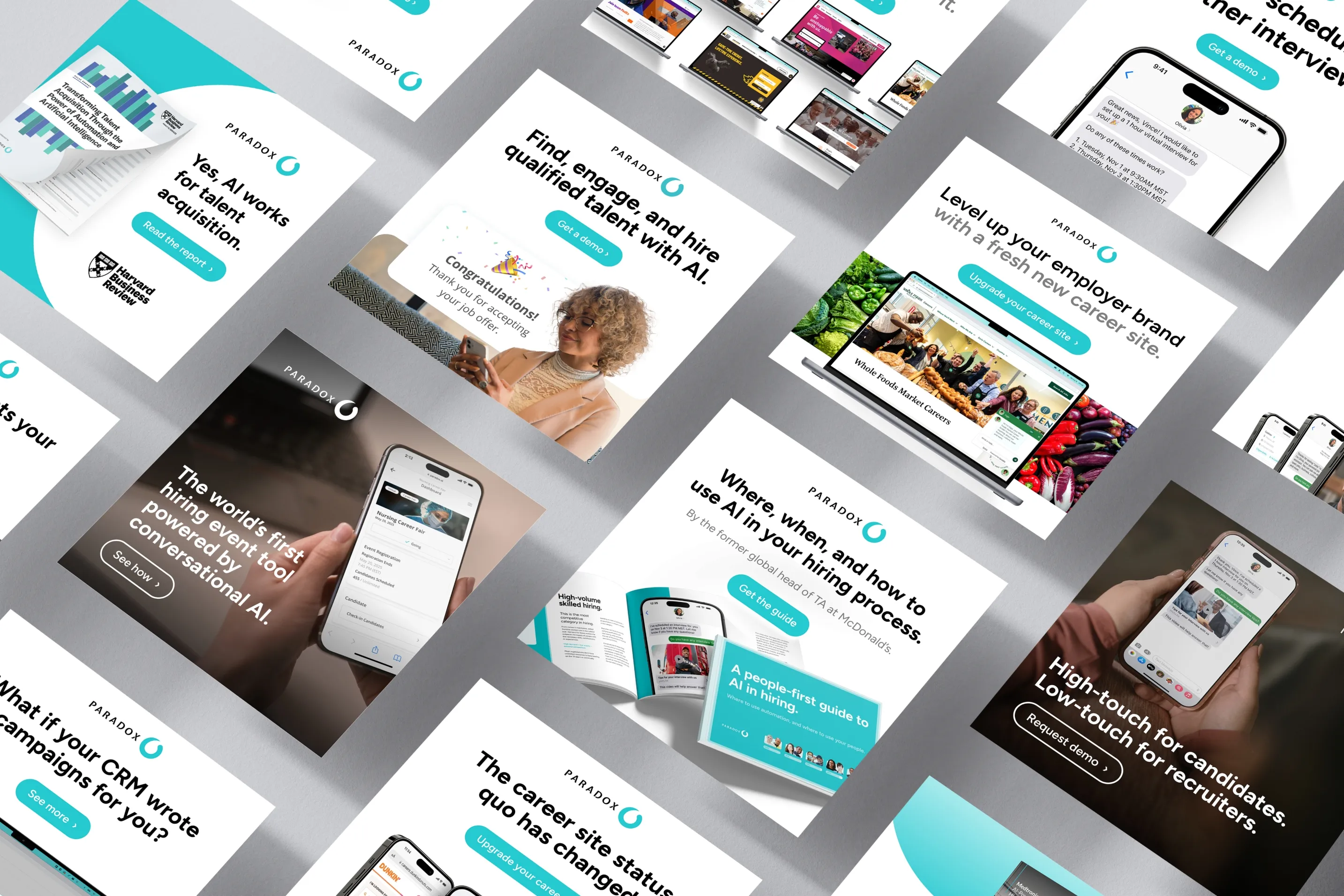
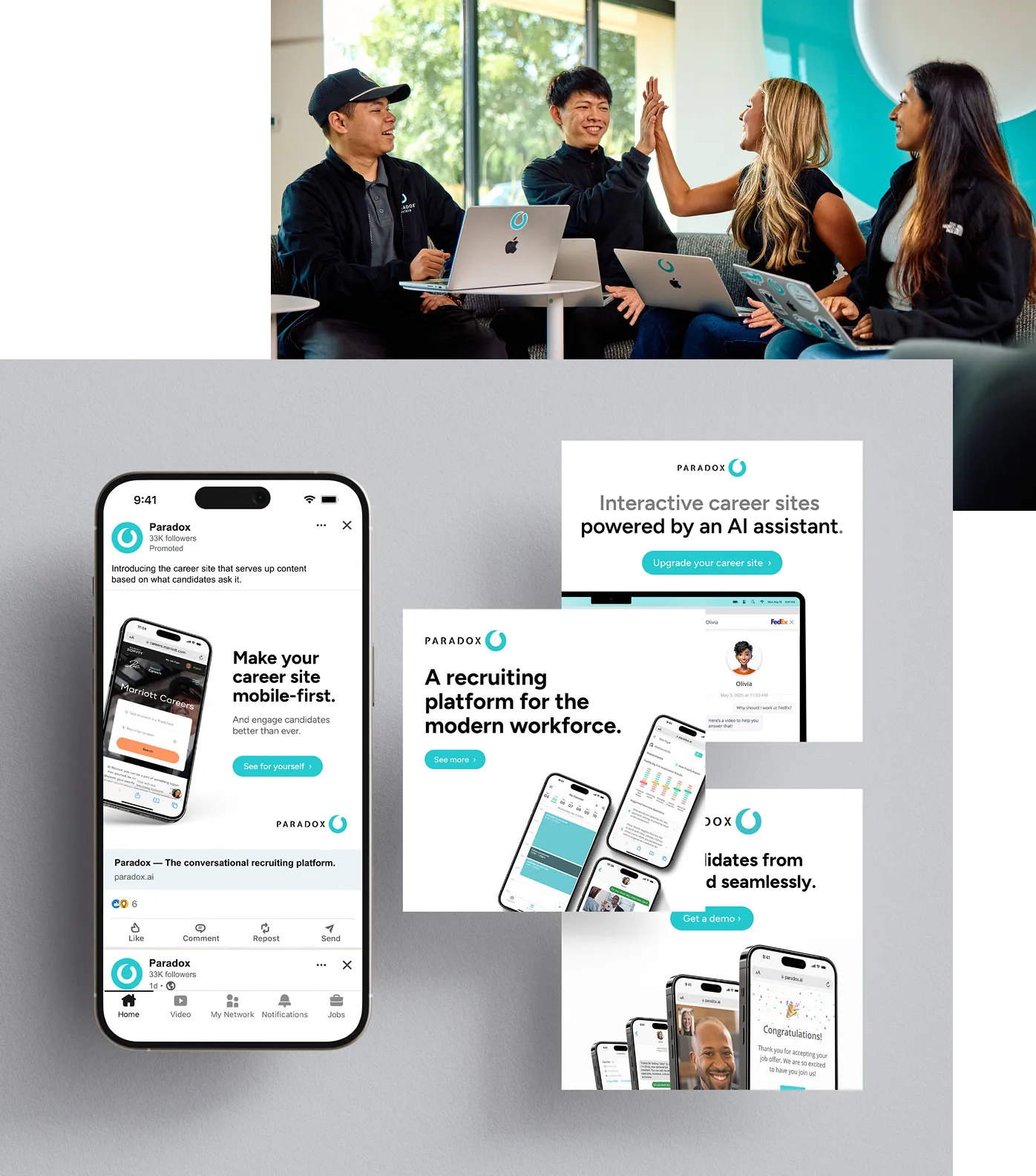
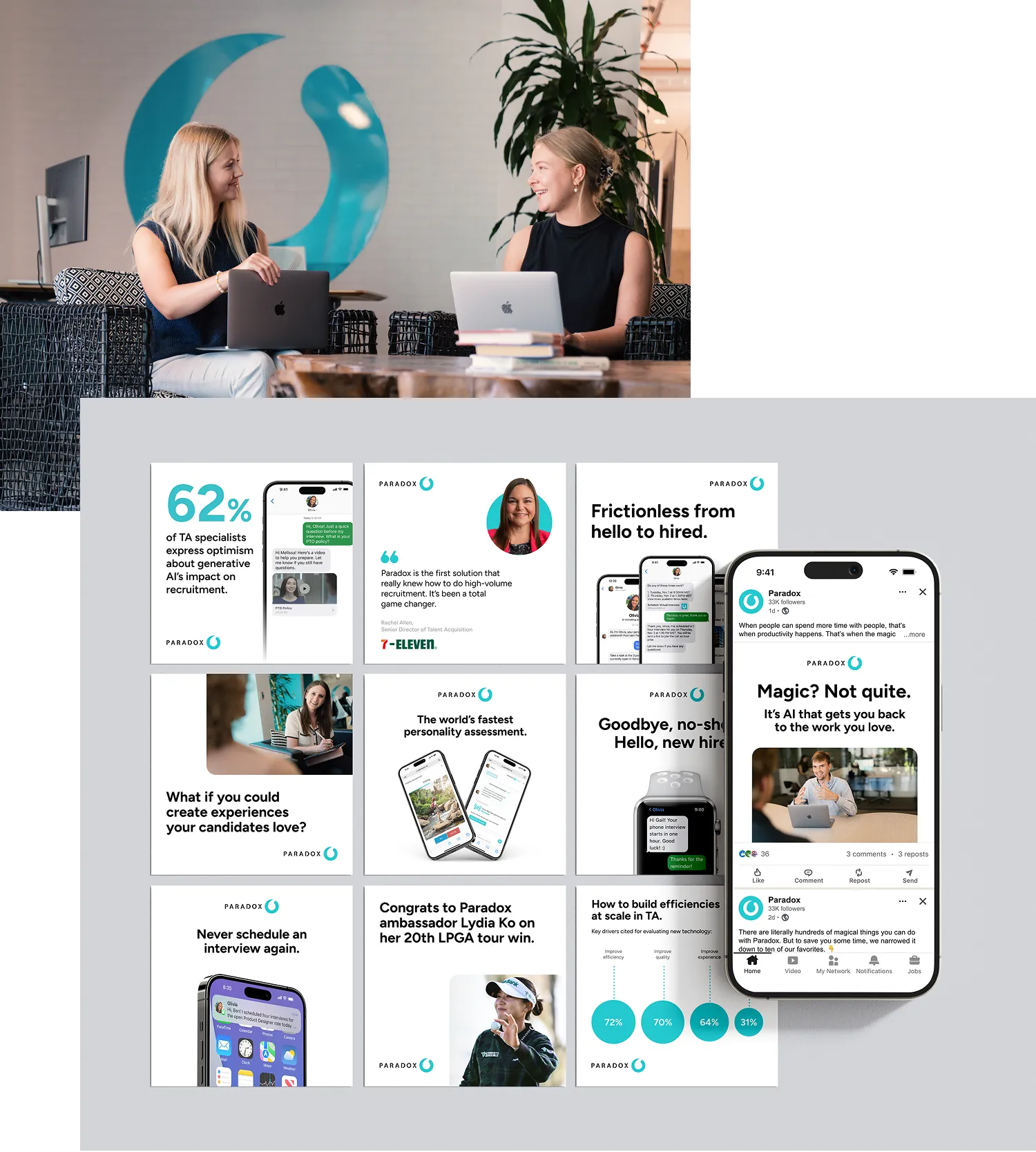
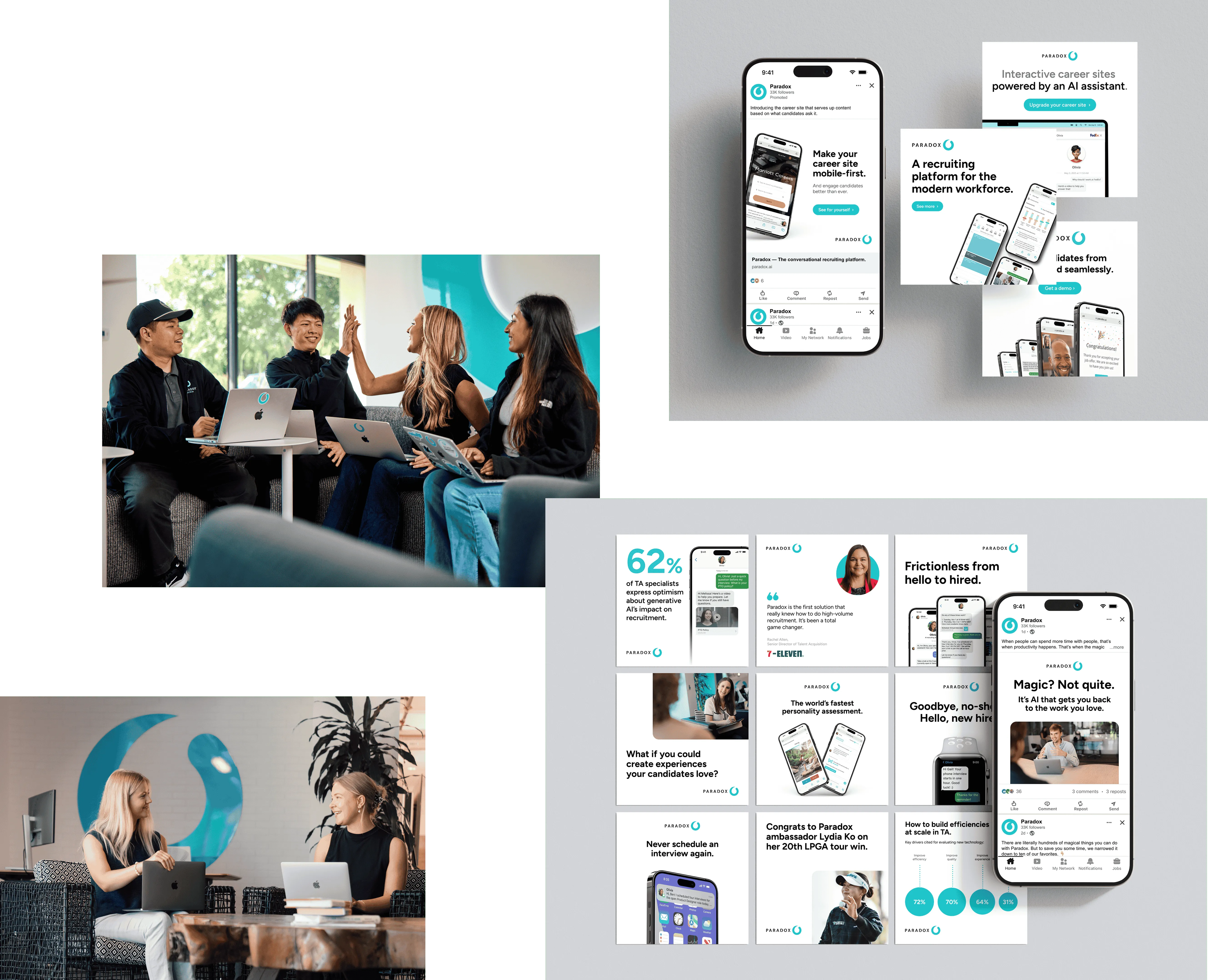
Inside, we created distinct zones: demo stations, meeting areas, video walls, and themed product graphics to encourage attendees to enter and engage more deeply. I leaned into white space, devices with shine and depth, and minimalism to convey a modern, effortless solution. I also designed all campaign materials—including direct mail, digital ads, and social posts—that funneled attendees to our booth and speaking sessions.
Inside, we created distinct zones: demo stations, meeting areas, video walls, and themed product graphics to encourage attendees to enter and engage more deeply. I leaned into white space, devices with shine and depth, and minimalism to convey a modern, effortless solution.
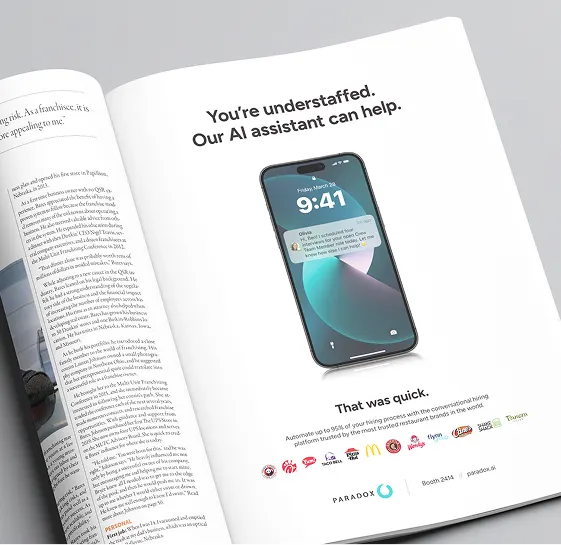
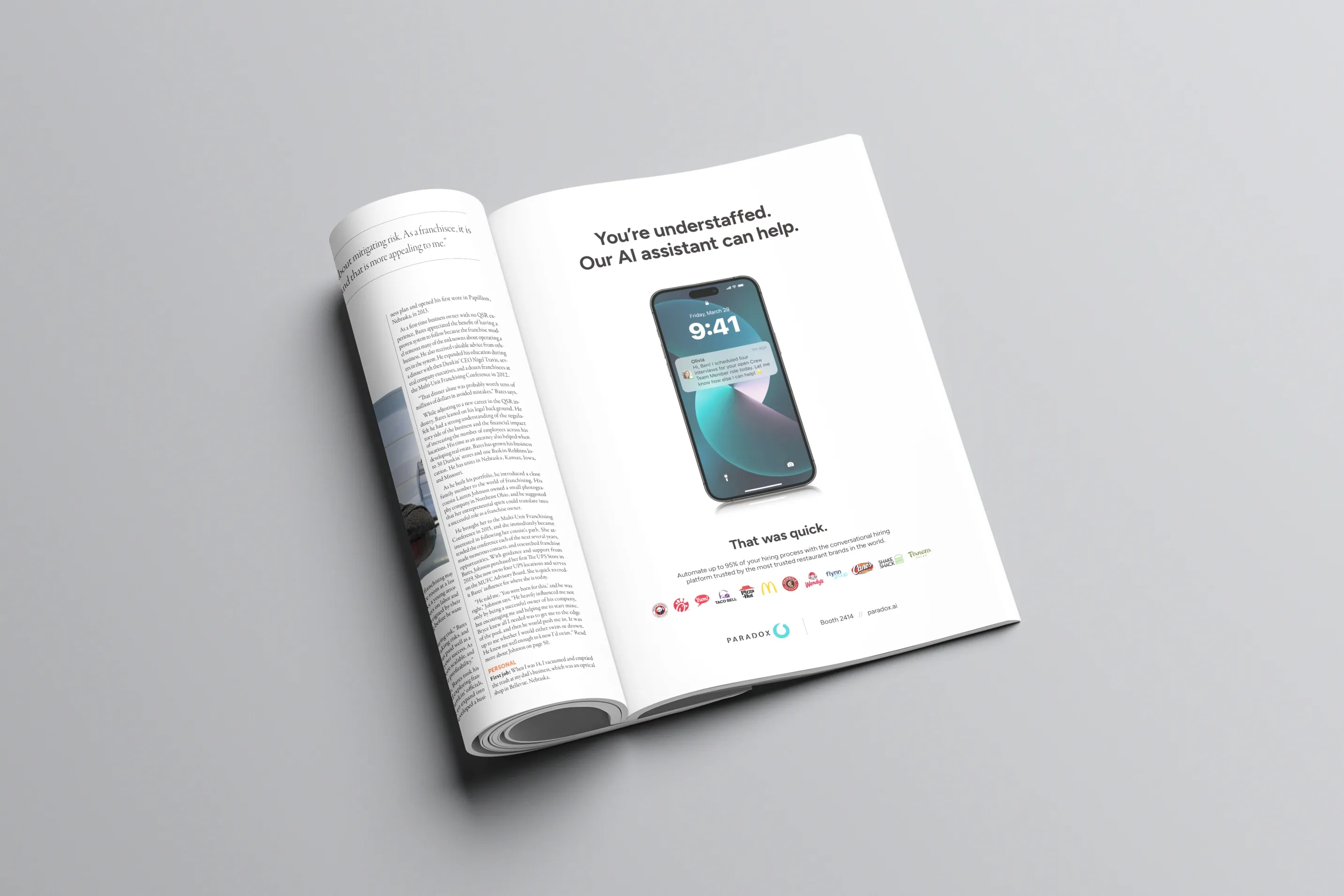
I also designed all campaign materials—including direct mail, digital ads, and social posts—that funneled attendees to our booth and speaking sessions.
I also designed all campaign materials—including direct mail, digital ads, and social posts—that funneled attendees to our booth and speaking sessions.

Swag
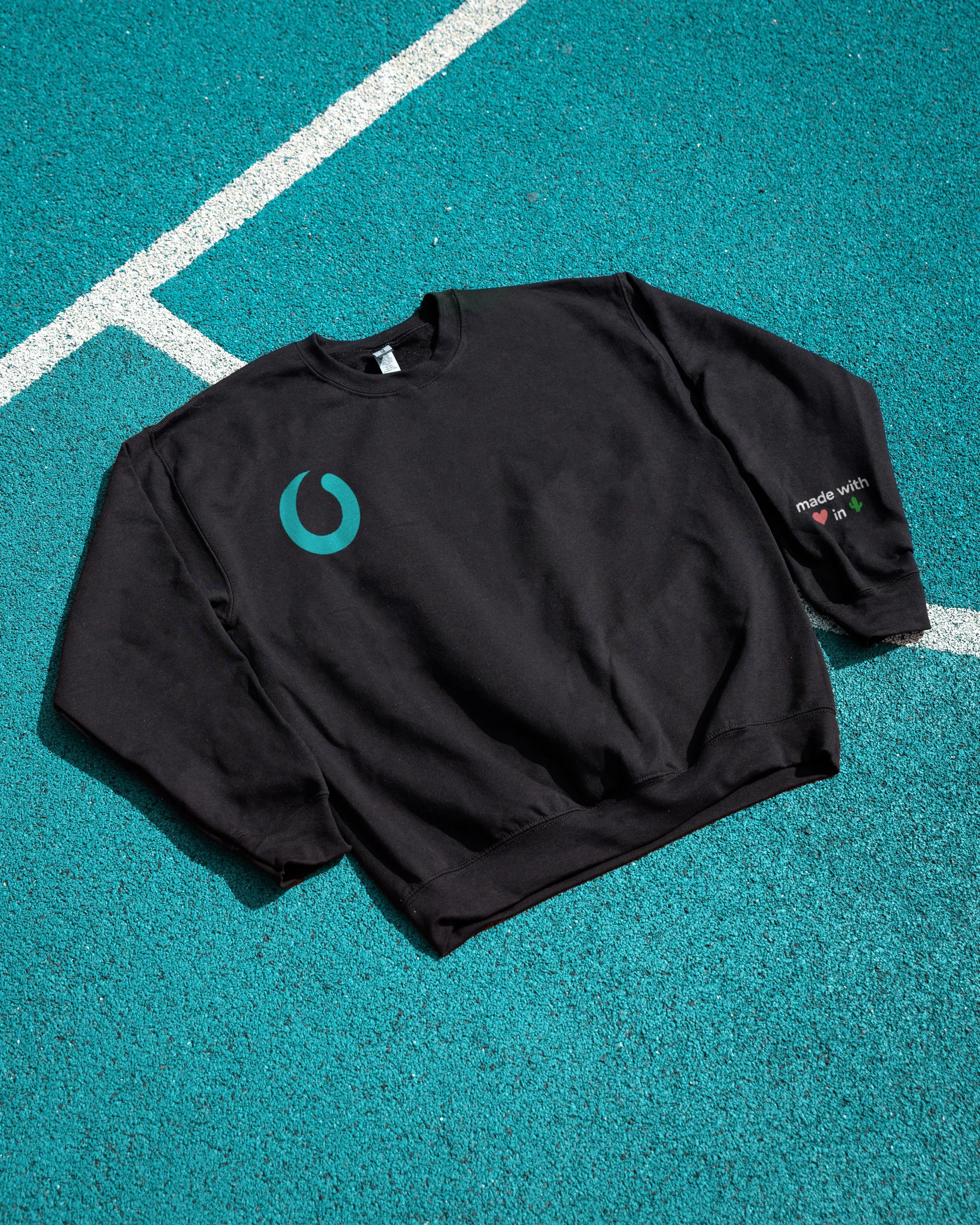
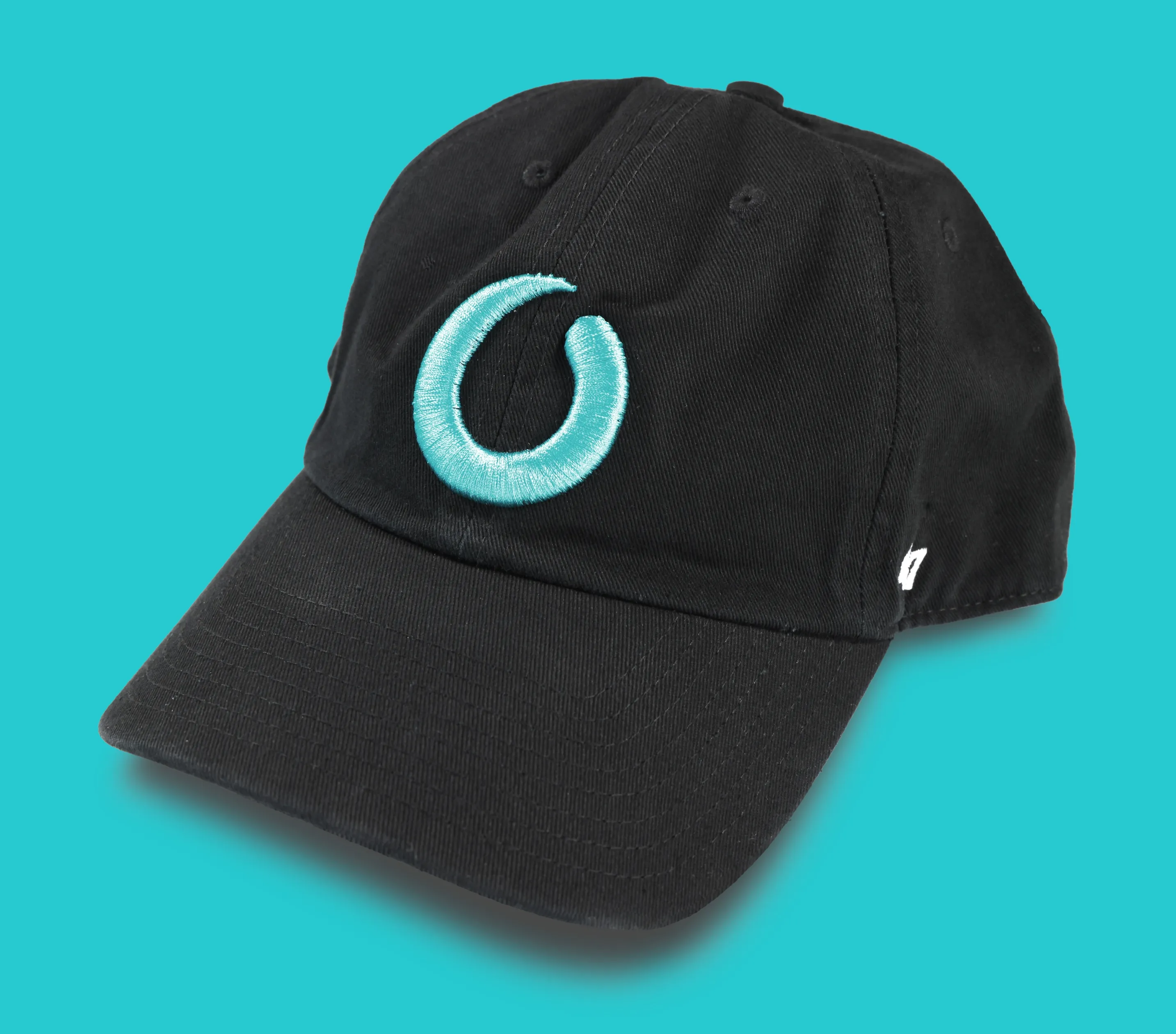
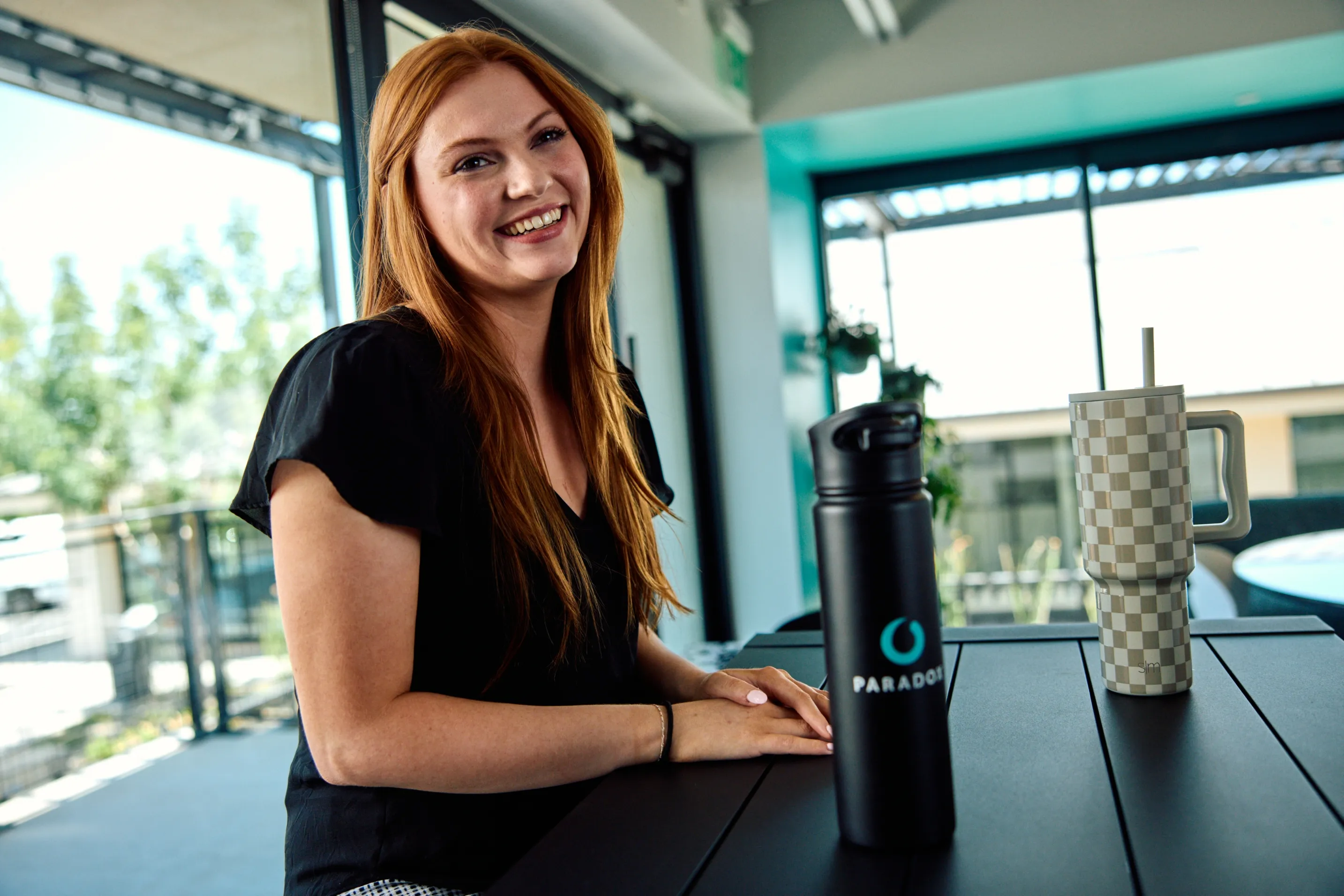
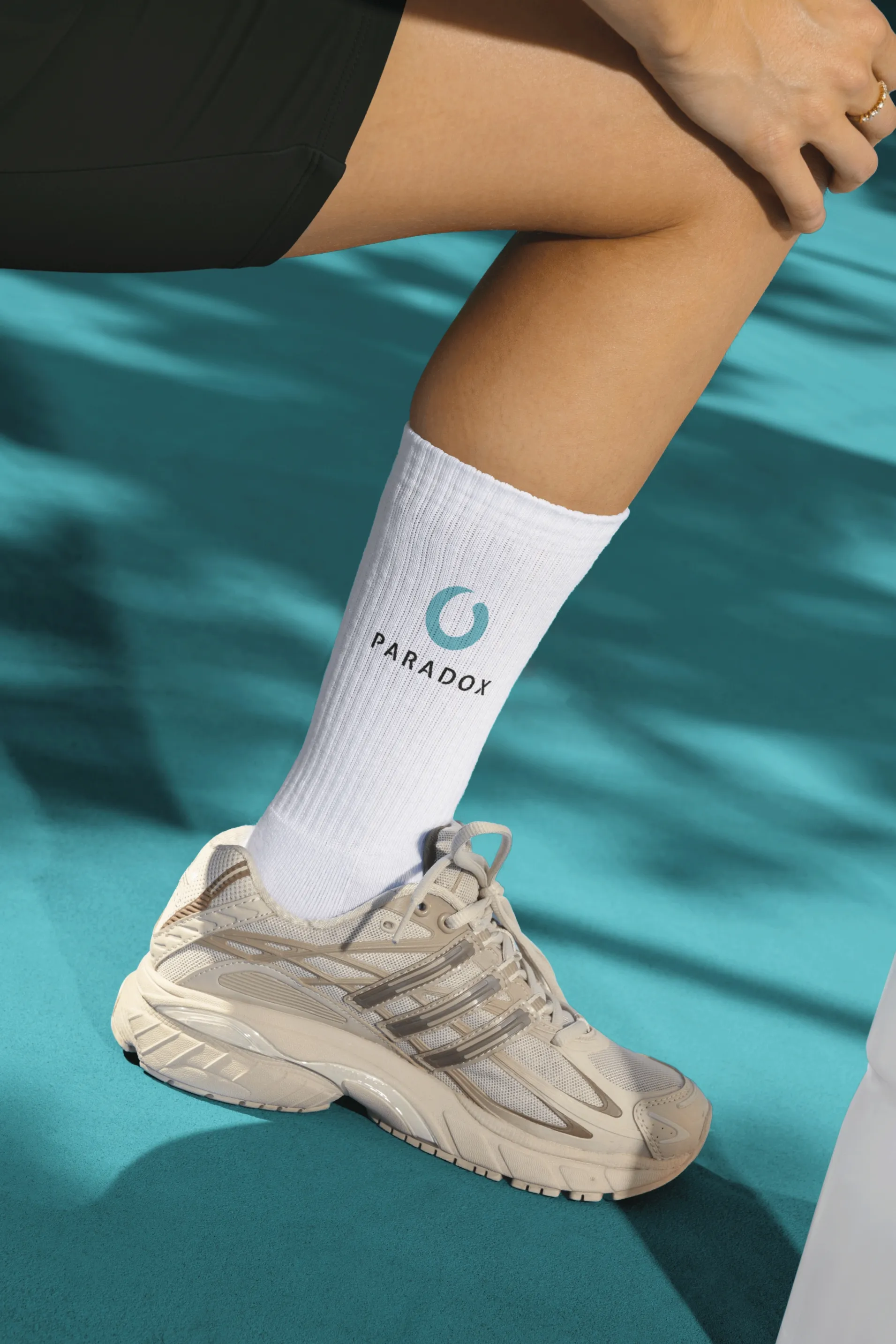
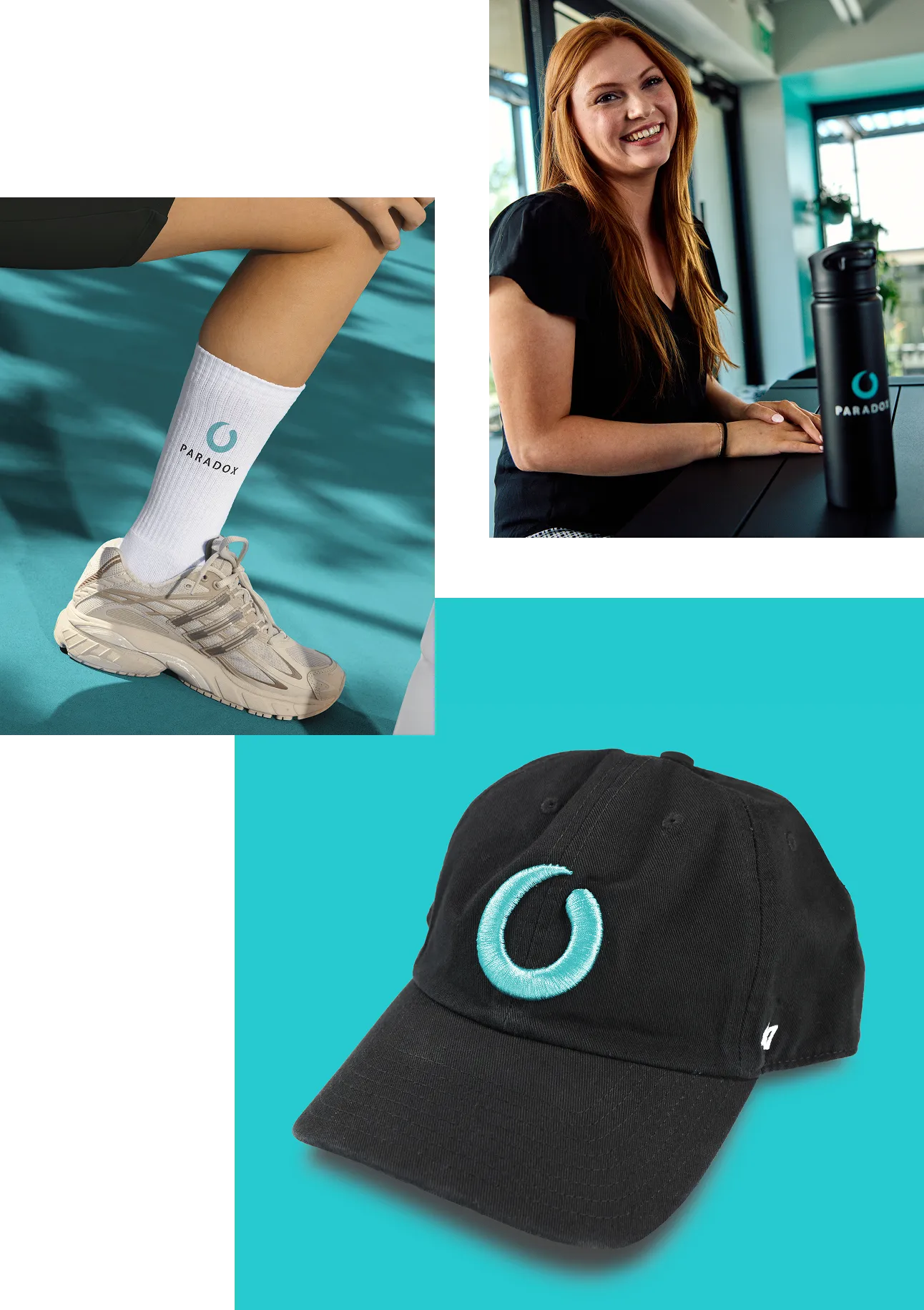
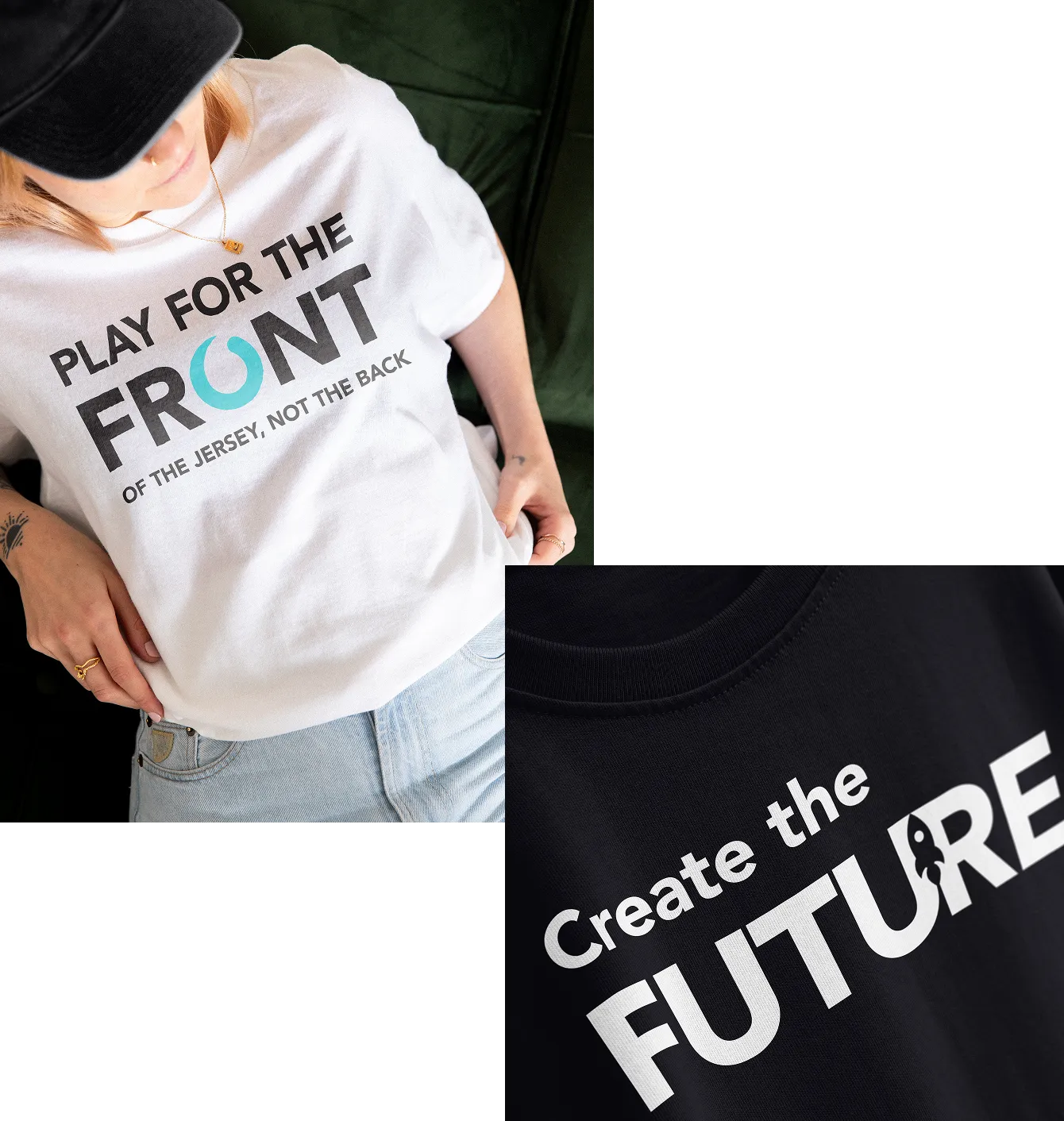
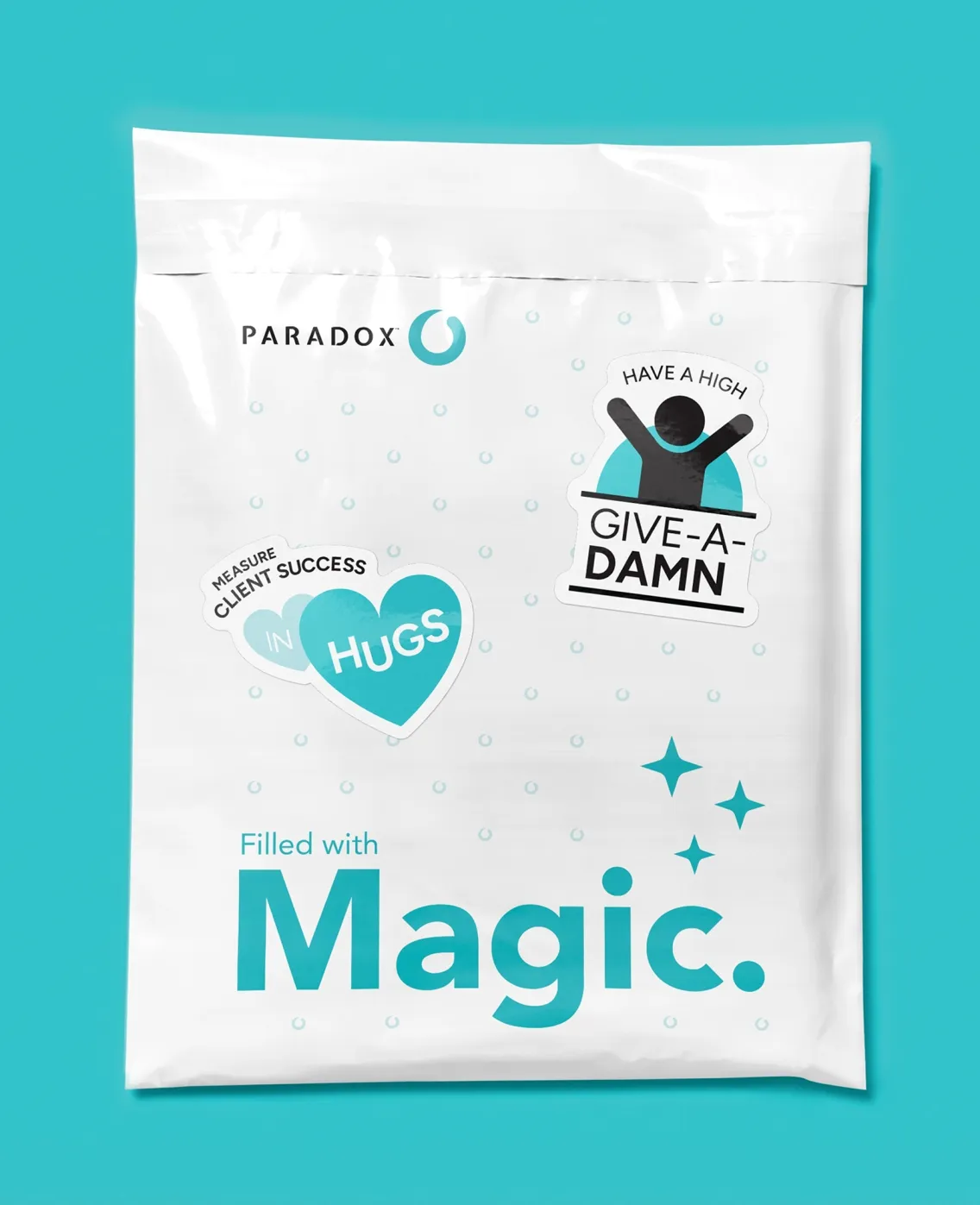
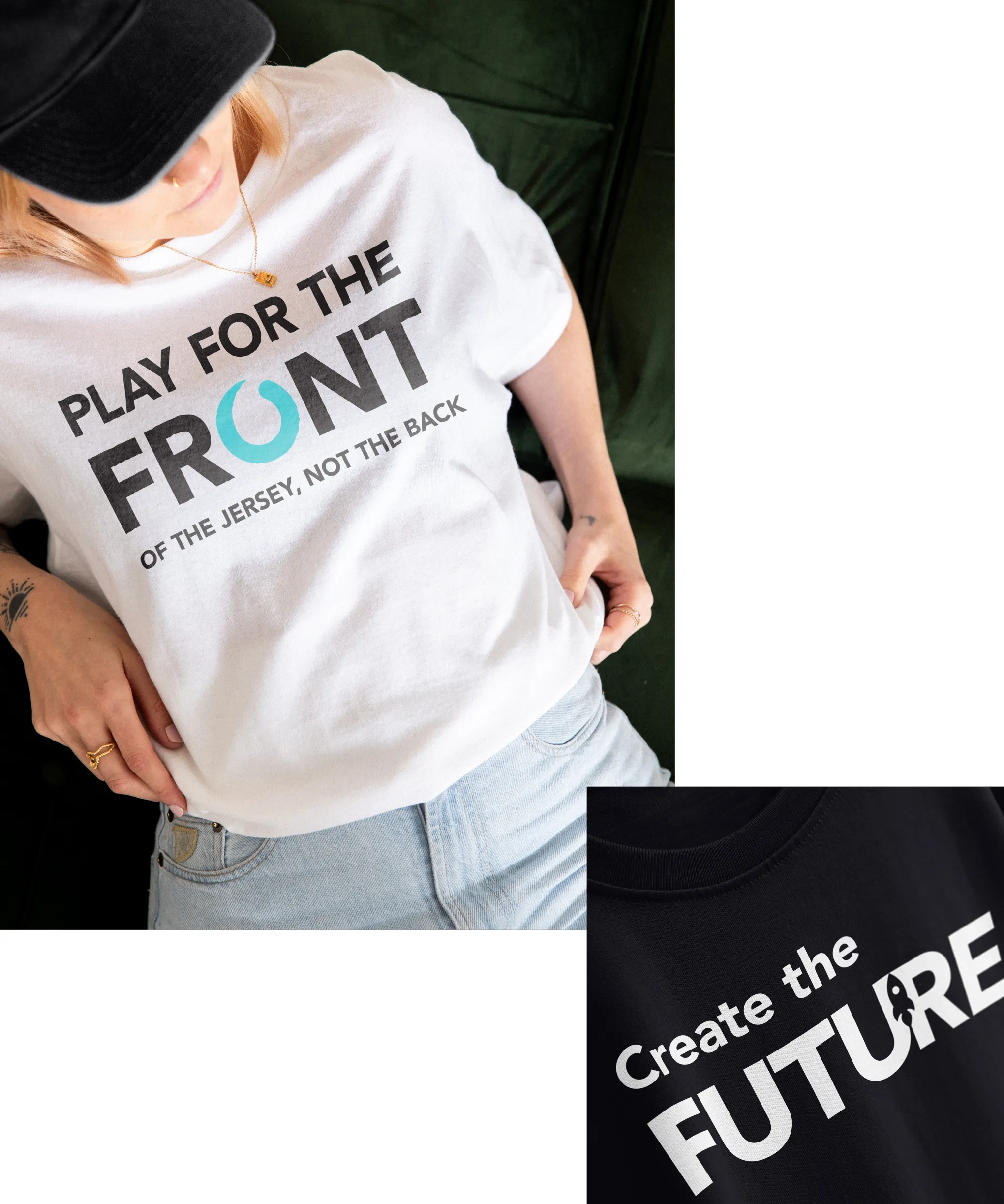
I extended the Paradox identity into physical brand touchpoints that reinforced a high-end positioning. By prioritizing a minimalist and typographic aesthetic, I created thoughtful goods that clients and partners were proud to keep, and employees were excited to represent. These pieces transformed abstract company values into a shared visual language.
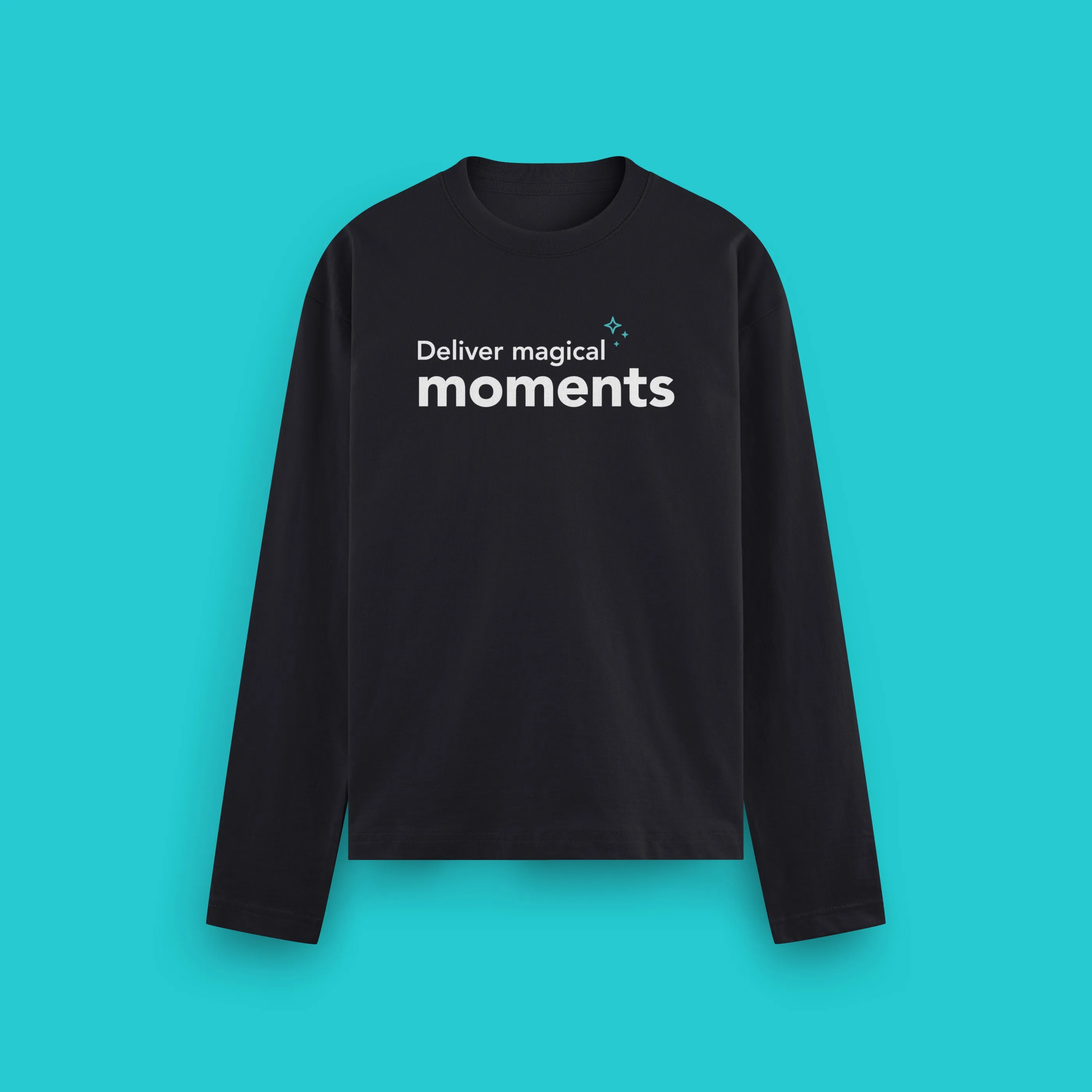
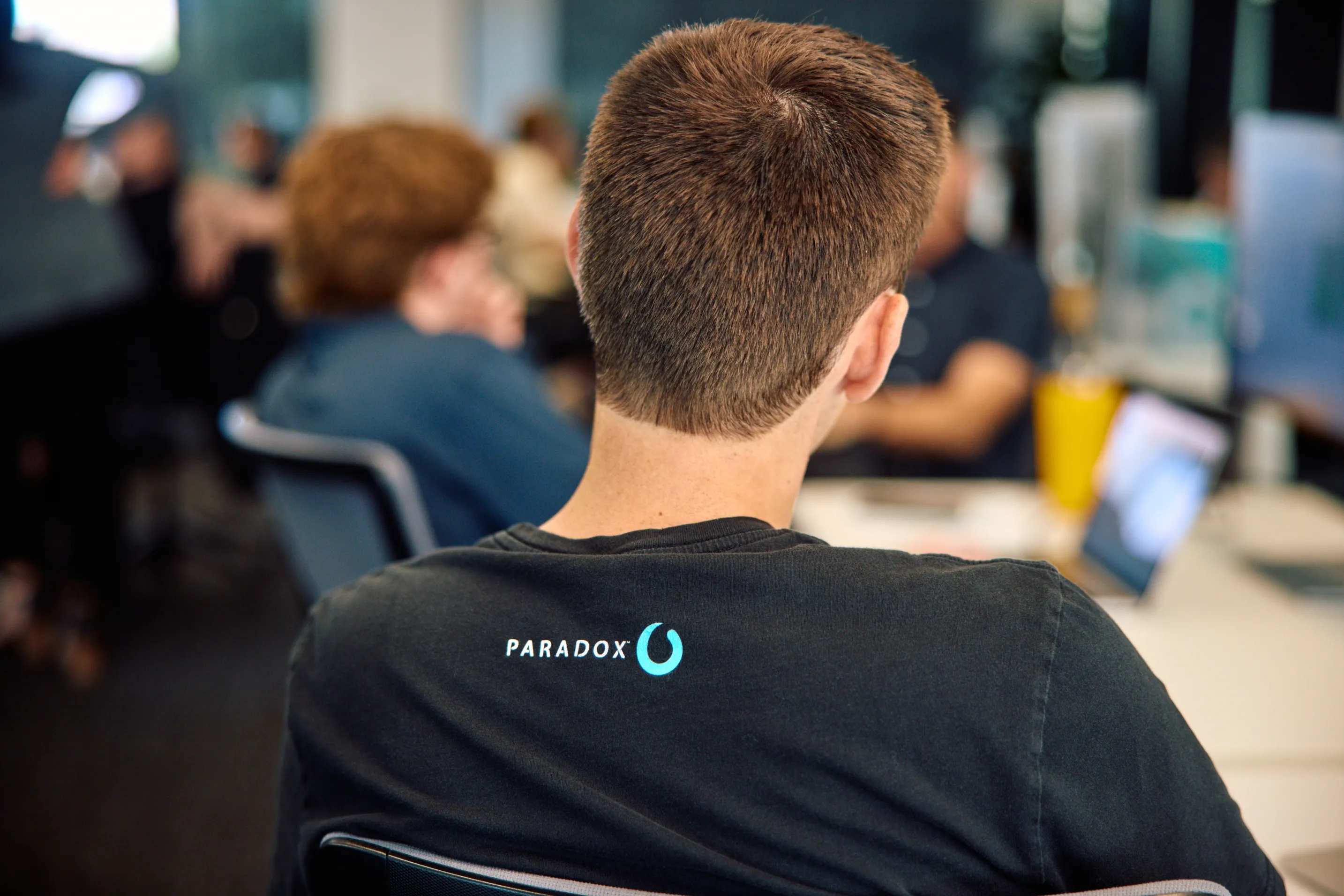
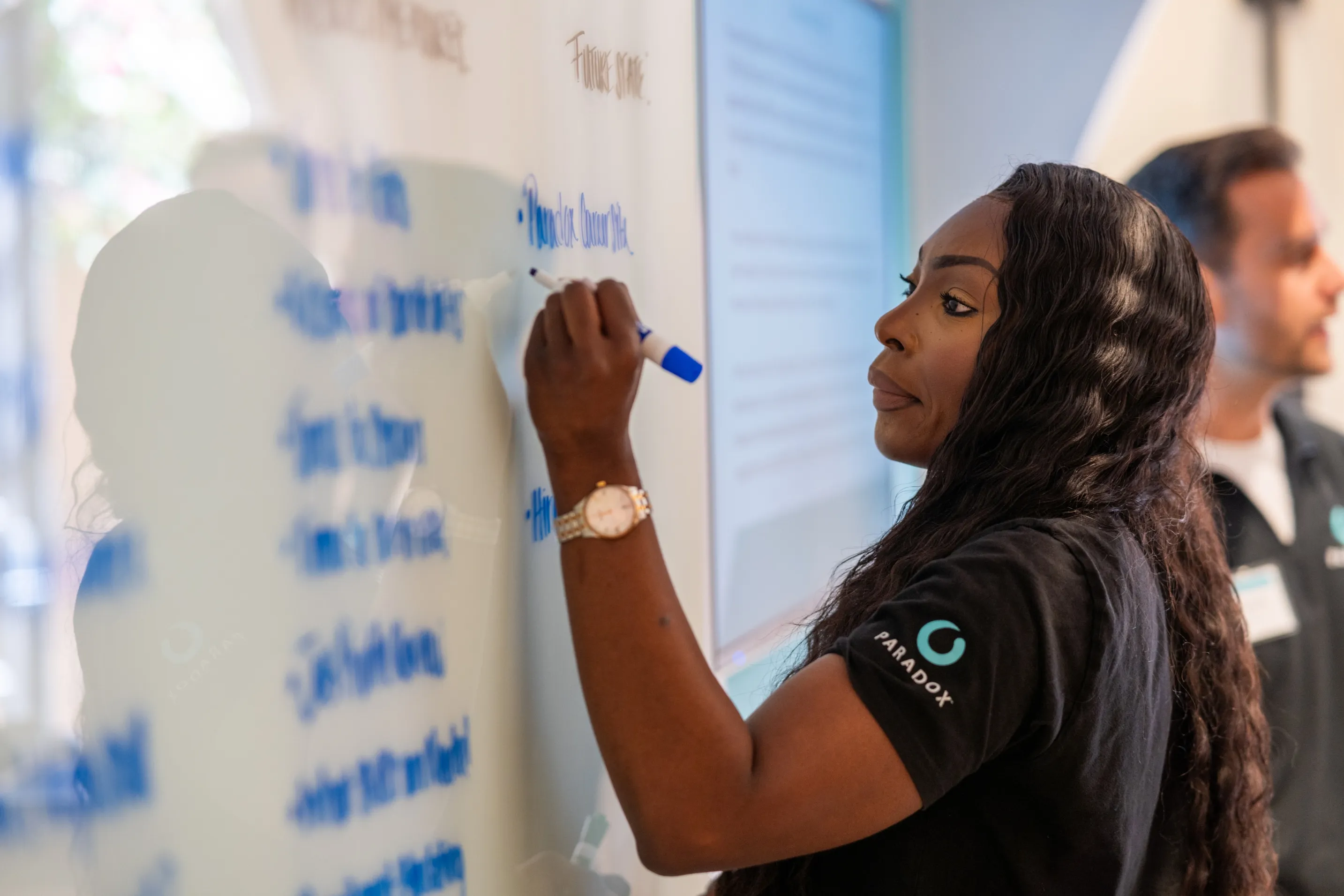
I extended the Paradox identity into physical brand touchpoints that reinforced a high-end positioning. By prioritizing a minimalist and typographic aesthetic, I created thoughtful goods that clients and partners were proud to keep, and employees were excited to represent. These pieces transformed abstract company values into a shared visual language.

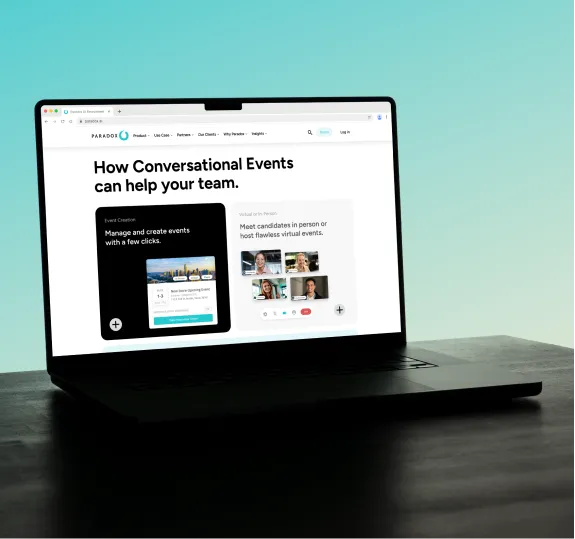
Over 5 years, I led the visual evolution of the Paradox brand from a growing Arizona startup into a global enterprise partner. By owning the design strategy behind our demand engine, I helped scale ARR 6x and directly supported the Workday acquisition. Workday recognized that Paradox’s value wasn't just in the product, but in the loyal client base and trusted brand that our team had established.
As industry analyst Josh Bersin shared, Paradox has “the potential to change Workday’s growth trajectory”—a testament to the consistent, strategic brand stewardship that helped build the business. Paradox now serves as a foundation for Workday’s next-gen AI platform, proving that brand equity can lead to business success.
As industry analyst Josh Bersin shared, Paradox has “the potential to change Workday’s growth trajectory”—a testament to the consistent, strategic brand stewardship that helped build the business. Paradox now serves as a foundation for Workday’s next-gen AI platform, proving that brand equity can lead to business success.
Impact
1/2
Driving growth with visual strategy
I led the design strategy for the highest drivers of company leads, pipeline, and ARR—events and the website—to culminate in a $1B exit.
Leading global web design and UX/UI
In 3 years, my work scaled active users from 334K to 1.8M and organic traffic by 252%, driving lifts in site conversion (70%) and MQLs (508%).
Maximizing pipeline efficiency
I led visual strategy for a mktg. team that generated 60% of all company pipeline, 40% of new clients, and scaled pipeline per dollar spent to $12:1.
Core educational offerings that convert
I directed product page redesigns that drove a 236% YOY lift in MQLs, and built a resource center that generates 34% of all site conversions.
High impact event presence
At the flagship HR Tech conference, a design-led environment led to an 88x increase in pipeline and 973% increase in booth visits over 5 years.
Scaling digital marketing
I standardized design systems to drive a 13.1% email CTR, 330% LinkedIn growth, and ~50M annual impressions across social and targeted ads.
Credits
Chief Marketing Officer
Josh Zywien
Josh Zywien
Chief Marketing Officer
Josh Zywien
Josh Zywien
VP of Marketing
Elyse Mayer & Joshua Secrest
Elyse Mayer & Joshua Secrest
Director of Content
Erik Schmidt
Erik Schmidt
Director of Events
Morgan Brunner
Morgan Brunner
Director of Product Mktg.
Daryl Carr
Daryl Carr
Web Development
BRIX Agency
BRIX Agency
Growth & Digital Marketing
Liv Venturini, Tyler McEvilly, Joe Prats, Maggie Knoll,
& Annabella Pirrotta
Liv Venturini, Tyler McEvilly, Joe Prats, Maggie Knoll,
& Annabella Pirrotta
Marketing Enablement
Scott Tremper, Grant
Taylor, Hayden Rodrigue,
& Kait Espinoza
Scott Tremper, Grant
Taylor, Hayden Rodrigue,
& Kait Espinoza
Photo & Video
Cultivator Content Labs & Po Outlaw
Cultivator Content Labs & Po Outlaw
Jr. Marketing Designer
Jack Dimond
Jack Dimond
Wait, there’s more...
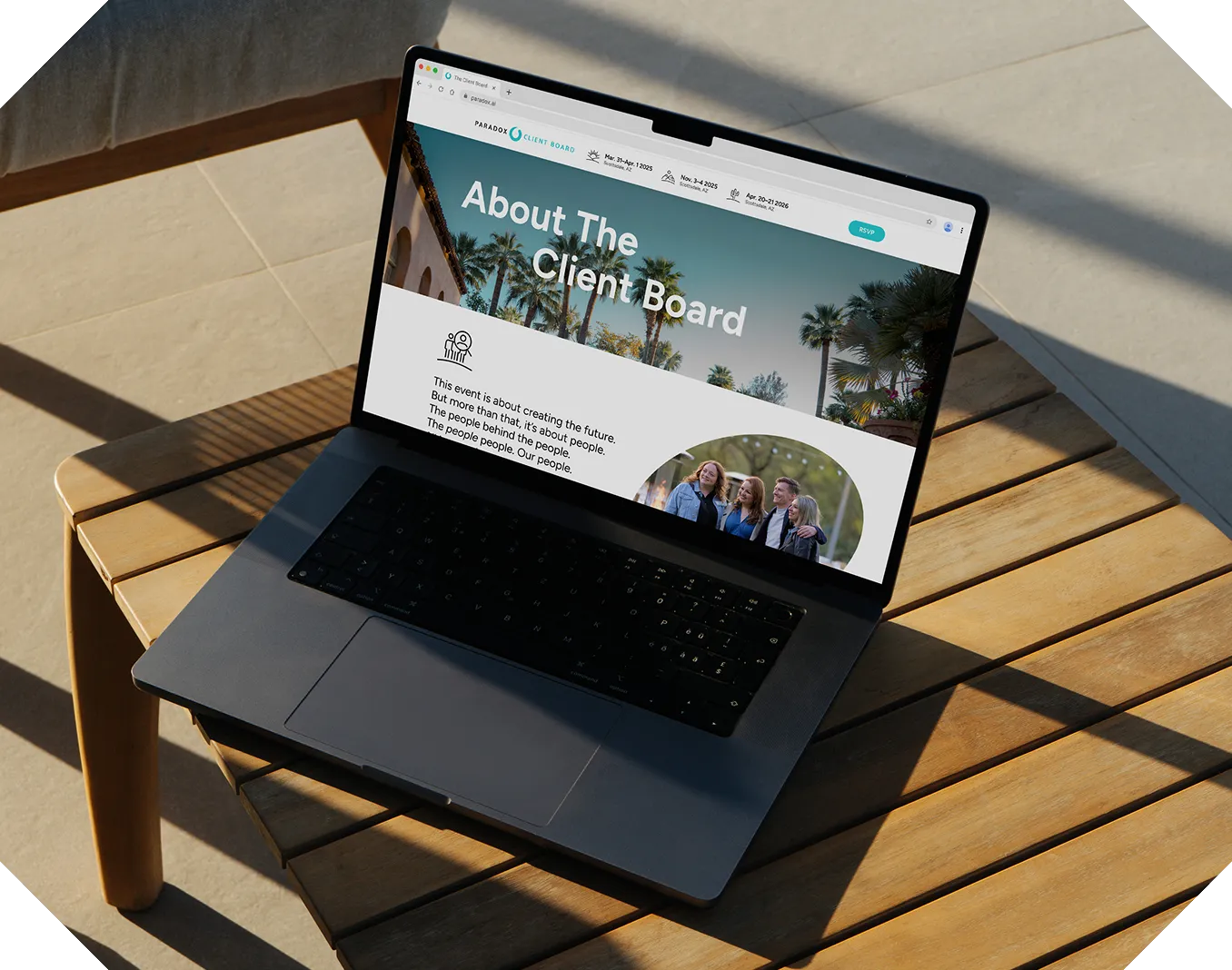
Paradox’s Client Board
HR User Conference
Creative direction for a 5-star talent collective and a microsite with a 37.7% WAU/MAU rate t
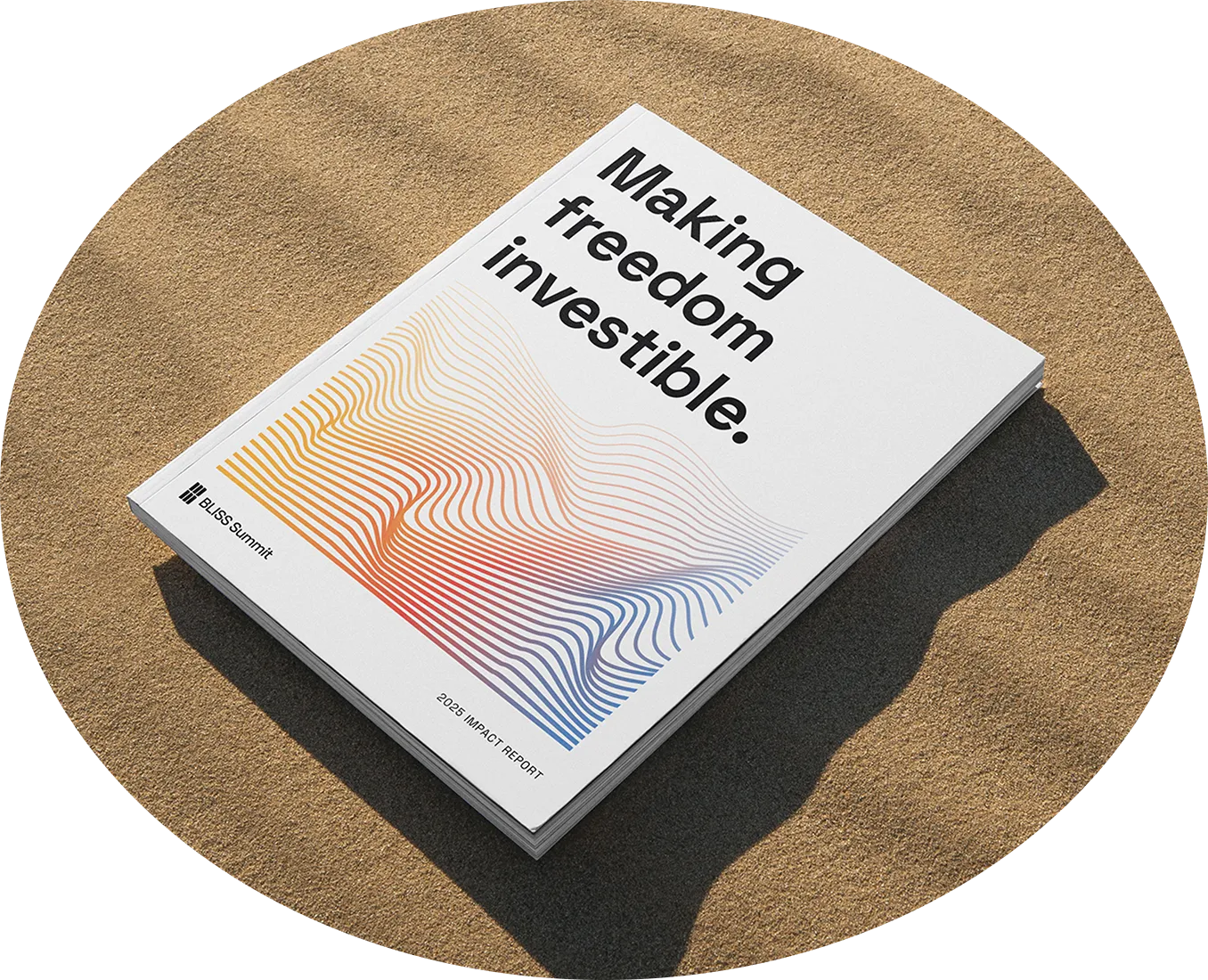
BLISS Summit
Civic Action Forum
Building investor confidence and brand authority through annual report art direction t

Northern Arizona University
Higher Education
Fostering a 3.67% one-year retention lift by supporting student success t
Let’s make something remarkable